
•
Discover the average dishwasher installation cost, key price factors, and tips to save on your project. Get transparent, expert-backed estimates.
Find the right dishwasher for your kitchen, whether it’s something simple that gets the job done or an appliance with all the bells and whistles

You can find a budget dishwasher starting around $250, with a stainless steel front panel that looks polished without overspending.
If you have standard cabinetry, built-in dishwashers fit under your counters, while portable and countertop models work well in apartments or ADUs.
Energy-efficient dishwashers lower your utility bills. ENERGY STAR-rated models cost about $35 a year to run and conserve thousands of gallons of water.
Hiring a local dishwasher installation professional ensures proper hookup and placement, especially when working with built-in models that require precise measurements and plumbing connections.
Buying a dishwasher comes down to a handful of decisions: how it fits your kitchen, how it cleans, and how much you want to spend. This dishwasher buying guide walks you through each choice in order, so you can shortlist the right model in minutes. You will learn how to measure your space, compare tub materials and controls, read noise ratings, and match features to your budget.
Work through these decisions in order to narrow your options fast:
Fit: Measure your cabinet opening first, then choose a standard 24-inch or compact 18-inch model.
Type: Pick built-in for most kitchens, or portable and countertop for rentals and small spaces.
Capacity: Match place settings to your household size, from 12 to 16 for most homes.
Noise: Look for a rating under 44 dBA if you have an open floor plan.
Tub material: Choose a stainless steel tub for faster drying and fewer odors.
Controls: Decide between hidden top controls for a clean look or front controls for easy access.
Drying: Compare heated, fan-assisted, and air drying based on your energy use.
Features: Prioritize adjustable racks, a soil sensor, and a filter type that fits your routine.
Budget: Plan for $250 at the low end to $2,000 or more for luxury models.
Installation: Book professional hookup, especially for built-in units.
Start here, because the wrong dimensions lead to a return. Measure the opening width, height, and depth before you compare models.
Width:
Standard dishwashers need a 24-inch opening. Compact models fit an 18-inch space.
Height:
Most units stand about 35 inches tall. Measure at three points to catch an uneven floor.
Depth:
Allow about 24 inches, plus room for the door to open fully.
Compact 18-inch dishwashers hold fewer dishes but suit apartments, ADUs, and tight galley kitchens.

You will find built-in models suit most kitchens, but three other types solve specific space problems.
Built-in: Slots under your counter between cabinets and saves floor space. This is the standard choice for most kitchens.
Drawer: Looks like a cabinet drawer and offers a custom look. Drawer models hold fewer dishes than built-ins.
Portable: Rolls on casters and connects to your sink faucet. Store it against a wall between loads.
Countertop: Sits on the counter and connects to the faucet. This model fits apartments and ADUs.
For a closer look at compact options, read our guide to portable dishwashers.
When shopping for a new dishwasher, there are several features and considerations to look out for.

Capacity tells you how many dishes fit in one load. Match it to how often you host and cook.
If you cook for a family or host guests, a standard 24-inch dishwasher holds 12 to 16 place settings. Compact models hold 6 to 8 place settings for smaller households.
The tub material affects drying, odor, and noise. Choose based on your budget and how much quiet you want.
Stainless steel: Dries dishes faster, resists odors, and dampens sound. It costs more up front.
Plastic: Costs less and holds up well. It retains more heat, so dishes take longer to dry.
Control placement shapes both the look and the daily use of your dishwasher.
Hidden (top) controls: Sit on the top edge of the door for a seamless front. You open the door to change a cycle mid-run.
Front controls: Sit on the door face for quick access. You check the cycle and time at a glance.
Dishwashers list a noise rating in decibels (dBA). A lower number means a quieter machine, which matters most in open floor plans.
Under 44 dBA: Very quiet. You barely hear it run across the room.
Mid-40s to low-50s dBA: Standard volume for most models. You notice it in a quiet kitchen.
Above 55 dBA: Louder budget models. Run these overnight with a timer.
Mid-range and luxury dishwashers run quieter thanks to added insulation and stainless steel tubs. Budget models with a manual filter run quieter than those with a self-cleaning grinder.
Your drying method affects how spotless the dishes look at the end of a cycle.
Heated dry: Uses a heating element to dry fast. It draws more energy per load.
Fan-assisted dry: Circulates air to dry without a heating element. This balances speed and efficiency.
Air (residual) dry: Relies on leftover heat and open venting. It saves the most energy but takes longer.

Every dishwasher cleans dishes, but these features make your routine more convenient and efficient.
Adjustable and third racks: Free up room for pots, pans, and baking sheets with fold-down tines and a top utensil rack.
Soil sensor: Detects how dirty each load is and picks the right cycle, which saves water and energy.
Scheduler or timer: Delays the start so you run the machine overnight at lower utility rates.
Rinse-hold: Rinses a partial load to stop food from drying on until you run a full cycle.
Filter type: Runs quieter with a manual filter, or adds convenience with a louder self-cleaning filter.
Wash cycles: Ranges from two or three on basic models to sanitize, steam, and delicate options on premium units.
Smart connectivity: Lets you start, monitor, and troubleshoot cycles from an app on Wi-Fi models.
Speed: Runs about two hours on a standard cycle, or 30 minutes on an express cycle that uses more energy.
Energy-efficient models cost more up front but lower your monthly utility bills. According to ENERGY STAR, a certified dishwasher costs about $35 a year to run and saves thousands of gallons of water over its lifetime. Learn how the label works in our guide to ENERGY STAR dishwasher savings.

Your finish choice ties the dishwasher into your kitchen. Options scale with price.
Budget (around $250): Available with a stainless steel front panel for a polished look.
Mid-range ($400 to $700): Offered in stainless steel or panel-ready fronts you cover with a cabinet panel.
Luxury ($700 to $2,000+): Includes stainless steel or fully custom panels to match your cabinetry.
A new dishwasher costs $400 to $700 on average, according to Angi cost data. Budget models start around $250, and luxury models run $2,000 or more. Higher-priced units add features, quieter operation, and custom finishes.
You install a portable or countertop model yourself in minutes. Built-in dishwashers need precise measurements, water lines, and electrical connections.
Installing a new dishwasher costs $110 to $270, according to Angi cost data. Book a professional installer for built-in units to protect your floors and plumbing.
Angi matches you with vetted local dishwasher installation pros who connect the water line, drain, and power, then level the unit. That hookup step is where most avoidable leaks start.
Before delivery day, measure your doorways and hallways so the new unit clears the path. Confirm the old dishwasher can be disconnected and hauled out.
A dependable dishwasher cleans well and stays out of the repair shop. Choose a model with strong owner reviews and available replacement parts.
Obscure or highly advanced models are hard to service because parts are limited. A secondhand unit from a discontinued line poses the same problem. Match the brand to your needs and confirm parts are easy to source.
Regular upkeep extends the life of any model. Follow our dishwasher maintenance checklist to keep yours running well.
You can find reliable dishwashers from many brands. Compare them on the features you need, your budget, and local parts and service availability.
Bosch
Whirlpool
KitchenAid
Maytag
GE
LG
Samsung
Frigidaire
Kenmore
Viking
Before you buy, confirm a local appliance repair pro services your chosen brand.
Run through this dishwasher buying guide checklist before you buy:
Measure the width, height, and depth of your space.
Choose a type that fits your kitchen and lifestyle.
Match capacity to your household size.
Compare noise ratings and target under 44 dBA for open spaces.
Pick a tub material, control style, and drying method.
Set a budget across the $250 to $2,000-plus range.
Clear doorways and hallways for delivery day.
Book a pro for a built-in installation.
Positive experience. As previously stated, the replacement/repair could not be completed (no fault of the plumbing tech) b/c misinformation was rec?d by property management maintenance. Thanks to the plumbing tech for your efforts. Appreciate you!
 The Waterworks
Carpet repair done well. Scheduling was easy. Showed up on time.
 BR Flooring Installation
As usual with ECO, tech Jordan was outstanding, very professional, very knowledgeable, and very thorough with repairs made to tankless water heaters. Very highly recommend ECO!!!
 Eco Plumbers, Electricians, and HVAC Technicians
I would recommend this company to anyone! He showed up on time, was friendly, completed a very difficult repair on our dryer vent cover, was responsive, and pricing was extremely fair and competitive. I would have him back to do any of our repairs or cleanings without hesitation!
 U.S.A. Dryer Vent, LLC
Everything from initial contact to completion was absolutely top notch. We contacted the business during off hours to leave a message, and the owner still reached out to feel out the issue within minutes. We were scheduled and repaired within 48 hours. I cannot say enough about the...
 Supreme brick & chimney
Ace Fireplace Services came to the rescue for my chimney repair. They were quick to pinpoint the issue and worked their magic to fix it. My chimney is now in excellent shape, and I'm a satisfied customer.
 Ace Fireplace Services
On Sunday 2/26 I requested quotes via Angi from 4 refrigerator repair businesses. Northwest Appliance responded to me Monday morning (2/27) and my refrigerator was repaired by noon the same day. Great communication, they did everything they said they would. The technician had the parts on...
Excellent! We were very satisfied with the service provided and the entire experience from start to finish. Very friendly and professional staff. I was able to instantly get in contact with them for a quote and the response time and overall communication remained quick and easy throughout the...
 Prime Cleaning Service
Description says they handle window repair including rotten hardwood - they called me back right away but didnâ t leave a voicemail. I followed up 3 days later and they said they donâ t do that kind of work.
 Window-Gurus
I needed reliable, affordable help the day of with moving a couple of appliances and misc items. It was a relief to hear back from Tanzillo almost instantly that morning so I could stop looking and move on to plan and prepare. Every part of the move was friendly and professional. Next time I...
 Tanzillo Concrete & Landscape
From average costs to expert advice, get all the answers you need to get your job done.
Discover the average dishwasher installation cost, key price factors, and tips to save on your project. Get transparent, expert-backed estimates.
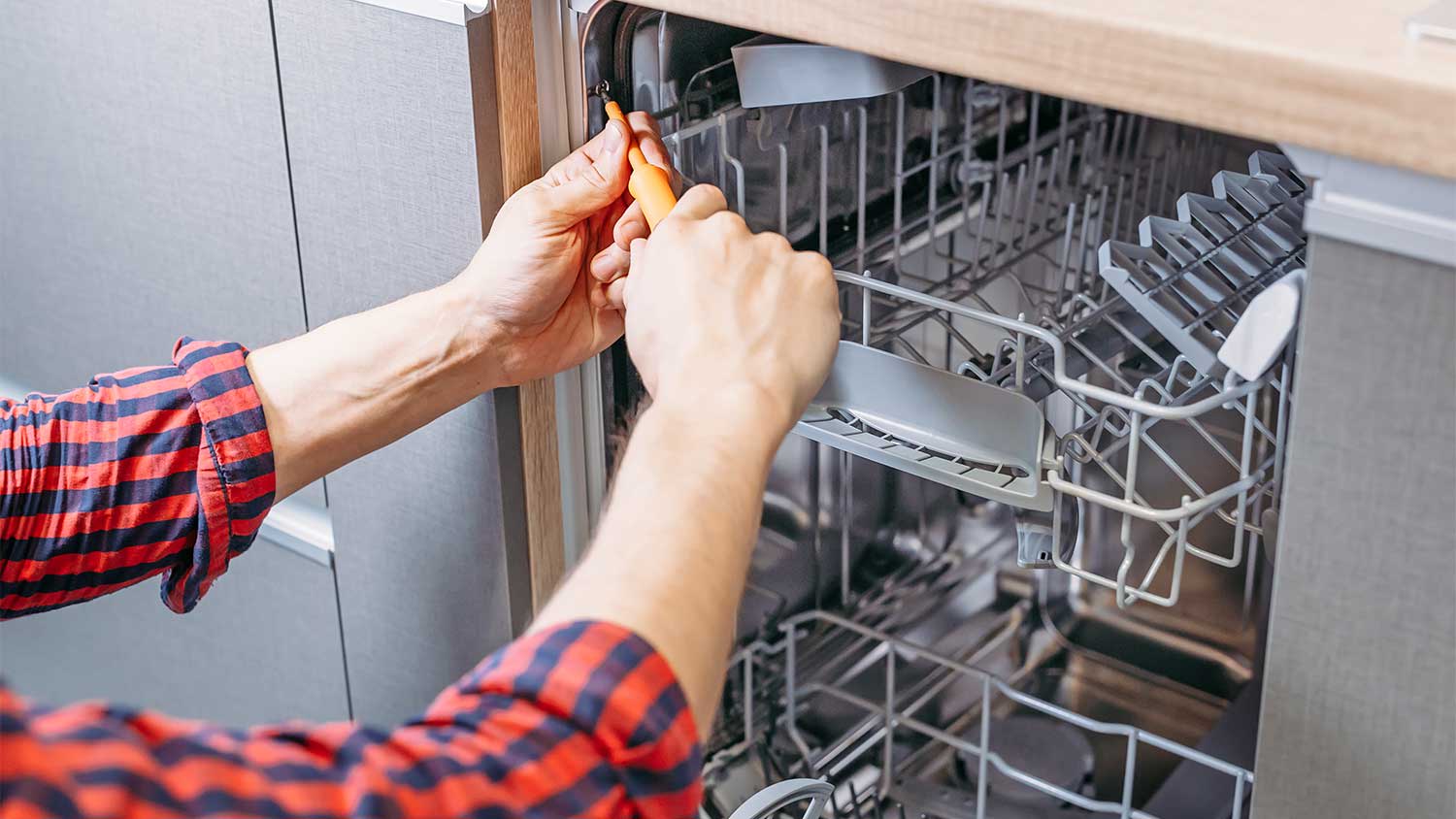
Get expert insights on dishwasher repair cost, including average prices, key cost factors, and tips to save money on repairs.

No one should have to holler over their dishwasher, but how much do dishwasher decibels matter? Here's how to decipher dishwasher noise levels.

Keep your dishwasher running smoothly with this dishwasher maintenance checklist.

Energy Star dishwasher water usage beats out both hand washing and older dishes. Find out how much by using this guide to Energy Star dishwashers.
What should you look for in a security screen door? Steel frame or aluminum? What kind of lock? There are many options and features for security doors for your home. Before you have a security screen door installed, here’s what you need to know.