

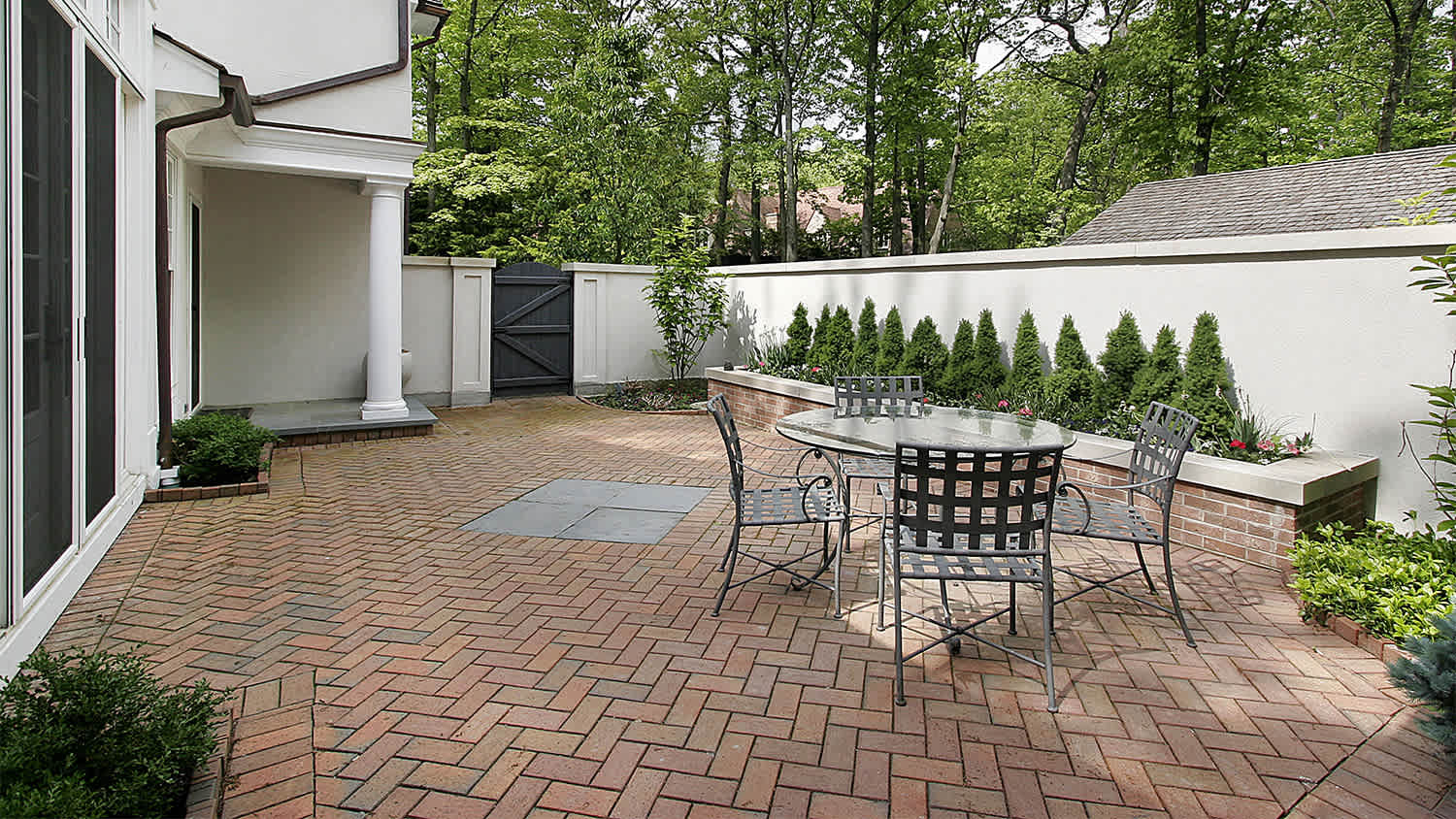
Looking to spruce up your outdoor area? Learn how much paver sealing and cleaning costs in Indianapolis, IN, and what factors to consider when budgeting.
Pavers and hardscaping service costs depend on your project and location. Check with a local pro for your specific job.

Outdoor porcelain tile installation costs $1,000 to $8,500, with your total determined by tile style and project size.
Your porcelain paver style affects your total, with unglazed tiles priced below glazed or polished outdoor options.
You should budget for permits ranging from $250 to $2,000, plus demolition costs if old patio materials need removal.
Hiring a local paver installation professional prevents cracked tiles and uneven surfaces while providing specialized cutting tools and proper drainage expertise.
Looking to upgrade your home’s hardscaping? Porcelain pavers can completely transform your outdoor space. Whether you’re looking to create a driveway, walkway, or patio, these outdoor tiles are anything but average. They’re remarkably durable, low-maintenance, and versatile compared to other popular types of pavers, like concrete and natural stone.
Though porcelain paving tiles are not the most budget-friendly option, many homeowners find them worth the splurge. Here’s how much you can expect to spend.
Porcelain pavers are porcelain tiles specifically created for outdoor use. That means they’re thicker and stronger than your average porcelain floor or wall tile because they need to withstand extreme weather.
The average cost of porcelain tile when installed outdoors is $3 to $35 per square foot. The overall price varies based on quality and design, but it is usually more than the cost of brick pavers, concrete pavers, or natural stone pavers.
Refer to these common porcelain patio sizes to help you estimate the cost of porcelain pavers:
| Patio Size in Square Feet | Average Cost |
|---|---|
| 6x10 (60 sq. ft.) | $180–$2,100 |
| 8x12 (96 sq. ft.) | $290–$3,400 |
| 10x10 (100 sq. ft.) | $300–$3,500 |
| 10x16 (160 sq. ft.) | $480–$5,600 |
| 10x20 (200 sq. ft.) | $600–$7,000 |
| 14x20 (280 sq. ft.) | $840–$9,800 |
| 20x20 (400 sq. ft.) | $1,200–$14,000 |

The main draw of porcelain is that it can mimic any type of flooring, but it’s usually more durable. There are options that imitate different types of flooring choices. You can even find an option that looks like wood. Overall, glazed tiles typically cost the most, though you’ll pay more for intricate patterns. Typical costs are:
| Type of Porcelain | Cost per Square Foot |
|---|---|
| Unglazed Porcelain tile | $3 to $15 |
| Glazed Porcelain tile | $3 to $35 |
| Polished Porcelain tile | $5 to $35 |
Sure, you can buy porcelain pavers at your local hardware store—but you’re using them in a project that has other costs. Regardless of the project, here’s the cost breakdown.

The cost of labor to install outdoor porcelain tile is anywhere from $4 to $25 per square foot. Some professionals charge per hour, at an average hourly rate of $30 to $120.
You may need a permit to install porcelain pavers in your yard. Most permits for outdoor projects cost around $250 to $2,000. Local laws vary between cities and states, but your contractor should know if you need one.
If your contractor has to tear out an old patio or seating area to lay your outdoor porcelain tiles, it can add $2,000 to $10,000 or more to the final cost of your hardscaping project.
You’ll also need to factor in the cost to maintain your porcelain pavers. Sealing and cleaning pavers costs between $300 and $550 on average. You can save on maintenance costs by DIYing it. For around $50 a day, you can rent a pressure washer from a local home improvement store. Sealant costs run from around $90 to $130. If you decide to hire a pro, the cost to power wash your patio is roughly $250.
DIYing porcelain pavers could potentially save you thousands, with labor alone running $4 to $25 per square foot, or up to $4,800 for a 300-square-foot patio. The problem, however, is that porcelain is incredibly tricky to cut without specialized equipment. It also cracks easily during installation. Hiring a local patio paver installer is the safer, smarter choice for your patio and your wallet.
Porcelain paver installation is a complex, labor-intensive project where professional tools are needed to get the job done right. Here are other reasons why you should hire a pro:
Professionals have specialized tools like porcelain-specific drill bits and wet saws to cut and shape pavers without cracking or shattering them.
They understand proper base preparation, grading, and drainage to prevent settling, shifting, and water pooling that can ruin your patio.
Pros can handle complex projects involving outdoor kitchens, fire pits, or electrical and gas line integration safely and up to code.
Experts know how to work with rectified versus non-rectified tiles and can minimize waste from broken pavers.
Contractors complete installations efficiently—what might take a DIYer weeks can be done in days by experienced installers.
Professional installation often includes warranties on both materials and workmanship.
Improper installation can lead to cracked pavers, uneven surfaces, and costly repairs that exceed what you saved on labor.
If you want to participate in the process, focus on smaller tasks such as:
Removing old pavers or existing patio materials yourself to save $2,000 to $10,000 on demolition costs.
Clearing the installation area of debris, plants, and obstacles before the contractor arrives.
Renting a pressure washer (which costs $50 a day) to clean and maintain your pavers after installation.
Applying sealant yourself for $90 to $130.
On top of your typical porcelain paver costs, there are many add-ons that can amplify your outdoor space and complement your new pavers, including:
Fire pit: $200–$3,000
Outdoor kitchen: $6,300–$26,900
Outdoor sound system: $250–$1,300
Patio roof: $14,000–$31,000
Railing/fencing: $10–$90 per linear foot
Solar shades: $200–$1,300
Porcelain pavers offer a luxury aesthetic that can make a huge impact on your wallet. But, with a couple of strategic tips, you can save on the cost of your pavers so that you can have that luxury look without going over budget.
Install a smaller patio. More materials mean higher expenses, so consider reducing the dimensions of your patio to save on pavers, sand, gravel, and labor.
Avoid installing high-end styles like glazed or polished porcelain tiles. Instead, choose unglazed porcelain tiles for your project.
DIY removing old pavers to lower labor costs.
Clear the area to make it easier—and faster—for installers to work.
Decide which porcelain style—unglazed, glazed, or polished—fits your aesthetic preferences and budget.
Measure your space and discuss your desired patio dimensions with contractors to get accurate quotes.
Talk with your paver installer about add-ons like fire pits, outdoor kitchens, or built-in seating areas.
Ask whether you need permits for your project and confirm your contractor will obtain them.
Discuss maintenance requirements and whether the contractor offers sealing services or warranties on their work.
Home is the most important place on earth, which is why Angi has helped more than 150 million homeowners transform their houses into homes they adore. To help homeowners with their next project, Angi provides readers with the most accurate cost data and upholds strict editorial standards. We extensively research project costs to develop the pricing data you see, so you can make the best decisions for you and your home. We rely on reputable sources, including the U.S. Bureau of Labor Statistics, academic journals, market studies, and interviews with industry experts—all to ensure our prices reflect real-world projects.
Want to help us improve our cost data? Send us a recent project quote to [email protected]. Quotes and personal information will not be shared publicly.
I recently moved to another state and chose United Trust Van Lines after comparing several companies. Their team was punctual, professional, and extremely careful with my belongings. I was especially impressed with how they handled my home office setup and fragile items. Everything arrived on...
 United Trust Van Lines, LLC
Mitchell and the crew were top tier i am so happy with my new roof
 Home Genius Exteriors
This company does it right. Firstly, I want to say that Landan was a joy to work with. He was so kind, transparent, and had everything under control. His entire team showed up ready to work and they were all very respectful of the fact that we were in an office space. A little backstory – we...
 Krumlauf Floors
Amazing job. Efficient and quick without compromising quality. Basement feels brand new. Would use them again in a heartbeat.
 AffordaPro Restoration
D1 Roofing delivers outstanding service from beginning to end, backed by a strong warranty and expert teams. I highly recommend them for their excellence in meeting and surpassing expectations with unmatched communication. Choosing D1 Roofing was flawless decision
 Division 1 Roofing LLC
I'm a repeat customer of All Star Paving & Sealing and I appreciate the service that all start paving has done for me in the past. I just recently had them out for an estimate and things couldn't have gone better. The staff that they send out to do the estimates are very knowledgeable. The...
 All Star Paving and Sealing
Supreme Brick & Chimney did an excellent job restoring the brick and mortar joints on my home. Their team was professional, knowledgeable, and completed the work on time. I highly recommend them and will hire them again in the future! Thanks!
 Supreme brick & chimney
Window Depot did an amazing job on my deck. I wasnt sure what I wanted to do, but their composite decking was affordable and will last a long time. I am excited to have family over, and I am no longer embarrassed by my backyard. Jeff and the ground crew were polite, respectful, and caring for...
 Window Depot USA of Central Ohio
They are very reliable and available. They the drains all the time
 The Waterworks
We had a 20+ year old landscape lighting system that needed replacement. Midwest Lightscapes worked with us to design a much improved lighting system, lighting the exterior of the house and the back yard. Installation of the 45 light system took one and one-half days, and went very smoothly....
 Midwest Lightscapes
From average costs to expert advice, get all the answers you need to get your job done.
Looking to spruce up your outdoor area? Learn how much paver sealing and cleaning costs in Indianapolis, IN, and what factors to consider when budgeting.
Looking to spruce up your outdoor entertaining area? Learn how much it costs to seal pavers and what factors to consider when estimating your total.
The cost of porcelain countertops is affected by many factors, primarily the material's type (tile or slab) and finish, as well as your counter’s size and shape.
Choosing the right type of pavers for your hardscape can be a challenge with all the options on the market. Check out the most popular varieties to narrow down your list.
Pavers are a popular option for homeowners redoing their hardscaping. Learn everything you need to know about what pavers are in this guide.
Whether you’re ready to upgrade or want to try something new, picking the best pavers for your patio and driveway can help elevate your outdoor space. We share some things you’ll want to consider before you install your pavers.