

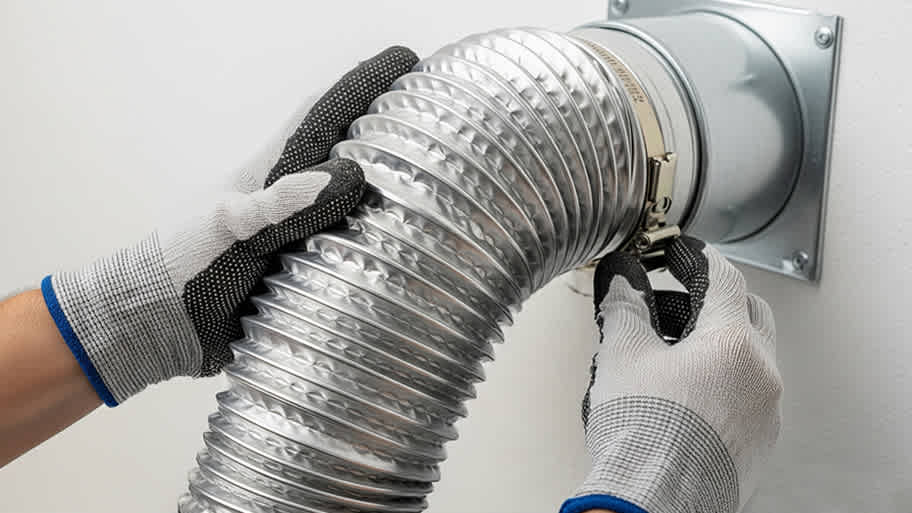
A dryer vent cleaning cost averages about $140 when done by a professional. Read our tips to understand the key cost factors involved in dryer vent cleaning.
Appliance repair costs depend on your project and location. Check with a local pro for your specific job.

Dryer vent installation costs between $140 and $600 for your new ductwork through an exterior wall.
Your dryer location, hose material, and vent path complexity shape your total, with metal costing more than plastic or PVC.
Plan for minor drywall patching after your installer makes access holes, so your finished walls look clean.
Hiring a local dryer repair professional reduces fire and carbon monoxide risks from lint buildup and ensures safe, efficient installation.
In 2026, the national average cost to install or replace a dryer vent is $200. Most homeowners spend between $140 and $600, with your dryer location, hose material, and vent path complexity being the primary cost drivers.
Several factors shape the final price of a dryer vent installation. The sections below break down each cost driver so you can plan your budget accurately.
Vent location refers to the path the duct takes from your dryer to an exterior opening in your home, and routing it as directly as possible typically costs $150 to $300, though complex jobs can reach $1,000. An exterior vent is the standard recommendation from pros and the most common solution for most homes. If no exterior route is available, an interior vent box is an option, but installing one costs $100 to $175 and requires constant maintenance while introducing warm, damp air near the dryer. Pros will only suggest an interior vent box when no exterior path is feasible.
Most dryer vents—64 % according to over 24,000 Angi customers—are located in the basement or on the first floor. Conversely, only 28 % of dryer vents in homes are located on the second floor or higher. Homeowners with higher dryer vents might have to deal with longer, more complex ductwork that is harder to clean and ultimately more expensive.
| Vent Location | Average Installation Cost in 2026 | Details |
|---|---|---|
| Exterior wall | $150 to $300 | The vent takes a direct path to the outside. |
| Interior vent box | $100 to $175 | An uncommon setup that needs constant maintenance. |
| Higher floor location | $1,000 | Longer, more complex ductwork can raise the price. |
Pros install one of three materials for a dryer vent hose or duct, and your choice affects both durability and cost. Here is how the options compare:
| Hose Material | Average Installation Cost in 2026 | Details |
|---|---|---|
| PVC | $125 | Not as durable |
| Plastic | $175 | Gets brittle with heat exposure |
| Metal | $250 | Aluminum or steel, very durable |
The right dryer vent hose type depends on the path the vent must take to reach your home's exterior. Here is how the three hose types compare:
| Hose Type | Average Installation Cost in 2026 | Details |
|---|---|---|
| Slim or Skinny | $150 | Good for tight spaces, carries less air |
| Semi-Rigid | $225 | Good for lots of duct bends |
| Rigid | $275 | Carries the greatest volume |
| Hose Length | Average Installation Cost in 2026 | Typical Cost Range in 2026 |
|---|---|---|
| 8 feet | $110 | $100–$120 |
| 12 feet | $140 | $130–$150 |
| 20 feet | $210 | $200–$220 |
| 35 feet | $290 | $280–$300 |
Dryer vent hose length directly affects your total cost, with materials and installation running $12.50 to $15 per linear foot. A dryer positioned against an exterior wall typically needs only an 8-foot duct, making it the shortest and least expensive run. Dryers in interior rooms may require longer, more complex paths to reach the exterior while staying within local building code limits, which often cap hose length at 25 to 35 feet. Hose length also influences how often you should clean your dryer vent—most homeowners clean once a year, but longer vents need cleaning two to four times per year.
The route the dryer vent hose must take also affects the cost. If the vent duct is installed straight through an exterior wall to the outside, this design incurs the lowest labor costs.
However, if you must install a vent hose from a dryer in an interior room, the path to the home's exterior may be quite complicated. The installer may need to move through floors, inside ceilings, and around support beams, which takes quite a bit of time and labor.
If your dryer is on an upper floor of your home, you may need to route the hose into the attic. A basement dryer's duct vent may need to go through a crawl space. These compact spaces are often difficult for the installer to work in, increasing labor costs.
Additionally, the installer may need to cut through the roof or a basement foundation, which can be quite labor-intensive.
Ideally, the installer may have a few possible routes in mind for the hose path. You could then select the best one for your budget and home aesthetics, should you not want to see the exterior vent cover on certain sides of your home.
Installing a new dryer vent typically requires cutting holes in walls, floors, or the exterior of your home, which often means minor drywall patching afterward. Drywall repair costs an average of $600, though the final amount depends on the extent of the dryer vent installation.
Replacing a damaged dryer vent typically costs less than a new installation because the structural work is already in place, with a standard replacement running $100 to $300 for materials and installation. The replacement requires new ductwork, a wall sleeve, a transition duct, and clamps. Ductwork runs $.50 to $2.50 per linear foot, and a kit covering the remaining components costs $10 to $25.
If you want to reroute the dryer vent to a new location outside the home, it could be a highly complex project.
If you must run an entirely new vent path, you may need to open walls and cut a new hole in your home's exterior. This would be a similar process to a new vent installation, which has an average cost of $200. Some highly complex and lengthy rerouting paths could cost up to $1,000, though.
If you're using a similar path to the current vent but changing the exit hole location over the last few feet, you'll probably pay less than $200 for labor and materials.
Dryer vent installation often requires the replacement or addition of ductwork, which can be tricky in small spaces and may involve cutting into walls, floors, and roofing. Hiring a dryer repair specialist near you will add to your cost but ensures proper installation that avoids leaks, condensation, or buildup that can pose a fire or carbon monoxide risk.
Dryer vent installation is best handled by a professional for the following reasons:
Pros have experience adding and removing ductwork in small or hard-to-access spaces.
Pros can help you safely move the location of your ducts or even your dryer.
Ventilation that snakes through the house requires careful planning by an expert to adhere to local building codes.
Pros have the experience to minimize cuts needed in walls, floors, or roofing.
A professionally installed dryer vent will be free from leaks and won't allow pests in.
Pro installation reduces the risk of fire or carbon monoxide poisoning from lint buildup.
A professional will know which hose type and material to recommend for your home.
Experts can install a dryer vent safely and efficiently.
When replacing an existing dryer vent, know where it exits your home so installers can estimate how much work is involved.
For dryer vents that take an unconventional route—such as through a crawl space—be prepared to explain access to installers.
If you wish to do some of the work yourself, inquire if you can handle simple tasks like minor drywall patching.
Home is the most important place on earth, which is why Angi has helped more than 150 million homeowners transform their houses into homes they adore. To help homeowners with their next project, Angi provides readers with the most accurate cost data and upholds strict editorial standards. We extensively research project costs to develop the pricing data you see, so you can make the best decisions for you and your home. We rely on reputable sources, including the U.S. Bureau of Labor Statistics, academic journals, market studies, and interviews with industry experts—all to ensure our prices reflect real-world projects.
Want to help us improve our cost data? Send us a recent project quote to [email protected]. Quotes and personal information will not be shared publicly.
Positive experience. As previously stated, the replacement/repair could not be completed (no fault of the plumbing tech) b/c misinformation was rec?d by property management maintenance. Thanks to the plumbing tech for your efforts. Appreciate you!
 The Waterworks
Carpet repair done well. Scheduling was easy. Showed up on time.
 BR Flooring Installation
As usual with ECO, tech Jordan was outstanding, very professional, very knowledgeable, and very thorough with repairs made to tankless water heaters. Very highly recommend ECO!!!
 Eco Plumbers, Electricians, and HVAC Technicians
I would recommend this company to anyone! He showed up on time, was friendly, completed a very difficult repair on our dryer vent cover, was responsive, and pricing was extremely fair and competitive. I would have him back to do any of our repairs or cleanings without hesitation!
 U.S.A. Dryer Vent, LLC
Everything from initial contact to completion was absolutely top notch. We contacted the business during off hours to leave a message, and the owner still reached out to feel out the issue within minutes. We were scheduled and repaired within 48 hours. I cannot say enough about the...
 Supreme brick & chimney
Ace Fireplace Services came to the rescue for my chimney repair. They were quick to pinpoint the issue and worked their magic to fix it. My chimney is now in excellent shape, and I'm a satisfied customer.
 Ace Fireplace Services
On Sunday 2/26 I requested quotes via Angi from 4 refrigerator repair businesses. Northwest Appliance responded to me Monday morning (2/27) and my refrigerator was repaired by noon the same day. Great communication, they did everything they said they would. The technician had the parts on...
Excellent! We were very satisfied with the service provided and the entire experience from start to finish. Very friendly and professional staff. I was able to instantly get in contact with them for a quote and the response time and overall communication remained quick and easy throughout the...
 Prime Cleaning Service
Description says they handle window repair including rotten hardwood - they called me back right away but didnâ t leave a voicemail. I followed up 3 days later and they said they donâ t do that kind of work.
 Window-Gurus
I needed reliable, affordable help the day of with moving a couple of appliances and misc items. It was a relief to hear back from Tanzillo almost instantly that morning so I could stop looking and move on to plan and prepare. Every part of the move was friendly and professional. Next time I...
 Tanzillo Concrete & Landscape
From average costs to expert advice, get all the answers you need to get your job done.
A dryer vent cleaning cost averages about $140 when done by a professional. Read our tips to understand the key cost factors involved in dryer vent cleaning.
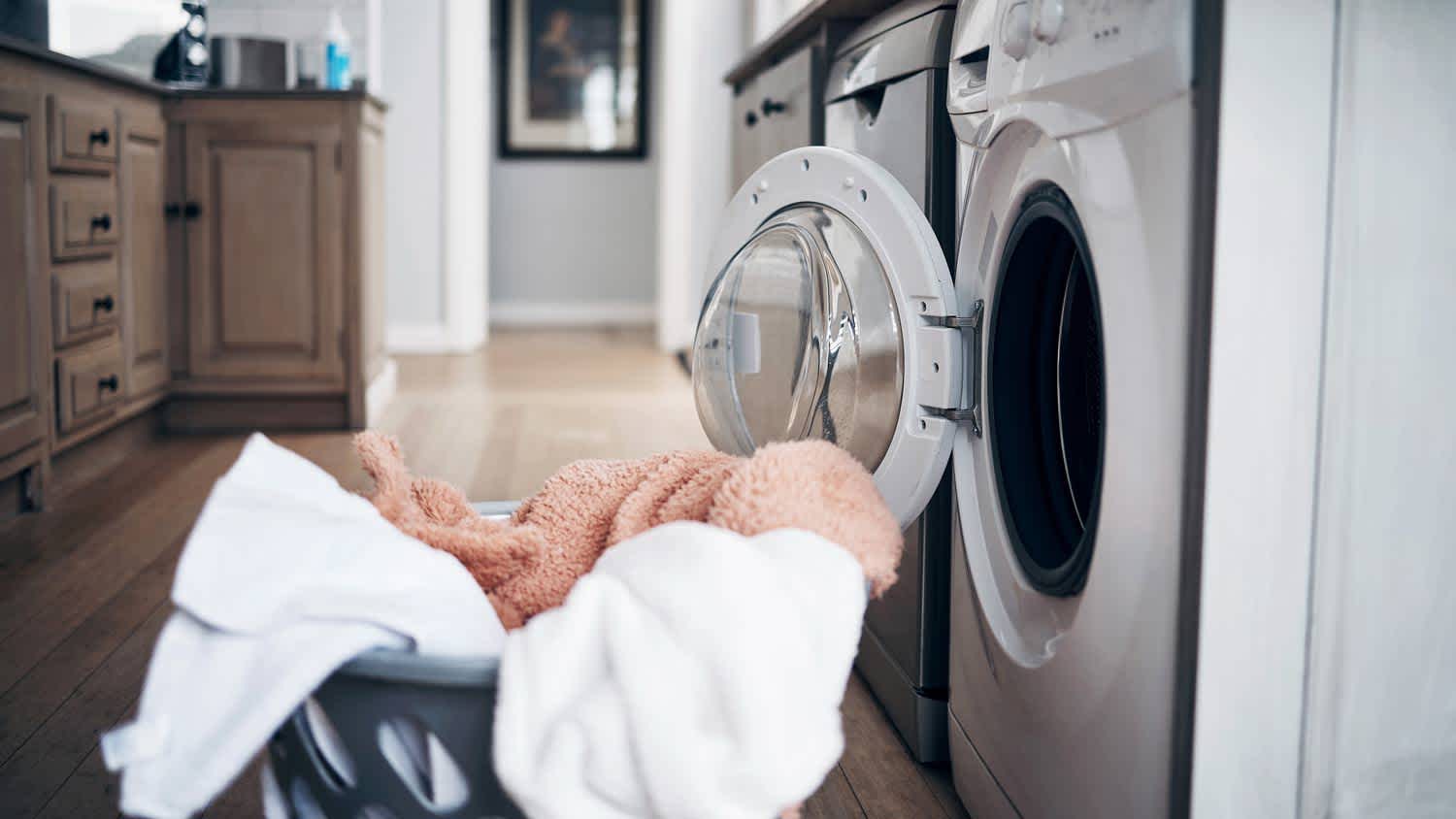
Dryer repair costs as little as $10, but sometimes, replacing your dryer is more cost-effective. But if you have to make repairs, here’s how much it’ll cost.
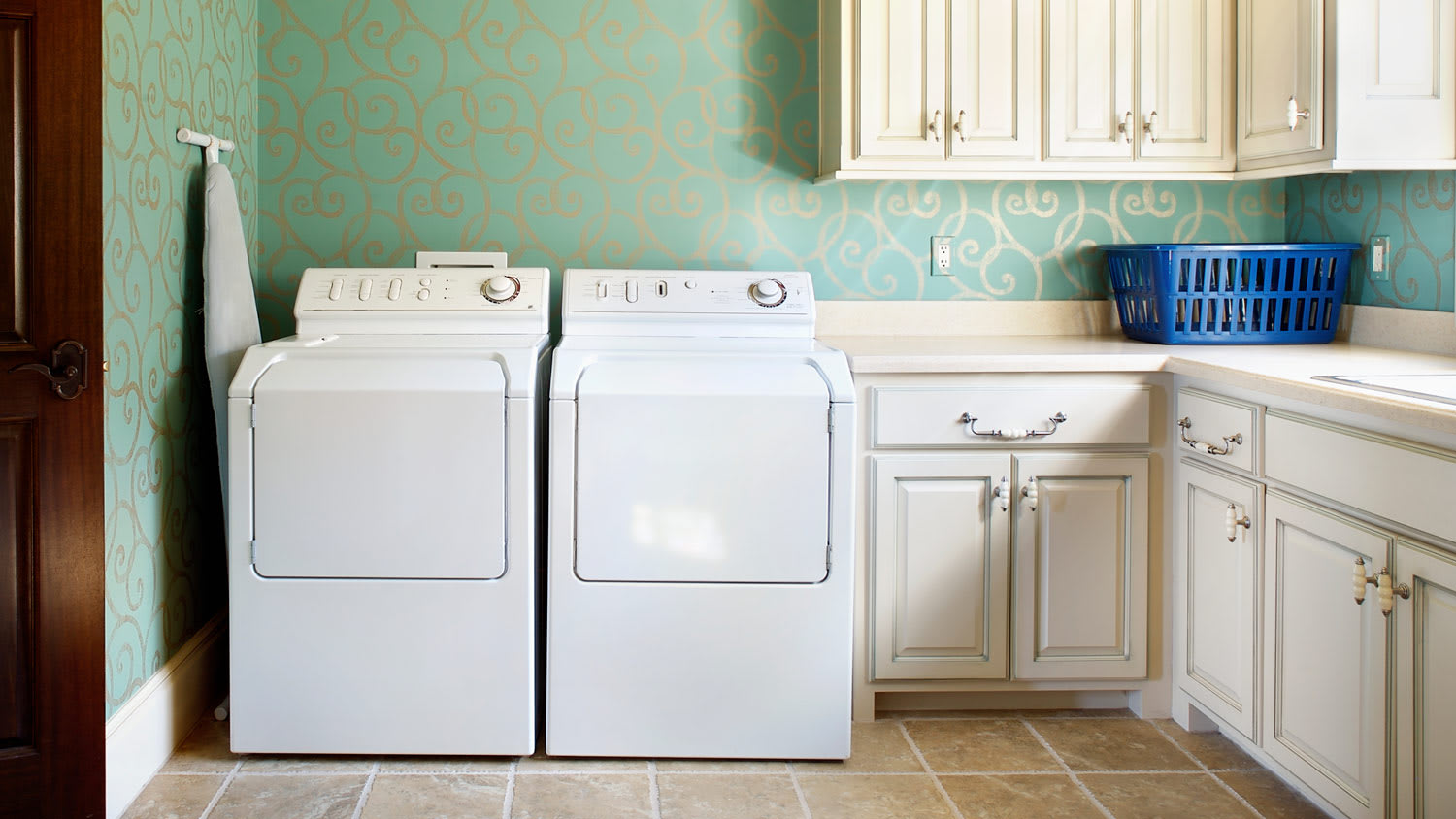
If you need to move your dryer, or you’re buying a home without proper ductwork, you’ll want to make sure the right pro installs your dryer vent. Read on to find out who installs dryer vents to get the job done quickly and easily.
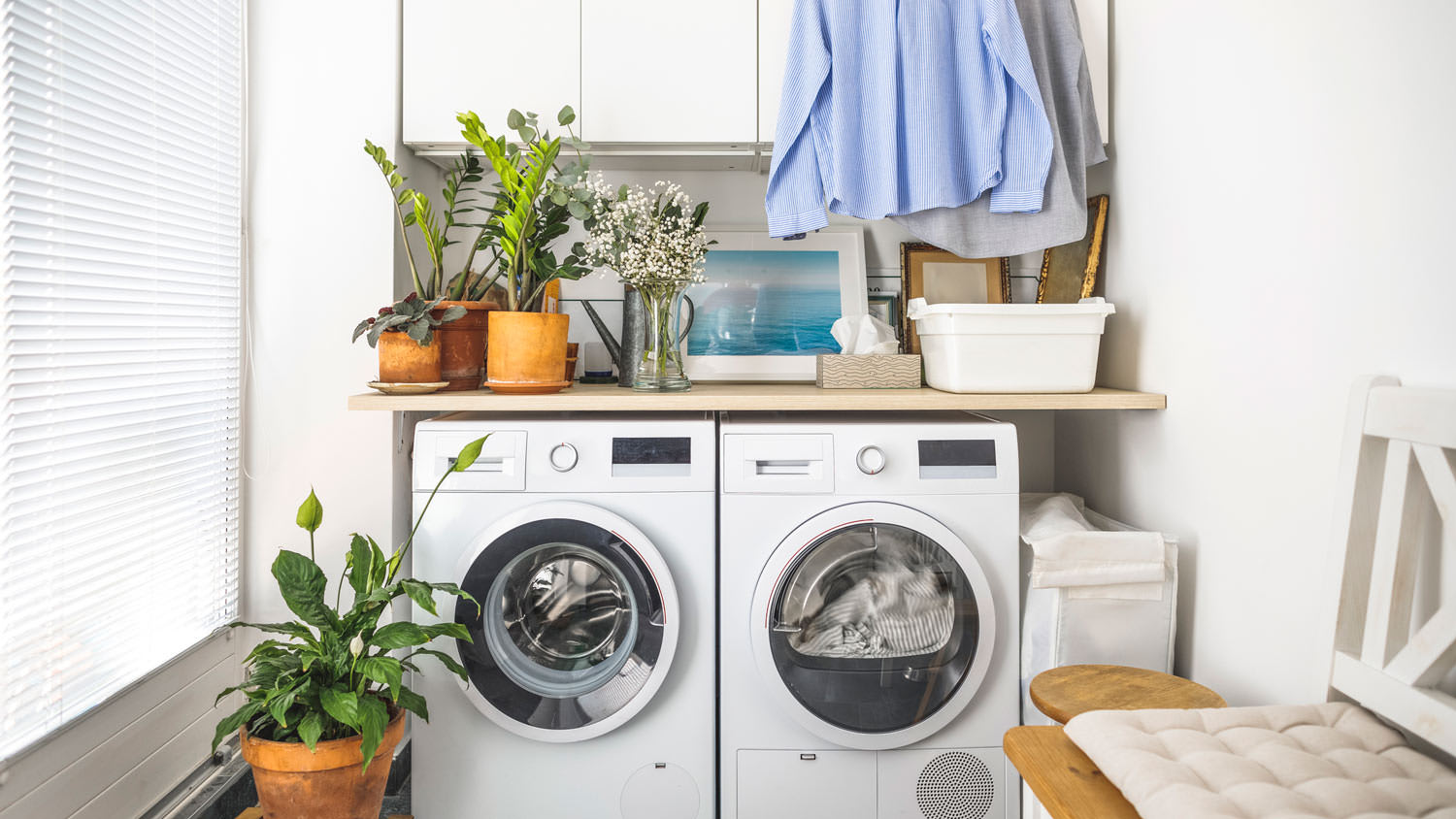
Regular dryer vent cleaning is essential to keeping your dryer running safely and efficiently. But when it comes to dryer vent cleaning, is it better to hire a pro or DIY?
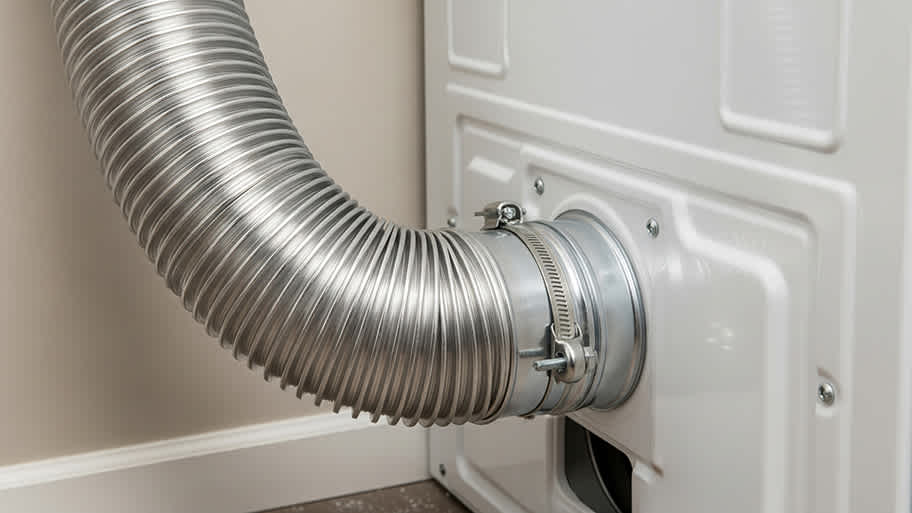
You might not think much of lint, but it’s actually a major fire hazard. Running your own dryer and dryer vent inspection can help you spot dangerous buildup.
Are your clothes taking too long to dry or smelling burnt? Learn about dryer vent cleaning costs, warning signs, and how to hire the right local pro.