




Top-rated arborists.

Get matched with top arborists in Howells, NE

Enter your zip and get matched with up to 5 pros

Need a pro for your arboricultural service project in Howells, NE?

Select your specific project to find the pro for you.

Find Arborists in Howells

Avatar for M. S. Wiekhorst Arbor Company
M. S. Wiekhorst Arbor Company
5.0(
10
)
Tree RemovalTree Removal - For BusinessTree Stump - Remove+5 more

Serving Howells, NE and surrounding areas

Free estimates

Emergency services offered

Warranties offered

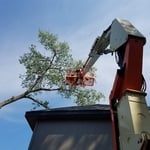
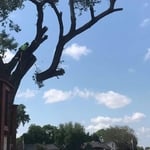
"The services performed went as smooth as expected. Mike was able to trim our biggest tree and remove an entire evergreen that had been exposed to bag worms. The work was quick and efficient and I would highly recommend him to anyone. We will definitely utilize his expertise in the future."
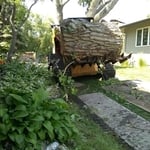
Large Cottonwood Removal

+12

Response time2 days
Response rate100%
Recommended by100%of homeowners
Arborists questions, answered by experts

Yes, it’s okay to trim low branches on a tree, also known as limbing up or raising the crown. Essentially, you’ll trim the lower third of the tree (trunk) and leave the upper two-thirds of the tree (crown). Arborists recommend trimming 20% of a tree’s leaves per season for two to three seasons. Trimming low branches allows light to flow through the tree, increasing circulation and making the tree stronger and healthier.

The recovery time for pruning depends on how much you prune, the species of tree, and how well you care for it afterward. All trees grow new wood and often sprout additional branches after pruning. Ideally, trees should recover from normal pruning after one or two years. Heavy pruning or slow-growing trees may take several years to fully recover.

While trees can grow in the curb strip between the sidewalk and the street, this placement often poses the problem of interfering with overhead power lines. It’s best to consult your local utility provider and tree planting service before transplanting a tree that might grow into power lines. Also, you should never work within 20 feet of a live power line to avoid the risk of electric shock. Tree branches should never touch nearby power lines, so it’s essential to ensure your tree isn’t in danger of growing too close to them.

Dead trees are dangerous for several reasons. They are structurally compromised and prone to branch or trunk failure, which can pose a significant safety risk to people, vehicles, and nearby structures. Dead trees can also harbor pests like termites, which may spread to other trees or your home. If a tree died from a disease, it could spread the illness to healthy trees. Additionally, the dry wood is highly flammable, increasing fire risk.

Some trees will bounce back just fine, and others will struggle and possibly die. Evergreens, for instance, have a very difficult time recovering after droughts and usually die after periods of extreme dryness. Usually, you’ll have to just wait and see—if the drought occurs in wintertime, it’s possible that your tree will recover during the gentler springtime.

The Howells, NE homeowners’ guide to arboricultural services

From average costs to expert advice, get all the answers you need to get your job done.