







Top-rated arborists.

Get matched with top arborists in Hooper, NE

Enter your zip and get matched with up to 5 pros

Need a pro for your arboricultural service project in Hooper, NE?

Select your specific project to find the pro for you.

TRUSTED BY HOOPER, NE HOMEOWNERS

  • Average homeowner rating star icon4.4
    Average homeowner rating
  • Verified reviews icon19
    Verified arboricultural services reviews

Find Arborists in Hooper

Avatar for M. S. Wiekhorst Arbor Company
M. S. Wiekhorst Arbor Company
5.0(
10
)

Serving Hooper, NE and surrounding areas

Free estimates

Emergency services offered

Warranties offered

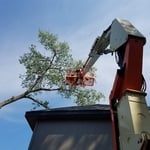
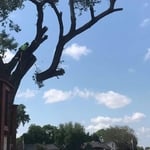
"The services performed went as smooth as expected. Mike was able to trim our biggest tree and remove an entire evergreen that had been exposed to bag worms. The work was quick and efficient and I would highly recommend him to anyone. We will definitely utilize his expertise in the future."
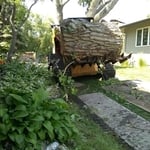
Large Cottonwood Removal

+12

Recommended by100%of homeowners
Arborists questions, answered by experts

In the case that a tree is growing directly on your property line, the cost of maintaining the tree is shared and is the property of both owners in common. In this case, all decisions regarding the maintenance of the tree must be made jointly, and both parties must agree on a course of action. You will need to agree with your neighbor about the cutting of any roots before you carry it out, and your neighbor must also consult with you before doing any trimming. Coming to an agreement with your neighbor about any shared trees ahead of necessary trimming and maintenance will make this process much simpler.

In most ways, palm trees are incredibly low-maintenance. They don’t need a ton of water—which is why they’re so beloved in desert regions—and they basically prune themselves. But they do need an ample supply of sunlight and to be in soil that will allow for proper drainage so that their roots don’t become waterlogged and at risk of developing illnesses.

If the plant begins to wilt, develop spots, or change color, these could all be signs that your palm tree has a disease. But a few basic treatments, like pruning and applying fungicide, will usually be more than enough to return it to perfect health.

Using Epsom salt to kill a tree stump typically takes between six and 12 months. While this may seem like a long time, it is significantly faster than the natural decomposition process, which can take up to seven years. This method is a viable DIY option for stumps that do not pose an immediate hazard. If you need a faster solution, you can hire a professional for stump removal or grinding, though this may cause more damage to the surrounding ground.

On grafted trees, tree suckers will grow from the root stock, not the branches grafted onto it. Therefore, the leaves and characteristics of the suckers aren’t the same as the tree because they are different varieties. Root stock has more hardiness, strength, or drought tolerance than its grafted limbs, so if the suckers are from fruit or flowers, it might be different than the main part of your tree.

Trees that flower in the spring—like dogwood, cherry, magnolia, and pear—should not be pruned during the winter. These spring-flowering plants grow buds on old growth, so you’ll actually remove what would’ve been gorgeous flowering foliage. Instead, wait to prune until right after they bloom, when the flowers fade.

The Hooper, NE homeowners’ guide to arboricultural services

From average costs to expert advice, get all the answers you need to get your job done.