


Top-rated arborists.

Get matched with top arborists in David City, NE

Enter your zip and get matched with up to 5 pros

Need a pro for your arboricultural service project in David City, NE?

Select your specific project to find the pro for you.

Find Arborists in David City

Avatar for M. S. Wiekhorst Arbor Company
M. S. Wiekhorst Arbor Company
5.0(
10
)
Tree RemovalTree Removal - For BusinessTree Stump - Remove+5 more

Serving David City, NE and surrounding areas

Free estimates

Emergency services offered

Warranties offered

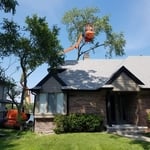
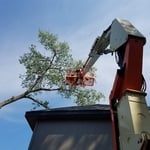
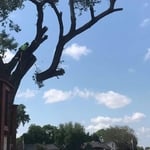
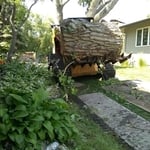
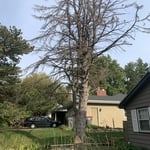
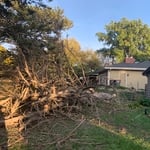
"The services performed went as smooth as expected. Mike was able to trim our biggest tree and remove an entire evergreen that had been exposed to bag worms. The work was quick and efficient and I would highly recommend him to anyone. We will definitely utilize his expertise in the future."
Large Cottonwood Removal

+12

Response time2 days
Response rate100%
Recommended by100%of homeowners
Showing 1-10 of 11
Arborists questions, answered by experts

Completely topping a plum tree is a risky business. Cut too much, and you’ll kill your tree. That said, you do need to trim the top of your tree to encourage bushy growth, maintain your tree’s vase shape, and limit size. 

A plum tree's central leader (or trunk) should never extend more than 3 feet above the highest branch. When you first plant your tree, cut the central leader so it’s 2 to 3 feet tall. As it grows, cut it back 12 to 20 inches until it reaches its desired height. Never prune more than one-third of the new growth.

Some fast-acting products can rot a tree stump in four to six weeks. Keep in mind, these products contain harsh chemicals that may prevent regrowth in the area. Other products, like fertilizer that contains lots of nitrogen, can enhance the process and rot a stump in about a year. (This is compared to the ten years it can take naturally for a stump to rot.)

Pruning trees during the summer can be a bad idea because the new growth will take place during the hottest months of the year, which can stress your tree out. Similarly, pruning during the early fall can be a bad idea, too, because you’d be stimulating new growth when most trees are aiming to go dormant. 

Pruning recommendations will vary by the type of tree, but generally, waiting until winter to prune your trees is a good idea.

The best way to protect tree roots is to avoid the roots entirely by excavating outside the root radius of the tree. For nearby projects, it’s a good idea to construct a temporary retaining wall. But that’s not always possible, depending on the project and the root system. In these cases, consider using alternative equipment like an auger to tunnel under the ground.

Remember, tree roots can damage nearby cement foundations as they grow. If a tree is close enough to interfere with large excavations, it may be better to remove the tree than risk future problems.

If you ever want to see the literal fruits of your labor, you’ll need to prune your peach trees. Without pruning, the trees may not grow or bear fruit since the nutrients will be divided among too many offshoots to provide any with enough energy to produce the peaches. Plus, if parts of the peach tree become diseased or pest-ridden, pruning can nip those problems in the bud.

The David City, NE homeowners’ guide to arboricultural services

From average costs to expert advice, get all the answers you need to get your job done.