










Top-rated arborists.

Get matched with top arborists in North Bend, NE

Enter your zip and get matched with up to 5 pros

Need a pro for your arboricultural service project in North Bend, NE?

Select your specific project to find the pro for you.

TRUSTED BY NORTH BEND, NE HOMEOWNERS

  • Average homeowner rating star icon4.3
    Average homeowner rating
  • Verified reviews icon18
    Verified arboricultural services reviews

Find Arborists in North Bend

Avatar for M. S. Wiekhorst Arbor Company
M. S. Wiekhorst Arbor Company
5.0(
10
)

Serving North Bend, NE and surrounding areas

Free estimates

Emergency services offered

Warranties offered

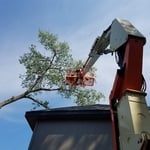
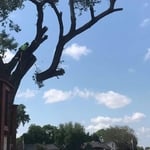
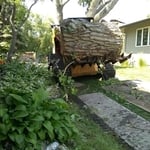
"The services performed went as smooth as expected. Mike was able to trim our biggest tree and remove an entire evergreen that had been exposed to bag worms. The work was quick and efficient and I would highly recommend him to anyone. We will definitely utilize his expertise in the future."
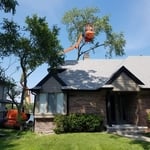
Large Cottonwood Removal

+12

Recommended by100%of homeowners
Arborists questions, answered by experts

Pruning is an effective way to prevent a diseased branch from infecting the rest of the tree. If the infection isn’t caught early enough and the pathogen has spread to the trunk or the majority of the branches though, it is too late to prune off the affected areas and you’ll likely need to remove the tree.

Most tree removals take 3-8 hours, requiring additional time for stump grinding or debris hauling.

For Bradford pears, damage from storms is common, and if the trunk splits, it can pose a danger to people and surrounding structures. The best thing to do in that instance is to have the tree removed. If there’s only minor damage to the branches, pruning away the damaged parts is the first order of business. You may also want to consult a professional arborist to make sure the tree is healthy.

You may be looking to identify maple trees to use for home improvement projects. In that case, you can tell hard maples by looking at their leaves. Leaves will have a U-shaped dip, or sinus, between the points, or lobes, of the leaves. Leaves of soft maples tend to have V-shaped sinuses.

If you already have the cut wood in front of you, look for a light, uniform color to identify hard maple wood and check for variations of red, gray, or brown streaks and an overall darker color in soft maple wood.

Yes, burning wood with Dutch elm disease is a safer way to dispose of it than, say, tossing it in with the rest of your yard waste, which could potentially allow it to spread to healthy trees. But it’s always a good idea to check with your local government to make sure you’re complying with any ordinances about removing diseased trees as well as burning brush piles.

The North Bend, NE homeowners’ guide to arboricultural services

From average costs to expert advice, get all the answers you need to get your job done.