

If you discover a wasp nest near your home, you’ll want to remove it ASAP. Learn wasp nest removal cost factors in this guide.
Let these insects feel the sting of defeat

Getting rid of wasps in your house requires caution because disturbing a nest can trigger multiple stings and serious allergic reactions.
Typical costs range from $100 to $1,300 for professional wasp removal, while DIY wasp traps cost $3 to $30 but need repeated applications.
Wasp traps work by luring wasps inside with sweet liquid where they drown, helping you reduce wasp activity around your home safely.
Hiring a local bug company provides reliable help with nest removal and treatment of common nesting areas to prevent future wasp infestations.
There are many reasons why you should learn how to get rid of wasps. These insects can be dangerous because they’re quick to sting when threatened, and that sting packs a brutal punch. As a matter of fact, wasp stings cause severe injury, possibly even death, to those with severe allergies.
In other words, you don’t want any yellowjackets or hornets to move into your yard or even your home. Fortunately, you can follow these methods to get rid of wasps for good.
Some types of hornets and wasps are more aggressive than others, so call a professional exterminator if you spot a nest in your yard that's bigger than a fist. Don't hesitate to take pest control action to prevent the infestation from growing.

If you notice one or more of the following signs of a wasp infestation, you should consider calling a pest control professional or an exterminator to eliminate them from your home or yard.
Signs of an infestation include:
Visible nests
Increased wasp activity
Buzzing noises
Stinging incidents
Chewed wood or paper around nests
Although there are several different species of wasps, they tend to fall into three categories in the U.S. Here are the most common types of wasps and how to differentiate them.
Hornets: Hornets range in size from ¾ to 2 inches long, which is much larger than other wasps. They vary by species (of which there are 22), but typically hornets are black and white.
Yellow Jackets: If you see a wasp on your property, it’s likely a yellow jacket. This is the most common type of wasp and these pests are not afraid to invade your space or your al fresco dinner. They have yellow and black stripes and are smooth as opposed to more furry bumblebee friends.
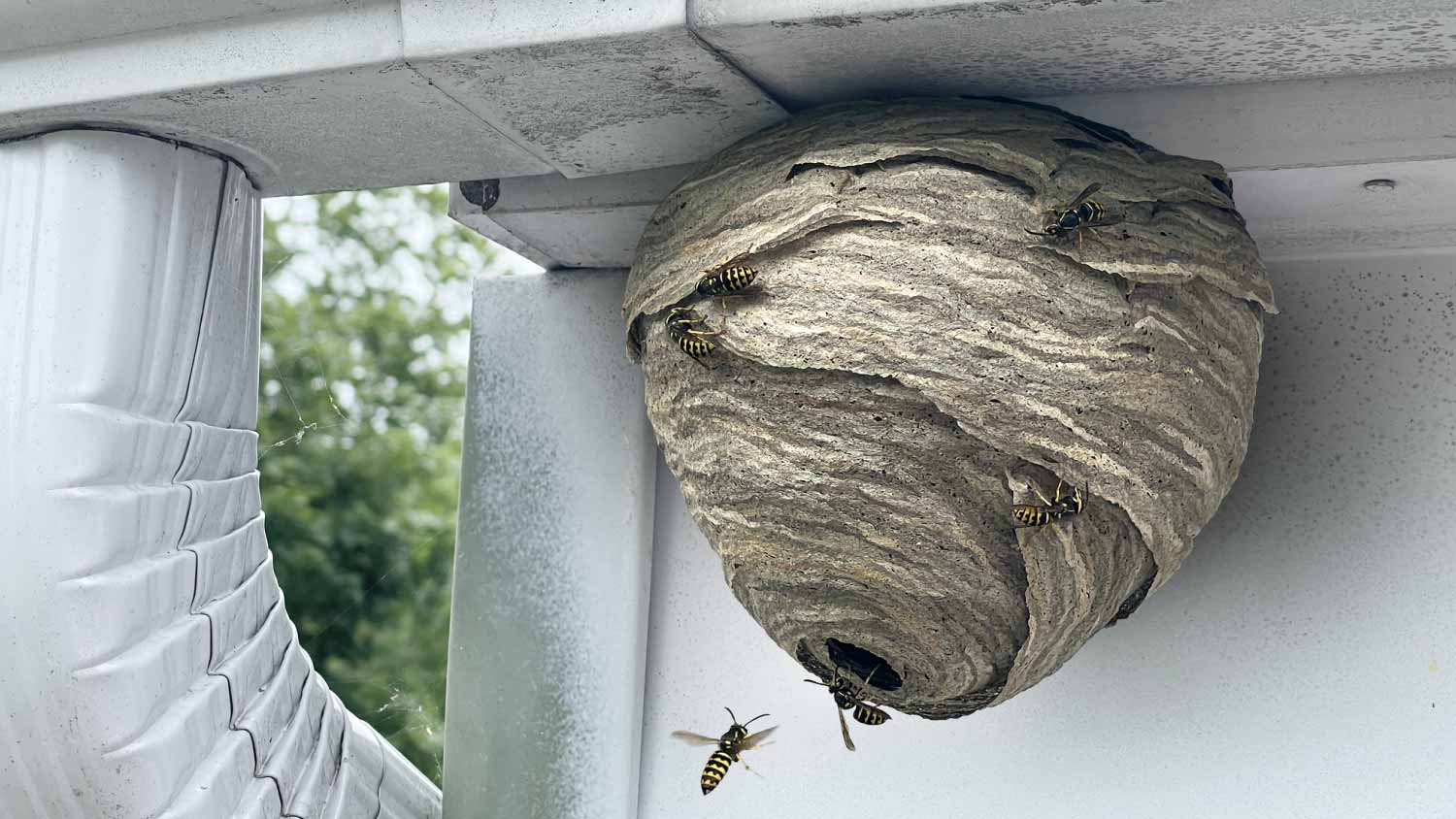
Paper Wasps: There are several different species of paper wasps, which is why we recommend checking out their nest to determine if they’re paper or another type. Paper wasp nests are made out of regurgitated wood pulp, so they resemble paper.
Due to the risks associated with wasps, getting rid of them requires more strategy, planning, and professional help to ensure no one gets stung in the process. If you attempt to get rid of wasps yourself, you’ll need to wear protective gear, such as a face shield, gloves, and even a beekeeper’s suit. Equipment like dust applicators and insecticide sprays may also be necessary if the wasps and their nest are in a hard-to-reach place.
Wasps migrate from yard to yard throughout the fairer seasons, so it is likely dumb luck that a colony picked your property to set down roots (or nests). However, there are some common reasons why wasps are drawn to certain areas, such as:
Shelter from predators and the elements
Food sources
Flowers to pollinate
Wasps are not nearly as picky as their less fearsome cousins (bees) when it comes to pollination, as they enjoy most flowers.
Follow these essential prep steps for safe wasp removal.
Your first step for wasp removal preparation is to gear up. Safety gear is an absolute must when dealing with wasps, as even people who are not allergic to stings face serious health risks if attacked by many insects at once. A single wasp stings several times repeatedly, so encountering a dozen or more is a risky prospect.
Wear these items when working on wasp removal:
A hat that offers as much coverage as possible
Thick work gloves
Thick socks
A face covering, such as a bandana or multiple masks
Glasses or eye protection of some kind
A long-sleeved shirt
Long denim, canvas, or corduroy pants

Now that you are geared up, your next step is to locate the wasp nests. Some nests are out in the open and easy to spot, while others take some sleuthing. Common wasp nest locations include dense bushes, wall voids, attics, under roof eaves, and anywhere else that offers adequate protection from the elements. Wasps are known to build nests nearly anywhere, including outdoor playsets and inside of mailboxes, so search with caution.
It is also helpful to learn what the wasp nests look like, though you can also look for wasps heading in and out of any suspicious areas. Generally speaking, above-ground wasps’ nests are round and made from a paper-like material that resembles mud. Many wasps build nests underground or at ground level, but these are solitary nests housing a single wasp. A single wasp isn’t a huge deal, so focus primarily on above-ground nests.
Read these guidelines closely before attempting to get rid of wasps around your home.
Wasp traps are a budget-friendly way to get rid of wasps, although they aren’t considered a humane method of wasp removal. The traps cost $3 to $30, and include a sweet-smelling liquid, similar to nectar, that will attract the wasps inside. The wasps get stuck inside the trap and drown.
Hang the wasp trap near the wasp nests according to the package instructions. Be careful, as wasps can get territorial and may sting if they feel you are a threat to their nests. You can also make your own version of these traps. To make a DIY wasp trap:
Cut the top of a soda bottle off, about one inch below the neck of the bottle. Put the top to the side.
Pour fruit juice into the base of the bottle, then add a few drops of liquid dish soap.
Remove the lid from the top of the bottle.
Flip the top of the bottle around and sit it inside the base, so the mouth of the bottle is toward the liquid.
Place the trap on a flat surface in proximity to the wasp nest.
Replace the traps at least every 3 to 4 weeks until all the wasps have been trapped and the nest is empty, making it safer to remove.
You can find wasp-targeting insecticides at major retailers or online. These sprays have chemicals that will kill wasps in their nests, but be mindful that they could also kill off other insects, including bees.
Before using a wap-killing spray, make sure to wear protective clothing. You’ll need to keep yourself safe from wasps as well as the spray.
Wait until evening, when the wasps go dormant but the queen and other wasps are in the nest.
Stand within spraying distance of the nest, and prepare to spray at a 45-degree angle.
Spray the nest until it’s fully saturated. Quickly take shelter nearby.
Wait 24 hours.
After 24 hours, watch the nest for signs of activity.
Respray the nests each evening for a few days until it is no longer active.
Once it’s inactive, use a broom or a large stick to carefully knock it down.
You can repel or exterminate wasps with homemade alternatives. Keep in mind that making a homemade spray can be dangerous, especially if the container nozzle doesn’t spray very far. You’ll need to get closer to the nest, which makes the wasps more likely to sting you.
To make a homemade wasp spray:
Combine two tablespoons of liquid dish soap with water in a spray bottle.
Put on your protective clothing and gear before applying to the nest.
In the evening, spray the nest and repeat daily until the next is inactive.
Wasps are territorial and aggressive, meaning they will likely sting you, and can sting multiple times, if you get close to an individual wasp or a wasp nest. By hiring a local exterminator, you’re leaving this dangerous job to someone with extensive knowledge and equipment to efficiently get rid of wasps, and prevent them from returning.
On average, professional wasp removal costs around $375, which is a bargain compared to facing a swarm of angry stingers. A wasp exterminator will ensure the situation is handled quickly and safely, plus you don’t have to put yourself at risk.
Now that your property is free from ornery wasps, take some preventive steps to ensure they never move back in.
Treat future nesting spots with residual liquid insecticides. Spray in the areas that previously housed nests. Repeat this process as indicated by the instructions.
Remove food sources, such as fallen fruit and berries, scraps of discarded meals, and even pet food. Seal outdoor garbage cans and cover up compost piles. Finally, move any hummingbird feeders a reasonable distance from the home. Remember, wasps are not picky and they love both protein and sugar.
Seal up doors, windows, and cracks to prevent wasps from entering the home or a screened-in porch. Use caulk to fill in any gaps, and check your screens to ensure they are in good condition.
Use a variety of herbs to make homemade repellents, and spray them liberally around your yard. Wasps dislike many essential oils, including clove, lemongrass, and peppermint.
Consider changing up the flowers and plants throughout your yard. Many flowers and plants attract wasps but others, such as pennyroyal, marigold, wormwood, mint, basil, and geranium, help keep them at bay.
Give your yard a thorough inspection every month or so, looking for newly-built nests.
Of the above methods of wasp removal, hanging up traps is the safest for average homeowners. All of the other methods put you at some risk of ending up on the receiving end of a pointy stinger.
For absolute safety, a professional wasp removal service or a qualified exterminator is your best bet. These pros handle more wasps in a day than regular people see in a year, and they use that experience to quickly remove individual wasps and populated nests from your property. They will also likely find a few nests you missed during your inspections. Keep in mind that the cost of professional wasp removal will vary from $100 to $1,300, depending on the infestation size, location, and type of wasp.
A reliable team for moves across state. My switch to a new place needed careful lifting through tight hallways. The movers checked the doorway first, then carried heavier pieces with slow, controlled movements. Their patience helped prevent damage, and I?d choose them again.
This company does it right. Firstly, I want to say that Landan was a joy to work with. He was so kind, transparent, and had everything under control. His entire team showed up ready to work and they were all very respectful of the fact that we were in an office space. A little backstory – we...
 Krumlauf Floors
I had FabClean 614 clean my apartment, and she did an outstanding job. She was so professional and efficient. My apartment looks absolutely spotless every surface, every corner, all cleaned to perfection. Definitely highly recommend FabClean 614 if you're looking for top-notch cleaning...
 Fab Clean 614
Raven and crew does absolutely fantastic job. They are very professional if any concerns were to occur with any of her work she always took responsibility and finished out with a great job. I have worked with her business for a year and have always been satisfied. Very trusted business and...
 Creations of Transformation LLC
I would recommend this company to anyone! He showed up on time, was friendly, completed a very difficult repair on our dryer vent cover, was responsive, and pricing was extremely fair and competitive. I would have him back to do any of our repairs or cleanings without hesitation!
 U.S.A. Dryer Vent, LLC
Best cleaning I've had at my property
Ace Fireplace Services' chimney sweep service is truly exceptional. They used advanced technology to ensure a thorough cleaning process, and my chimney has never looked better. I highly recommend their services.
 Ace Fireplace Services
This company went above and beyond with their work, chimney sweeps are usually pretty messy, but the clean up was spot on.!! Josh explained every thing that he was doing, and the things that he was checking to make sure the chimney was safe for me and my family. He was very professional,...
 Supreme brick & chimney
Good workers and they do a good job.
 Mira Construction
Mary Cleaning Service is fantastic! The entire team is professional and pay a great deal of attention to detail. They do such a thorough job of cleaning my house. I would definitely recommend!
From average costs to expert advice, get all the answers you need to get your job done.
If you discover a wasp nest near your home, you’ll want to remove it ASAP. Learn wasp nest removal cost factors in this guide.
Knowing who to call to remove a wasp nest can keep you and your loved ones safe from harmful stings. This guide outlines who to hire.

Paper wasps can be aggressively defensive with painful stings. Learn how to get rid of paper wasps and their nests in your home or yard safely.
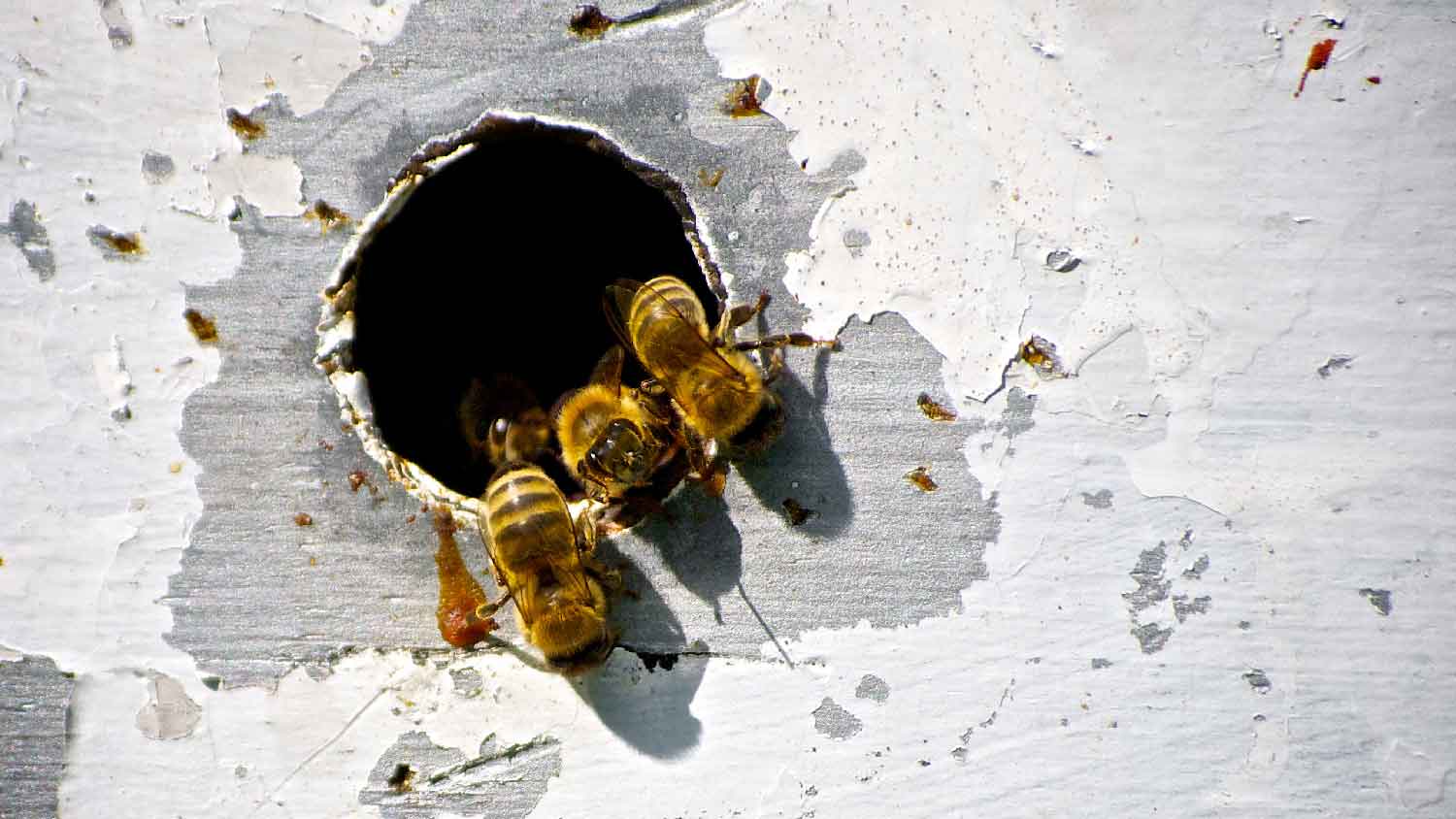
Bees with a hive in your wall cavity present a host of problems: Our guide will show you the best ways to remove them safely, especially if you want to save the bees.
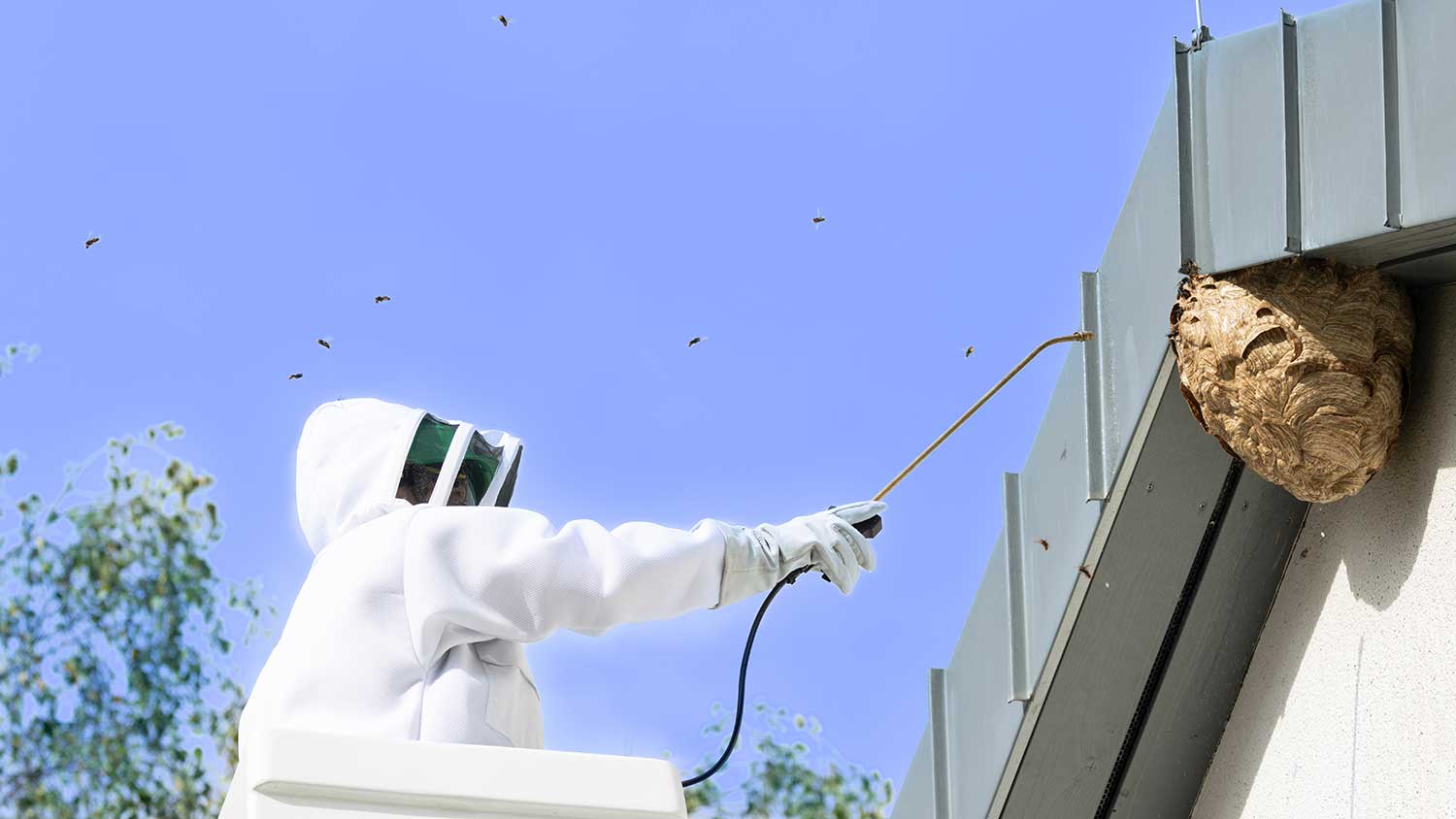
Wondering who to call to get rid of a hornet’s nest? It’s best to reach out to a specialist. Learn more about who to hire with our handy hiring guide.
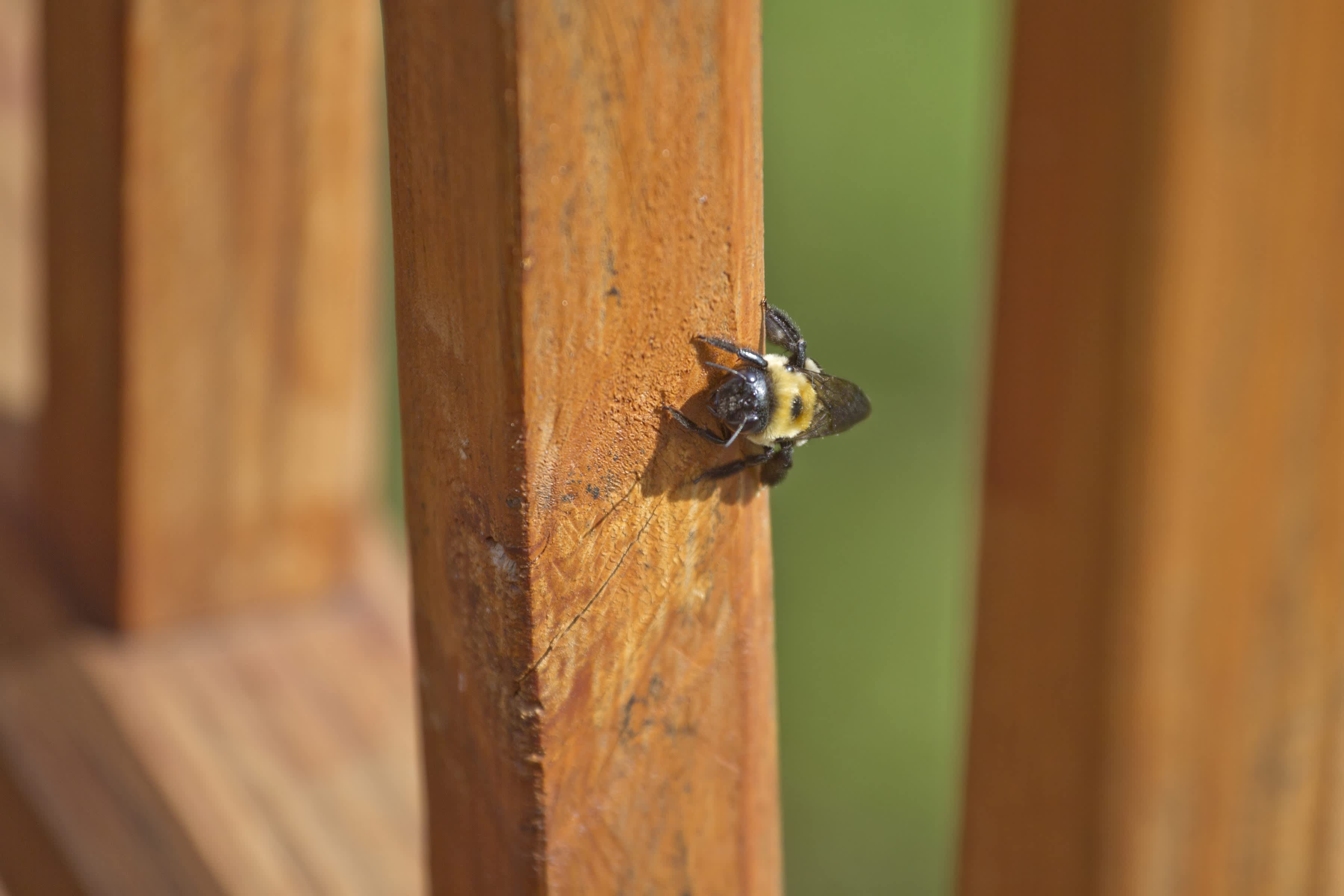
Learning how to get rid of carpenter bees naturally is important for the environment, ecosystem, and the structure of your home. Use this guide for easy DIY tips.