

Discover the average tree maintenance cost, key price factors, and tips to save. Get expert insights to plan your tree care budget with confidence.
Pick the right stately specimen to score points on your street

The right tree for your front yard depends on your space, climate, and soil conditions, so consider compact options like crabapples or Japanese maples for smaller yards.
Strategically planting large shade trees like southern magnolias or red maples helps reduce your home cooling bills while adding year-round visual appeal to your landscape.
Your front yard tree needs proper placement to avoid foundation damage, power line interference, or invasive root systems that can crack driveways and patios over time.
Hiring a local arborist professional provides expert guidance on tree selection and placement, helping you choose species that thrive in your landscape without causing future problems.
First impressions matter when it comes to a home, and nothing makes a bigger initial impact than a tidy front yard. A well-placed tree can add value to your property and has many other benefits. Healthy, mature trees connect you with your outside space, support the environment and surrounding wildlife, and can even help you make energy savings.
Whether you’re looking to add year-round interest, delight with spring blooms, or dazzle with fall foliage, choosing the right tree for your space and climate is important. Hiring a certified arborist for a consultation can be a worthwhile investment, as they can advise on whether a tree you have in mind will do well in your landscape—the last thing you want is a weak, disease-ridden, messy specimen.
If you’re looking for inspiration and want to keep up good neighborly relations, these versatile trees all add great curb appeal.
USDA Hardiness Zones: 4 to 8
Want to attract wildlife to your yard? Look no further than one of the many compact, deciduous crabapple species. These are showy, fragrant spring-blooming trees that pollinators love, and their small, tangy fruit is perfect for making tasty jelly in the fall.
Depending on your yard conditions and climate, there are hundreds of versatile crabapple varieties to choose from. Malus ‘Adirondack’ is an award-winning, disease-resistant cultivar for a full sun position. Its upright, columnar form (it rarely grows taller than 18 feet) makes it a good choice for narrow front yards.

USDA Hardiness Zones: 5 to 8
Dogwoods are shapely flowering shrubs or trees popular in home landscaping for good reasons. The kousa dogwood (Cornus kousa) is a disease-resistant, slow and low-growing species (maximum height of 30 feet). It’s ideal for use as a beautiful specimen plant under front yard power lines, and you won’t have to worry about the tree roots interfering with home foundations because they are shallow and non-invasive. These trees do well in shade, have attractive summer blooms, dramatic fall foliage, and edible berries that wildlife love. And the peeling bark on the mature trees provides winter interest.
USDA Hardiness Zones: 2 to 9
The evergreen eastern red cedar (Juniperus virginiana) might not be as ornamentally attractive as some of the other trees on this list. Still, this juniper species is an excellent choice if you need something low-maintenance, hardy, and adaptable. Adding year-round greenery and texture, the dense, aromatic foliage makes for an excellent windbreak or privacy screen, and its high salt tolerance means it works well in coastal front yards.
Be aware, however, that this fast-growing native species can reach heights of 50 feet and is invasive in some US regions.
USDA Hardiness Zones: 5 to 8
This compact, graceful, deciduous tree is ideal for smaller front yards (growing up to 20 feet tall) and will undoubtedly be a talking point with your neighbors. The large, late summer blooming fragrant white flowers of the Franklin tree (Franklinia alatamaha) and colorful fall foliage make it stand out.
By planting one of these trees, you’ll be helping to conserve a historical, native species now extinct in the wild. Just be aware that it's the most challenging to grow of all the trees on this list. They’re particular about moisture levels, environmental stresses, and need nutrient-rich, acidic soil.
USDA Hardiness Zones: 3 to 9
Other spring-flowering species often overshadow the fringe tree (Chionanthus virginicus). It’s surprising given it’s an easy-to-grow, adaptable, pretty, and compact eastern North American native. The wispy white flowers put on an impressive show throughout May and June, and birds love the fall fruit. They do well in wet soils, so it’s a good match for front yards that don’t have great drainage.
USDA Hardiness Zones: 3 to 9
You won’t find a hardier deciduous species than the common hackberry (Celtis occidentalis). This large, energy-conserving shade tree can handle strong winds, urban pollution, heat, flooding, and drought. It’s a good choice if you’re looking to conserve water, but still want a medium-large specimen tree with an arching habit in your yard.
If you want to develop an impressive garden ecosystem, the hackberry is attractive to various wild birds and butterflies. Plus, the warty, corky bark adds interest to your landscape throughout the year.

USDA Hardiness Zones: 5 to 8
It’s all about the fall foliage when it comes to the many Japanese Maple (Acer palmatum) cultivars. And these compact, slow-growing, versatile, and striking trees can grow in even the smallest of front yards.
Their architectural form means they offer a great focal point in your landscape. And, because they grow easily in containers, these trees are ideal even if you only have a small porch. An added advantage is that they’re more shade-tolerant than many other deciduous species.
USDA Hardiness Zones: 6 to 10
With their showy, fragrant blooms and glossy, deep green foliage, magnolias are synonymous with the South, and none more so than the aptly named southern magnolia (Magnolia grandiflora). These aristocratic evergreen shade trees grow up to 50 feet tall (although there are dwarf varieties that work in smaller yards). And strategically planting large shade trees like this can help to reduce your energy costs.
You can grow southern magnolia in most soil types, and there aren’t many pests that bother it. However, with their large surface roots, they aren’t ideal for planting too close to concrete patios or driveways.
USDA Hardiness Zones: 3 to 9
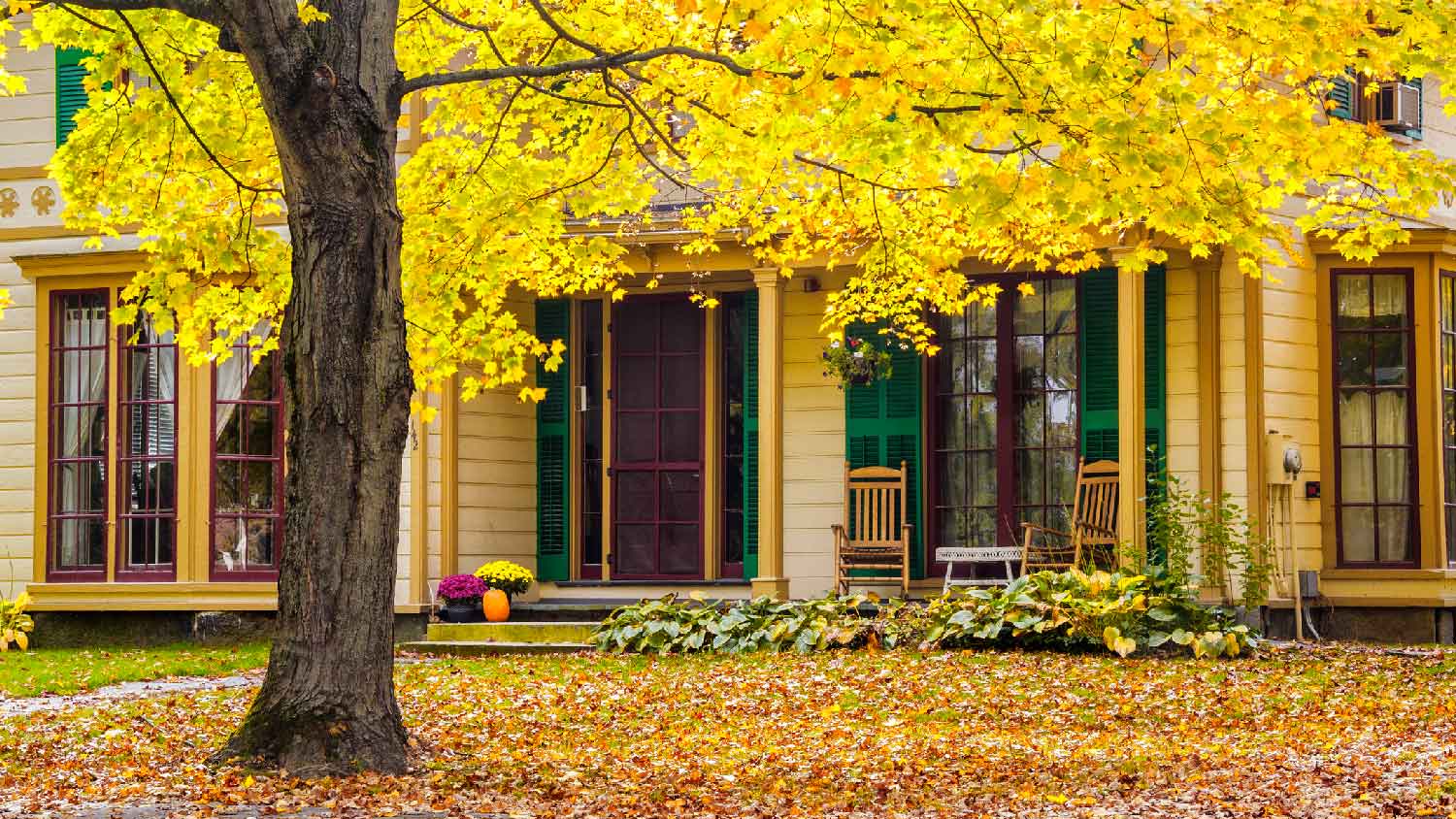
The deep and varied colors of the fall foliage on the red maple (Acer rubrum) are sure to stop any passerby in their tracks. Adaptable to many environments and climates, these large, native shade trees make for great specimens in a spacious front yard where you want to try to cut costs on your home cooling bills—they can grow to 70 feet tall. And, unlike many other shade trees, it isn’t messy and is tolerant of fairly wet soils.
USDA Hardiness Zones: 4 to 9
If you’re looking for a tree to add winter interest in your front yard, the deciduous river birch (Betula nigra), with its cinnamon-colored, curling bark, is a good option. Resistant to the bronze birch borer, happy in wet soils, and more heat tolerant than some other birch species, the river birch has a lot going for it. You can grow this adaptable, fast-growing species in almost any region of the US—you just need space, as it can reach heights of over 70 feet.
Custom Paint Jobs LLC made our home feel like a piece of art. Thank you for your creativity!
 Custom Paint Jobs, LLC
Window Depot did an amazing job on my deck. I wasnt sure what I wanted to do, but their composite decking was affordable and will last a long time. I am excited to have family over, and I am no longer embarrassed by my backyard. Jeff and the ground crew were polite, respectful, and caring for...
 Window Depot USA of Central Ohio
First of all, the gentleman I dealt with (Cam?) was very responsive to my many questions and concerns throughout the project, which is a huge plus to me. From the first time I met him for the estimate all the way til the completion of the job, he and his crew were professional and respectful....
 All Star Paving and Sealing
We had a 20+ year old landscape lighting system that needed replacement. Midwest Lightscapes worked with us to design a much improved lighting system, lighting the exterior of the house and the back yard. Installation of the 45 light system took one and one-half days, and went very smoothly....
 Midwest Lightscapes
Another great success for me on home advisor. This company did an awesome job on my landscaping and stayed within my budget. The best part, the work was complete within 2 days of my initial request. Professional and responsive. I highly recommend!
 Blue Ring Residential Services, LLC
The company no showed on me twice. The 2nd time was no call no show. They were responsive to set up the first appointment to perform the "landscape cleanup". 3 hours after their initial scheduled appointment time they called me to let me know they had some "problem" with the truck and their...
 Ruby Home and Hauling Services
Received ideas for future landscape plans...quote to do the work seemed a bit high but I did not have any other quotes to compare it to, so perhaps that is the going rates. <br />
 Landscapes By Terra, Inc
All around they have done a really great job. <br /> I have used JL Landscapes for the past 8 years. I own and operate my own commercial/residential real estate company where we own, operate, and maintain our own properties. JL Landscapes has been our exclusive landscaper for both our...
 J.L. Landscapes
Bought a half a cord of firewood from Pitzer with stacking last month. I waited to report so I could see how the wood burned. <br /> <br /> I have three pet peeves regarding landscapers, but Pitzer scored "A"s regarding all three. First, rather than having customers "leave a message" and...
 Pitzer Landscaping
I left a message on Sunday requesting to schedule a time to obtain an estimate/walk-through and received a return call in the morning of the following Monday. Mark worked with me and agreed to schedule the estimate/walk-through for the following Saturday. When Mark arrived for the...
From average costs to expert advice, get all the answers you need to get your job done.
Discover the average tree maintenance cost, key price factors, and tips to save. Get expert insights to plan your tree care budget with confidence.

Tree felling requires strategic cuts to make the tree land accurately. Check out the types of tree felling cuts and notches used for various conditions.
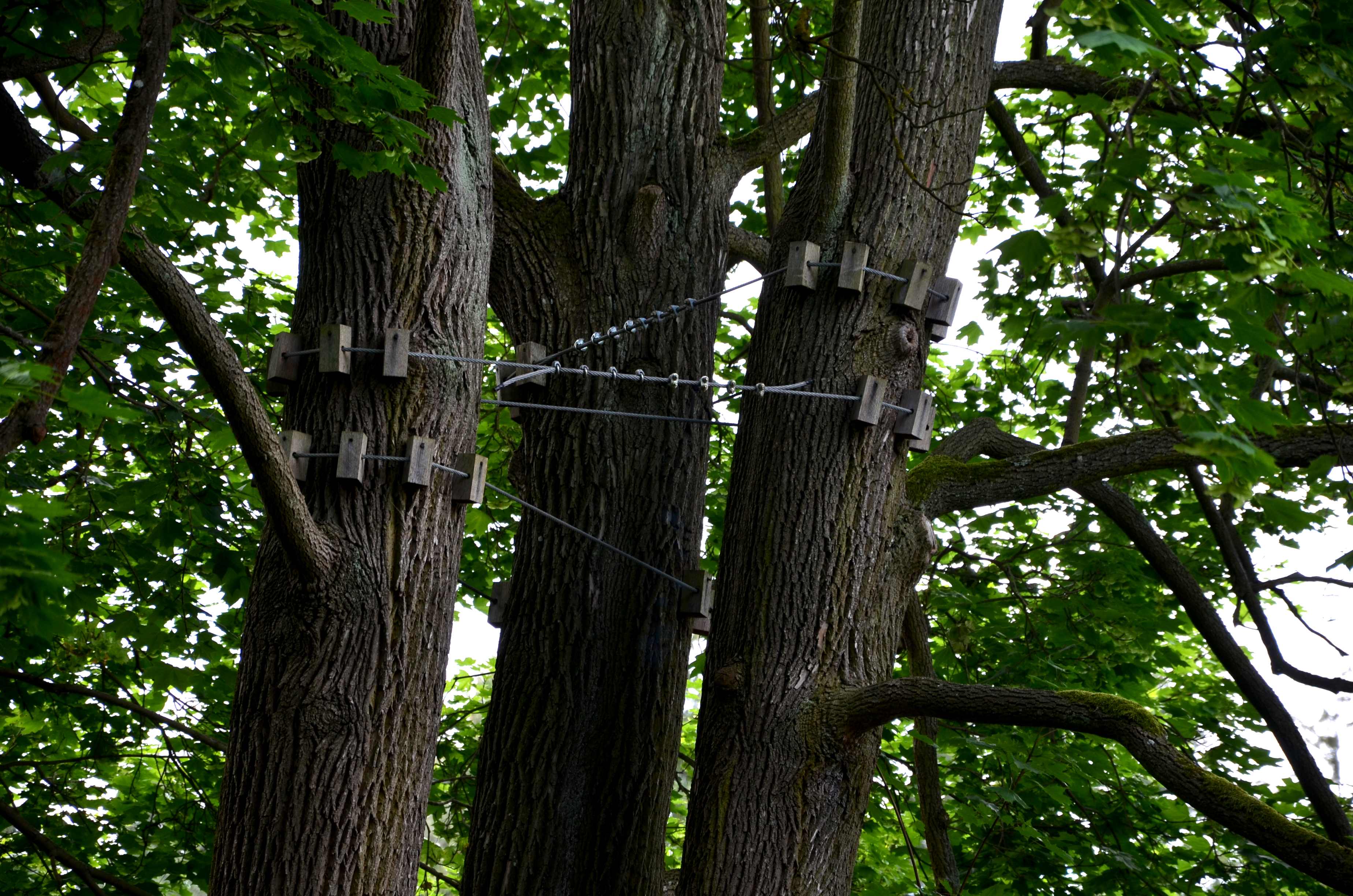
Cabling and bracing trees may help to increase longevity and prevent limbs from falling when trees are showing certain signs of distress.
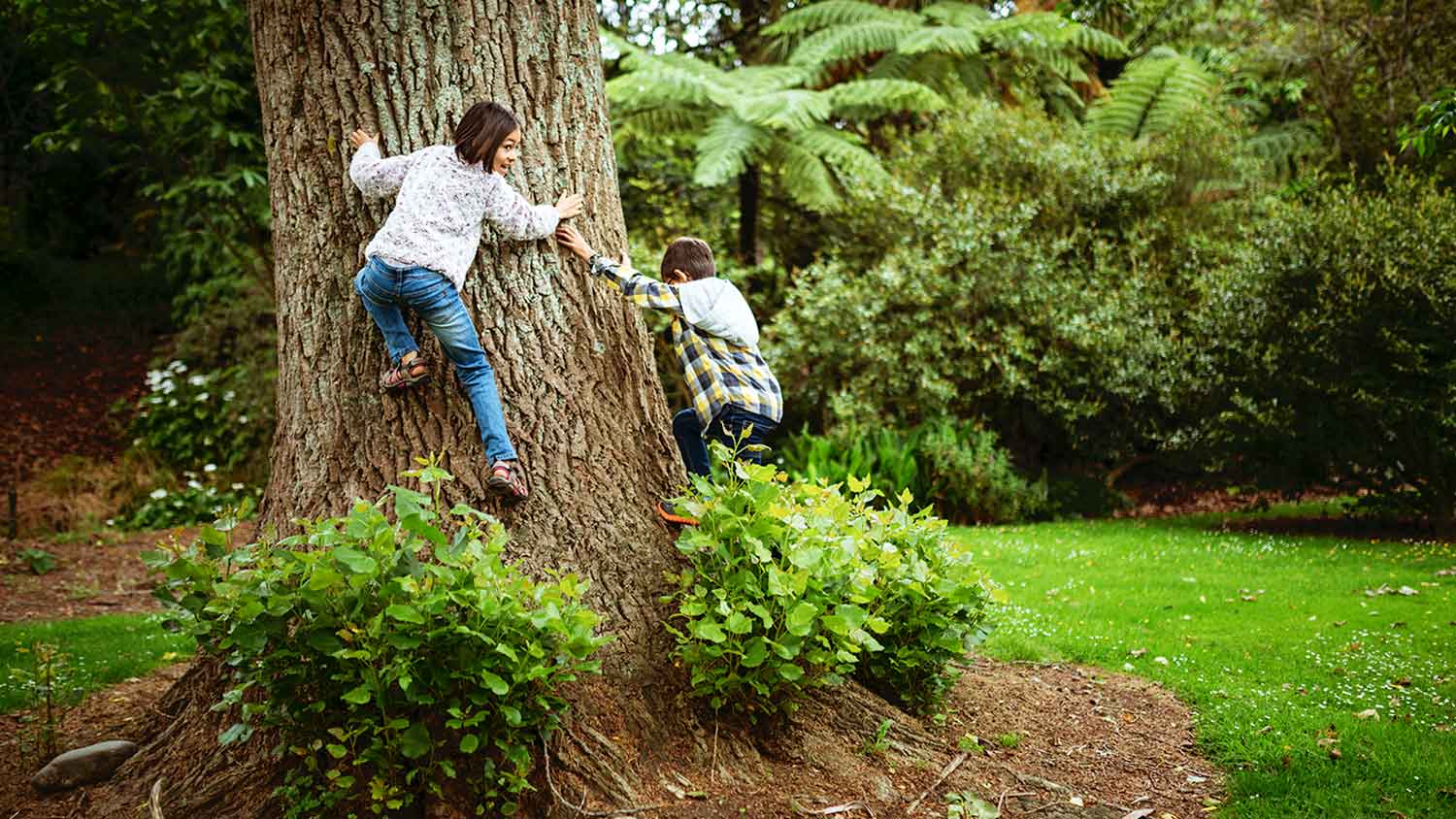
If your backyard is filled with unfamiliar blooms, this guide will show you how to identify trees based on their leaves, bark, silhouette, and more.
What should you do after a tree hits your house? Here's what you need to know to be safe when tree damage strikes.
Learn the benefits of pruning your trees and caring for them every spring, and why this process differs from harmful tree topping.