

The cost of a new AC unit depends on the size and type. Our guide breaks down AC replacement cost factors so you can decide which option matches your budget.
Knowing this HVAC term will make a ton of sense

Your AC ton rating measures how much heat your air conditioner removes per hour, with one ton equal to 12,000 BTU of cooling capacity.
A 2-ton AC unit costs around $2,250, while a 5-ton unit runs about $5,500, so proper sizing helps you avoid overpaying for unnecessary capacity.
Your home's square footage, insulation quality, ductwork condition, and climate zone all affect the tonnage you need to keep your space comfortable year-round.
Hiring a local air conditioner installing professional ensures your system matches your home's cooling needs and prevents costly oversizing or undersizing issues.
If you’ve ever needed repair work on your AC unit, you may have heard your HVAC technician throw out the phrase “AC tonnage,” only to nod your head in confusion. But understanding how AC tonnage relates to your AC unit can make all the difference in its ability to keep your home comfortable. This guide will help you understand AC tonnage so that you choose the right HVAC system for your home.
A ton in the heating and cooling field refers to an HVAC system’s ability to cool a space by removing heat. Your AC’s tonnage depends on how many British Thermal Units (BTU) your unit absorbs and removes per hour. BTU is a heat measurement based on the amount of heat needed to increase a pound of water’s temperature by 1 degree Fahrenheit.
Calculation based on the average square footage of a home, which is 2,273 square feet. Calculations rounded to the nearest whole number.
| Input Measurement | Result |
|---|---|
| Home region | Climate zone 3 |
| HVAC system type | Cooling and heating |
| Home square footage | 2,273 square feet |
| Recommended HVAC tonnage | 4 tons |

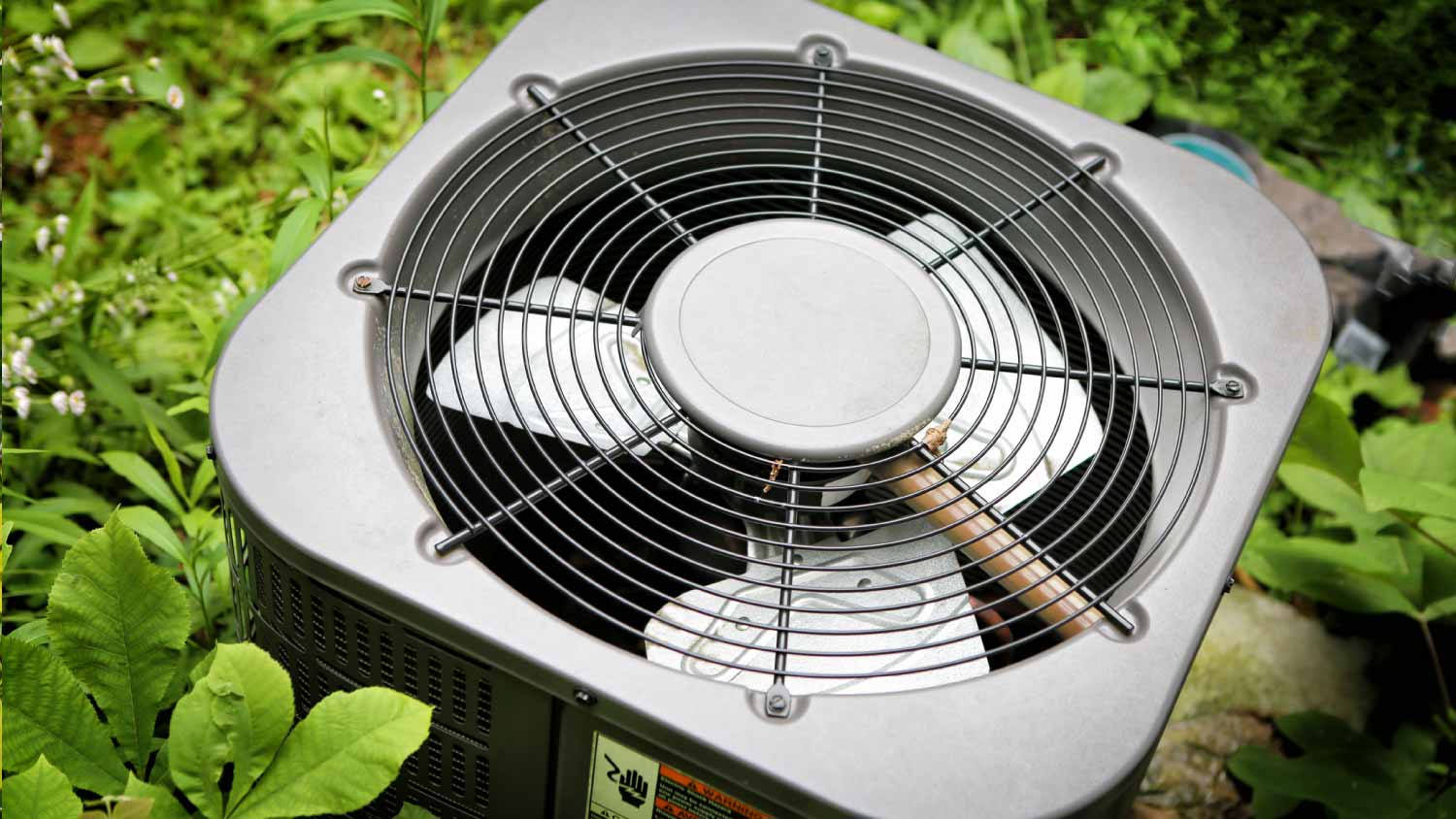
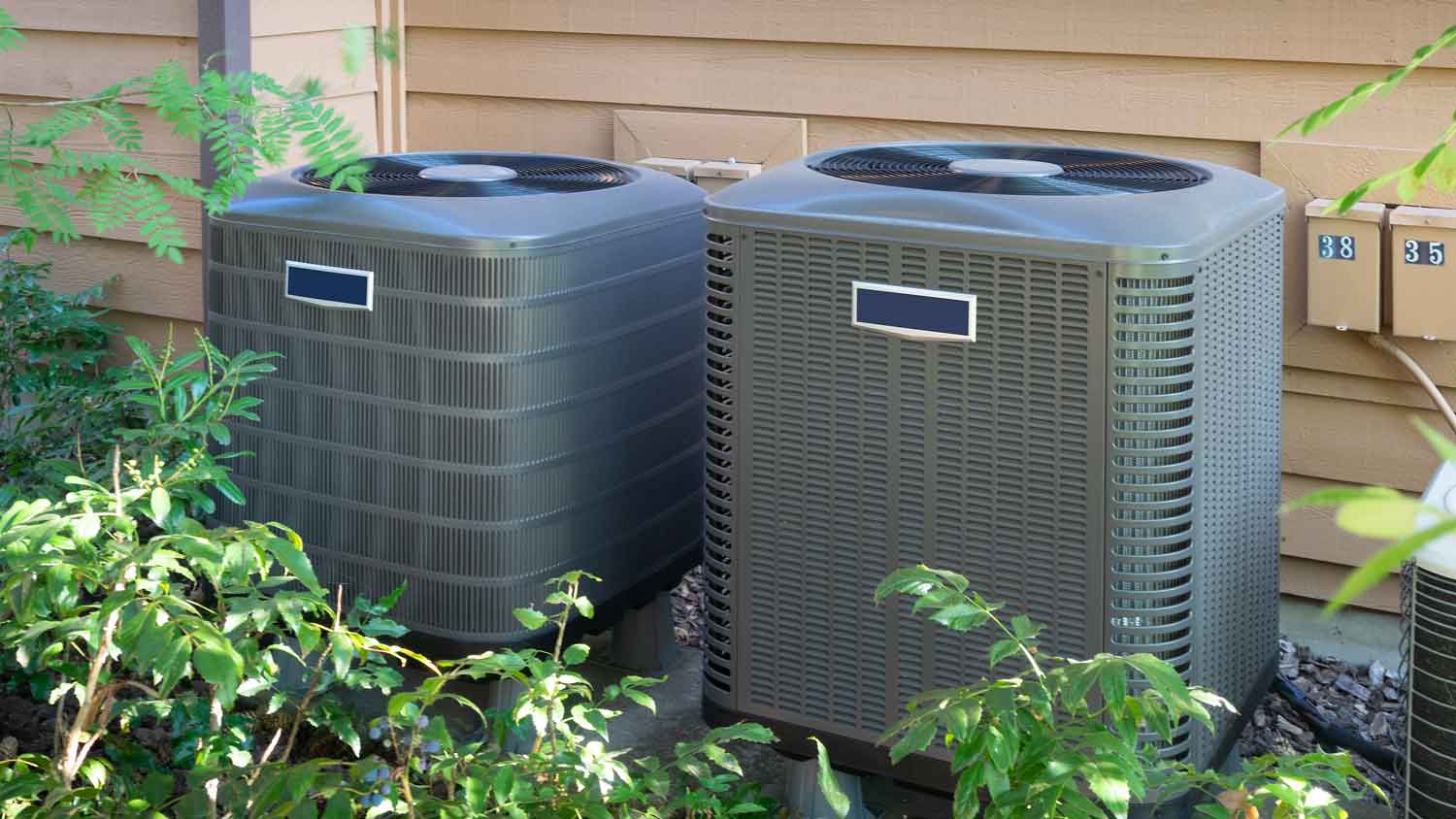
If you want to know how much AC tonnage your current unit has, check the label on your outdoor condenser unit. Depending on your manufacturer, they might list the exact tonnage, but you’ll usually only find the BTU information, which you can use to find your tonnage.
Here’s how you can find the tonnage information for most HVAC units:
Step 1: Locate your outdoor condenser unit.
Step 2: Find the product information label, usually located on the back of the unit.
Step 3: Look for the model number.
Step 4: Search for an even number between 18 and 60 within the model number sequence.
Step 5: Divide the even number by 12 (which represents 12,000 BTU per hr, or 1 ton of cooling capacity) to get your AC unit’s tonnage.
These numbers represent the BTU of your system; e.g., 18 means 18,000 BTU. Here are some examples of AC tonnage levels your HVAC may have:
18 = 1.5 tons
24 = 2 tons
30 = 2.5 tons
Determining how much AC tonnage you need is key to getting the most out of your AC unit, but doing so isn’t necessarily as straightforward as you may think. Calculating the proper tonnage estimate requires you to consider a variety of factors, including:
The square footage of your house
Your home’s layout
The type of insulation and ventilation in the house
Your home’s ductwork
The current energy efficiency of your home
Your climate zone
A 1-ton HVAC system removes 12,000 British Thermal Units (BTU) of heat—or approximately 3,500 W of electricity—every hour. Most AC units range from 1 to 5 and a half tons, but how much AC tonnage your AC unit needs depends greatly on the area of your home. Roughly speaking, 1 square foot of space equals 20 BTU.
Below is a chart for reference.
| Area in Square Feet | BTU | AC Tonnage |
|---|---|---|
| 600 sq ft | 12,000 BTU | 1 ton |
| 900 sq ft | 18,000 BTU | 1.5 tons |
| 1,200 sq ft | 24,000 BTU | 2 tons |
| 1,500 sq ft | 30,000 BTU | 2.5 tons |
| 1,800 sq ft | 36,000 BTU | 3 tons |
| 2,100 sq ft | 42,000 BTU | 3.5 tons |
| 2,400 sq ft | 48,000 BTU | 4 tons |
| 2,700 sq ft | 54,000 BTU | 4.5 tons |
| 3,000 sq ft | 60,000 BTU | 5 tons |
| 3,300 sq ft | 66,000 BTU | 5.5 tons |
While basing your AC tonnage on the number of square feet in your home may be a quick way to come to a conclusion, your home’s layout also plays a role. The number of stories your home has and your ceiling height are two large factors to consider. Both a two-story home and a home with a high vaulted ceiling will hold onto heat in the upper level due to the stack effect.
A home with solid insulation and a good ventilation system throughout it will help prevent heat from entering the home, counteracting the stack effect. This feature means your AC unit won’t need to work as hard to keep the home’s interior cool. However, if your home lacks insulation, has leaks, or needs to have its insulation replaced, you might need to account for its inability to hold onto cool air by opting for an AC unit with more tonnage.
If you have a ducted AC unit, choosing the right-sized ducts can affect your unit’s efficiency and the AC tonnage it needs. Ducts distribute air throughout your home, so if you have too small ducts, the air won’t cool your home fast enough, causing your AC unit to stay on longer than needed.
For homes with poor energy efficiency, you might need to multiply your square footage by 25 BTU to account for energy loss. Consider having an energy audit to crack down on the window, door, and foundational leaks that could be causing your home’s AC unit to work harder than it should.

Both your climate zone and the microclimate in your yard play roles in the AC tonnage you’ll need to keep your home comfortable. For example, your relative who lives in a cooler region can get by with less AC tonnage than someone who lives in a hot region. Likewise, your neighbor’s home might have lots of shade coverage and can get by with a smaller unit, but if your home doesn’t have any trees, you might need a unit with a higher capacity.
The system's capacity must be quite close to the load demand, or your unit could struggle to cool your house efficiently. Too little AC tonnage can cause a unit to struggle to cool your home properly, make the inside of your home uncomfortable, shorten your unit’s life span, and increase your energy bills. On the other side, too much tonnage not only costs more upfront but can also cost more in HVAC maintenance.
A home with too little AC tonnage can lead to excessively dry air that makes for an uncomfortable time indoors, while a home with too much AC tonnage can cause the air in your house to feel thick and stuffy. This issue can prevent the system from removing enough humidity, making a damp home susceptible to mold.
An undersized unit will constantly run, which can shorten the equipment's life span since it runs so much of the time. However, an oversized unit will tend to short-cycle, meaning the unit turns on and off before adequately or evenly cooling your home. An oversized system that short-cycles will cause your unit to work harder than intended to keep you cool. In some cases, it can also cause high levels of humidity and mold growth in your home, leading to expensive AC repairs or frequent AC servicing.
While some home appliances such as microwaves and refrigerators are worth the extra cost, bigger is not better for your HVAC system. A 2-ton AC unit costs approximately $2,250, while a 5-ton AC unit costs around $5,500 on average, so choosing an oversized unit could mean the difference between thousands of dollars.
As mentioned above, an oversized AC unit can do more harm than good, but you could also overpay for an undersized unit that kicks the bucket prematurely from overuse. If you’re unsure of the right-sized AC tonnage you need for your home, speak with an HVAC contractor near you to avoid turning your AC investment unit into a money pit.
Sara Coleman contributed to this article.
If you’re good people wanting to do business with good people, hire Matt. He is a consummate professional and utterly competent. He installed a water heater in my home at a price that beat competitors by hundreds of dollars with a promise to support the unit for its life (even after its 6 yr...
 Greene's Plumbing Services
Corey Carr was great. I had damage from a recent storm and needed to have my mast and other components replaced. The project entailed coordinating with AEP, and Corey helped make a stressful situation a lot less stressful. I really appreciated his dedication to service and the job very well done.
 Mr. Electric of Columbus
This service was great. My air conditioner went out during the heat spell that we had. My husband has health issues and they came out that night and at 9:30pm the air conditioner was fixed and running. We are sooo very thankful, this is the company I will be using from now on and would...
 Mr. Mechanical Ohio
I normally do not leave reviews, but my experience with Worthington Air was extremely frustrating and disappointing. About 30 days ago, I had a consultation done for an HVAC replacement and was quoted approximately $15,079. Based on that quote, I applied for financing through their company...
 ARS Columbus Worthington Air
Great company! Price was competitive, technician showed up on time and completed the job (exterior electric Radon fan replacement) quickly. Would hire them again.
 MaGen Property Inspections and Radon Mitigation
Raven and crew does absolutely fantastic job. They are very professional if any concerns were to occur with any of her work she always took responsibility and finished out with a great job. I have worked with her business for a year and have always been satisfied. Very trusted business and...
 Creations of Transformation LLC
I would recommend this company to anyone! He showed up on time, was friendly, completed a very difficult repair on our dryer vent cover, was responsive, and pricing was extremely fair and competitive. I would have him back to do any of our repairs or cleanings without hesitation!
 U.S.A. Dryer Vent, LLC
Ace Fireplace Services' chimney sweep service is truly exceptional. They used advanced technology to ensure a thorough cleaning process, and my chimney has never looked better. I highly recommend their services.
 Ace Fireplace Services
The technician was very professional and friendly. He answered all my questions and was very thorough. He left the fireplace area very clean . He inspected from the roof and advised me as to other work that might need to be done. There was no pressure there. I was very satisfied with the...
 Supreme brick & chimney
On time, clean and finished fast. Windows seem sturdy and the finish is good. Caulking was done with no smudges. Would recommend.
 Window Depot USA of Central Ohio
From average costs to expert advice, get all the answers you need to get your job done.
The cost of a new AC unit depends on the size and type. Our guide breaks down AC replacement cost factors so you can decide which option matches your budget.
If you’re having problems with your air conditioner’s condenser, it may be time for an upgrade. Learn about the cost to replace an AC condenser in this guide.

If your air conditioning unit isn’t functioning properly, you might need an AC recharge. Our guide will detail what a typical AC recharge cost looks like.

Wondering 'what tonnage of AC do I need?' Read our guide to learn about AC tonnage, finding the right tonnage for your home's cooling system, calculating the square footage of your home, and who to hire to calculate AC tonnage for you.
Wondering how long AC units last? Check out this helpful guide with common signs it’s time to replace your AC unit.

Air conditioners have a really important job, which is why it’s upsetting when they stop working. Check out 12 air conditioner troubleshooting tips here.