


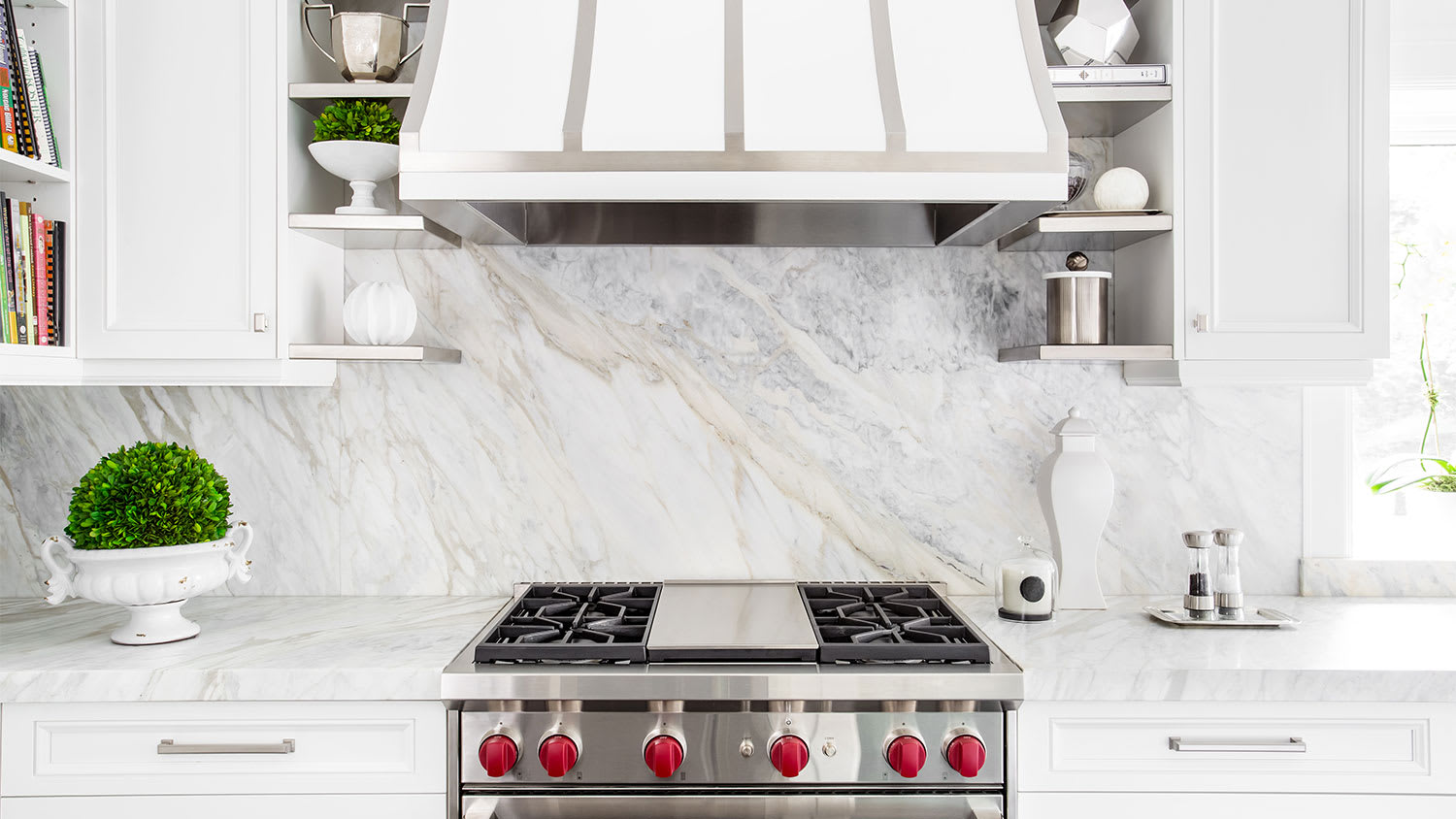
Marble backsplashes are beautiful and costly additions to your kitchen. Our guide lays out marble options and the labor required to install it.
Kitchen and bathroom remodel costs depend on your project and location. Check with a local pro for your specific job.


Professional backsplash installation for your kitchen or bathroom costs $480 to $1,500 on average.
Your material choice affects the total, with ceramic and tin costing less while marble and natural stone require more precision and time.
Budget for removing your old backsplash at $3 to $6 per square foot and replacing any damaged drywall or backer board underneath.
Hiring a local backsplash installation professional ensures precise cuts around outlets and windows and delivers a polished finish.
In 2026, the national average cost for a backsplash installation is $1,000, based on 35 square feet of backsplash. Most projects fall between $480 and $1,500, with costs driven by your material choice, the size of the area, and local labor rates. You could pay as little as $300 for affordable materials like brick or as much as $4,500 for high-end options like marble, with most backsplash projects running $15 to $40 per square foot.
Backsplash installation costs an average of $15 to $40 per square foot, with the material you choose being the primary factor in where your project lands within that range. Expect to pay toward the higher end when a pro needs to cut tiles around outlets, switches, windows, or other irregular shapes. Here’s a breakdown of average backsplash installation costs by square footage:
| Square Feet | Average Installation Cost (Including Labor) in 2026 | Installation Cost Range (Including Labor) in 2026 |
|---|---|---|
| 15 | $420 | $225–$600 |
| 20 | $560 | $280–$800 |
| 25 | $700 | $350–$1,000 |
| 30 | $840 | $450–$1,200 |
| 40 | $1,120 | $600–$1,600 |
| 50 | $1,400 | $750–$2,000 |

Your material choice is one of the biggest factors in your total backsplash installation cost, with per-square-foot prices ranging from $10 for basic tin or brick up to $150 for high-end marble. Budget-friendly options like ceramic and porcelain sit in the middle of that range, while natural stone and glass tend to cost more. Labor costs also shift with your material selection, since cutting marble requires more time and precision than working with tin or wooden beadboard.
The table below breaks down how common backsplash materials compare on cost:
| Backsplash Material | Average Price per Square Foot (Including Labor) in 2026 |
|---|---|
| Beadboard | $18–$26 |
| Brick | $10–$40 |
| Ceramic | $12–$32 |
| Glass | $18–$42 |
| Granite | $20–$46 |
| Marble | $30–$150 |
| Natural stone | $20–$68 |
| Porcelain | $14–$28 |
| Slate | $18–$42 |
| Stainless steel | $25–$75 |
| Tin | $10–$30 |
| Travertine | $16–$25 |
Don’t forget to consider which type of backsplash material and texture will be easiest to clean. The simplest materials to clean are tile, glass, stainless steel, and ceramic.
Labor for backsplash installation ranges from $5 to $20 per square foot, though your material choice is the most significant overall cost factor. Simpler rectangular sections with few outlets, windows, or cabinets to cut around will keep labor costs toward the lower end. Complex designs or intricate patterns like herringbone push labor rates higher, with pros charging around $100 per hour compared to $40 to $60 per hour for straightforward work. Here is how labor rates break down by pricing method:
Per square foot: $5–$20
Hourly: $50–$100
Hiring a local backsplash installation company is your best option for two reasons. First, you'll get a professional appearance in one of your home's more frequented rooms. Second, a pro can help you decide which material best suits your budget, lifestyle, and decor.
There are other minor cost factors you might need to consider to get the most accurate price possible for your backsplash project.
Intricate layouts like mosaics or herringbone patterns cost more to install, with contractors charging around $100 per hour or up to $500 per day. Beyond the pattern itself, your pro will factor in the number of obstructions on the wall, including outlets, switches, cabinets, and windows. Each cutout requires precise work and adds time to the job, directly increasing your labor costs.
You have three options for the material your professional installs on your backsplash:
Individual tiles: This option takes the longest to install because your pro has to set each tile. However, they allow for total customization, so your backsplash ideas and imagination are the only limitations.
Slabs: Like marble or granite, slabs are precut to cover your entire backsplash. Precise measurements are needed for cutting before delivery. However, the labor is less costly since the entire backsplash goes up in a single piece, but the higher material cost means you’ll spend more overall.
Tile sheets: These are prearranged tiles on a mesh backing that allows your pro to install an entire square foot of individual tiles at once. This cuts down on labor costs when working with small tiles. The only downside is that you’re limited to the available designs and patterns.
Where you install a backsplash affects the overall cost, with kitchen projects typically running higher than bathroom ones because kitchen countertops cover more linear footage. Bathroom backsplashes require cement backer board to handle moisture and humidity, and backer board is more expensive than drywall, which raises the per-square-foot cost in bathrooms. Even so, the greater total area of a kitchen backsplash means replacing one in the kitchen usually costs more overall.
Professional backsplash removal costs $3 and $6 per square foot, including disposal, and is worth factoring into your budget before work begins. Once the old tile is off, you may also need to replace the drywall or backer board underneath. If you choose to remove the backsplash yourself using a chisel and hammer, you will still need to patch the drywall and ensure the surface is smooth and dry before new tile goes up.
Backsplash installation may appear simple on the surface, but several factors can make it more complicated than it seems. Certain tile materials, such as marble and ceramic, are difficult to cut and require specialized tools that professionals will bring to the project. Even slabs require precise measurements to fit properly. Hiring a local backsplash installation pro is the best choice to get the project done right.
Professional backsplash installation experts will bring their specialized knowledge and experience to the project, including:
Your pro will have special tools and equipment to cut backsplash materials.
They will measure properly for tiles and slabs to reduce material waste and ensure there’s enough to complete the project.
An installer can remove the existing backsplash and dispose of the old materials.
Pros can make necessary repairs after the existing backsplash is removed.
They can handle complex backsplash installation patterns that a DIYer may struggle with.
DIY backsplash installation can result in wasted materials and installation errors, but if you want to make the task easier for the pro, here are a few things you can do:
Clear counters and the surrounding area to make space for tools and installation materials
Remove the existing backsplash
Remove outlet covers
Clean the installation area, so the surface is ready for the new backsplash
Pick up the tiles and other materials prior to the installation
Peel-and-stick tile can be a good short-term solution for a pop of color in other places in your home, but avoid using it in your bathrooms. The high mositure level can create issues with the tile sticking and looking its best for a long period of time.


Installing a backsplash can add instant elegance and charm to your kitchen, but it comes at a cost. Luckily, there are ways to save on your kitchen backsplash installation project, including the following:
Pick up the tiles yourself instead of paying shipping fees
Check home improvement stores for sales
Opt for prearranged tile sheets over tiles or slabs
Choose larger tiles that are less time-intensive to install
Learn how to install a peel-and-stick backsplash
Choose a cost-effective backsplash material like tin
Retile a focal point in your kitchen, such as above the stove, instead of the entire kitchen
Install a kitchen backsplash at the same time as another kitchen project—such as countertop installation—to save on labor and trip fees
In some cases, installing a backsplash will increase your home value, but it depends on a few factors. First, if you’re replacing an existing backsplash that’s in decent shape with a new one to suit your tastes, you might not be adding any value, especially if the new backsplash isn’t generally desirable. Second, the backsplash material you choose and its longevity can determine your return on investment.
Certain renovations, like a total kitchen remodel, increase home value hands down. However, a backsplash is a feature that appeals to some and not to others. If you’re selling your house, a new backsplash may raise the value indirectly if it’s a desirable design choice for a particular buyer, while it might have the opposite effect on others.
Discuss materials, such as wallet-friendly porcelain or high-end marble, that fit within your budget.
Know exactly where you want your backsplash so your pro can take precise measurements.
Share your ideas and vision, so the backsplash installer knows the look and feel you want to achieve.
Ask if there are tasks you can complete before the backsplash pro arrives, such as clearing the area.
Home is the most important place on earth, which is why Angi has helped more than 150 million homeowners transform their houses into homes they adore. To help homeowners with their next project, Angi provides readers with the most accurate cost data and upholds strict editorial standards. We extensively research project costs to develop the pricing data you see, so you can make the best decisions for you and your home. We rely on reputable sources, including the U.S. Bureau of Labor Statistics, academic journals, market studies, and interviews with industry experts—all to ensure our prices reflect real-world projects.
Want to help us improve our cost data? Send us a recent project quote to [email protected]. Quotes and personal information will not be shared publicly.
Jason has helped me with multiple household projects, with the most recent being new door installation. He has always showed up on time and organized and has done an incredible job! Jason is very professional and he's now my go-to for anything around my house that needs to be fixed or...
 Huff Garage Rescue, LLC
Cole has been handling plumbing and general contracting for our four properties over the past three years, and he’s always done a great job. Most recently, he installed a sink and countertop in our retail store where none existed before, and it turned out exactly how we needed. He’s...
 ANB Renovations LLC
1st Choice Renew is simply the best! We hired them for a complete home renovation, and they transformed our space into something truly amazing. The team attention to detail and commitment to quality were evident throughout the project. They were easy to work with, very responsive, and always...
 Save A Dime
This company went above and beyond with their work, chimney sweeps are usually pretty messy, but the clean up was spot on.!! Josh explained every thing that he was doing, and the things that he was checking to make sure the chimney was safe for me and my family. He was very professional,...
 Supreme brick & chimney
Custom Paint Jobs LLC turned our outdated bathroom into a modern masterpiece.
 Custom Paint Jobs, LLC
Excellent customer service and knowledge. I was recommend to him from my neighbour. My front door and window came in great and were installed beautifully perfectly, I m very satisfied with their excellent work, so decided to order one more big bow window for my living room. I cant wait for...
 Window Depot USA of Central Ohio
If I could give 10 stars for Kitchen Tune Up, I would. I cannot say enough good things about my experience with Kitchen Tune Up and the entire team involved in the process of my kitchen project. They went above and beyond as far as service and quality with my cabinets, paint, countertops, and...
It was wonderful working with Yordy and his team. They were very professional and are experts in what they do. They have completed the work on time, with better quality and with in fairly reasonable price. We just started with backsplash work , but liking his work, we went on to provide...
 Flooring Solutions
We were having 2”x 2” tile installed . There was a small installation error and the new additional replacement tile was from a different lot and the colors didn’t match. Joe assured us that he would rectify everything , which he did without hesitation. We decided to go with the 18” x 36” tile...
 CarifaTile
They work that 360 did on my kitchen cabinets is nothing short of amazing. I still cannot believe the difference from before and after. Jon and Jeff were both so incredibly professional throughout the whole process and their communications with me were constant and consistent. These guys...
 360 Painting Columbus
From average costs to expert advice, get all the answers you need to get your job done.
Marble backsplashes are beautiful and costly additions to your kitchen. Our guide lays out marble options and the labor required to install it.
How much does a kitchen remodel cost? Find out the average cost and where you can save money on the path to building your ideal cooking space.
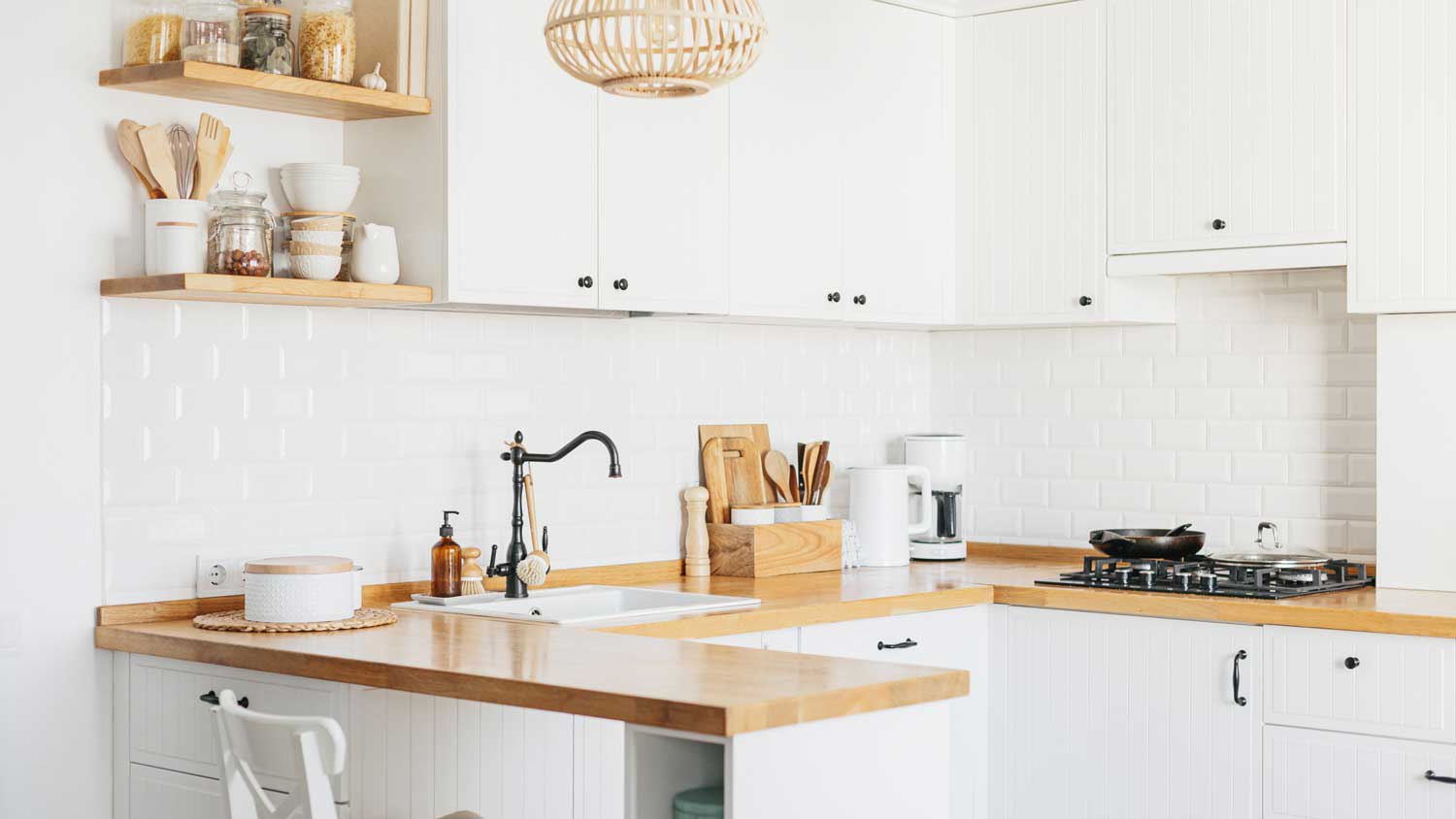
Small kitchen remodels cost $12,750 on average, depending on the materials, size, labor, and more. Read this to calculate your kitchen remodel costs.
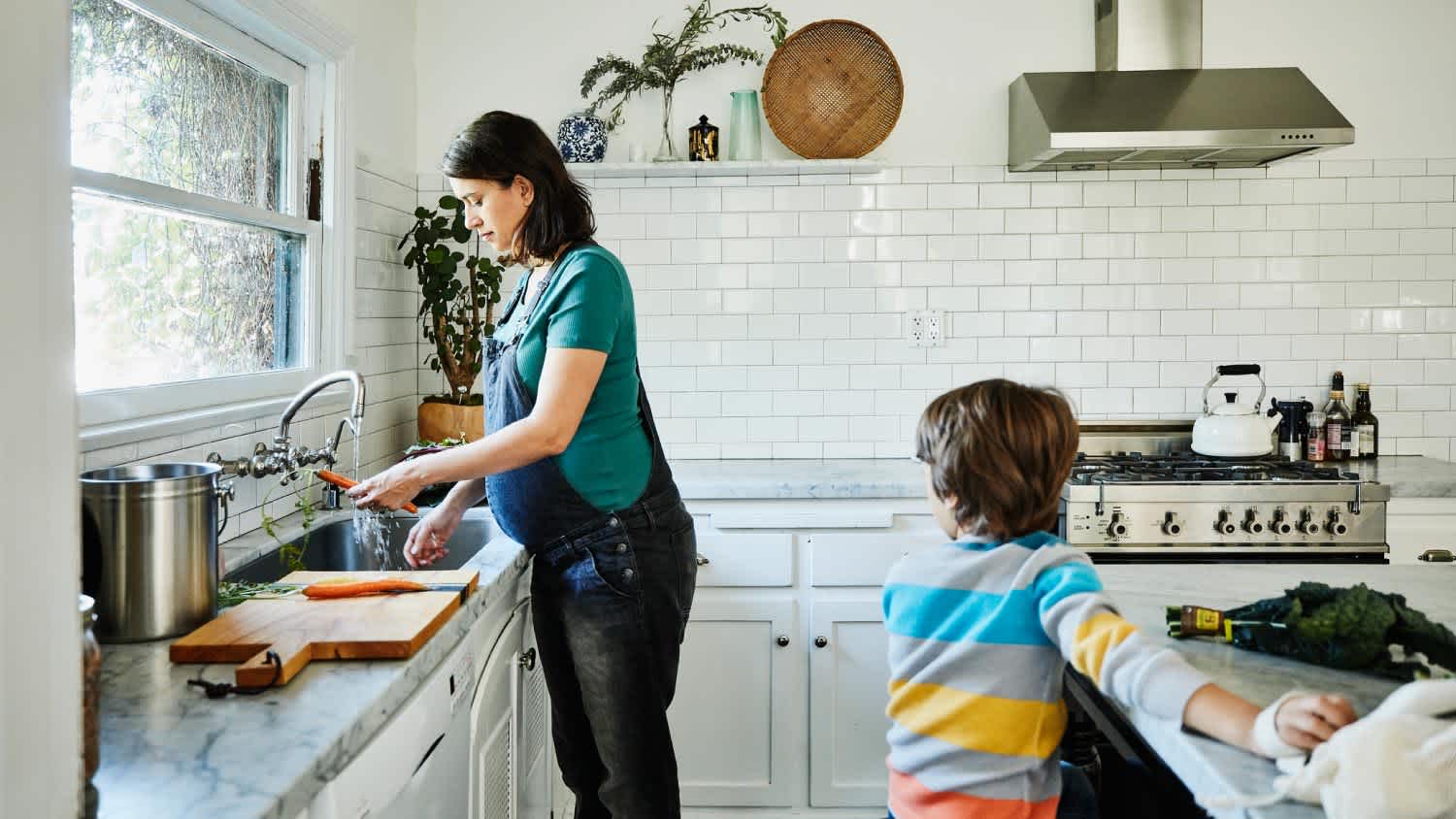
When installing a kitchen backsplash, you’ll need the right tools, materials, and knowledge. Our guide will show you how to install a kitchen backsplash.
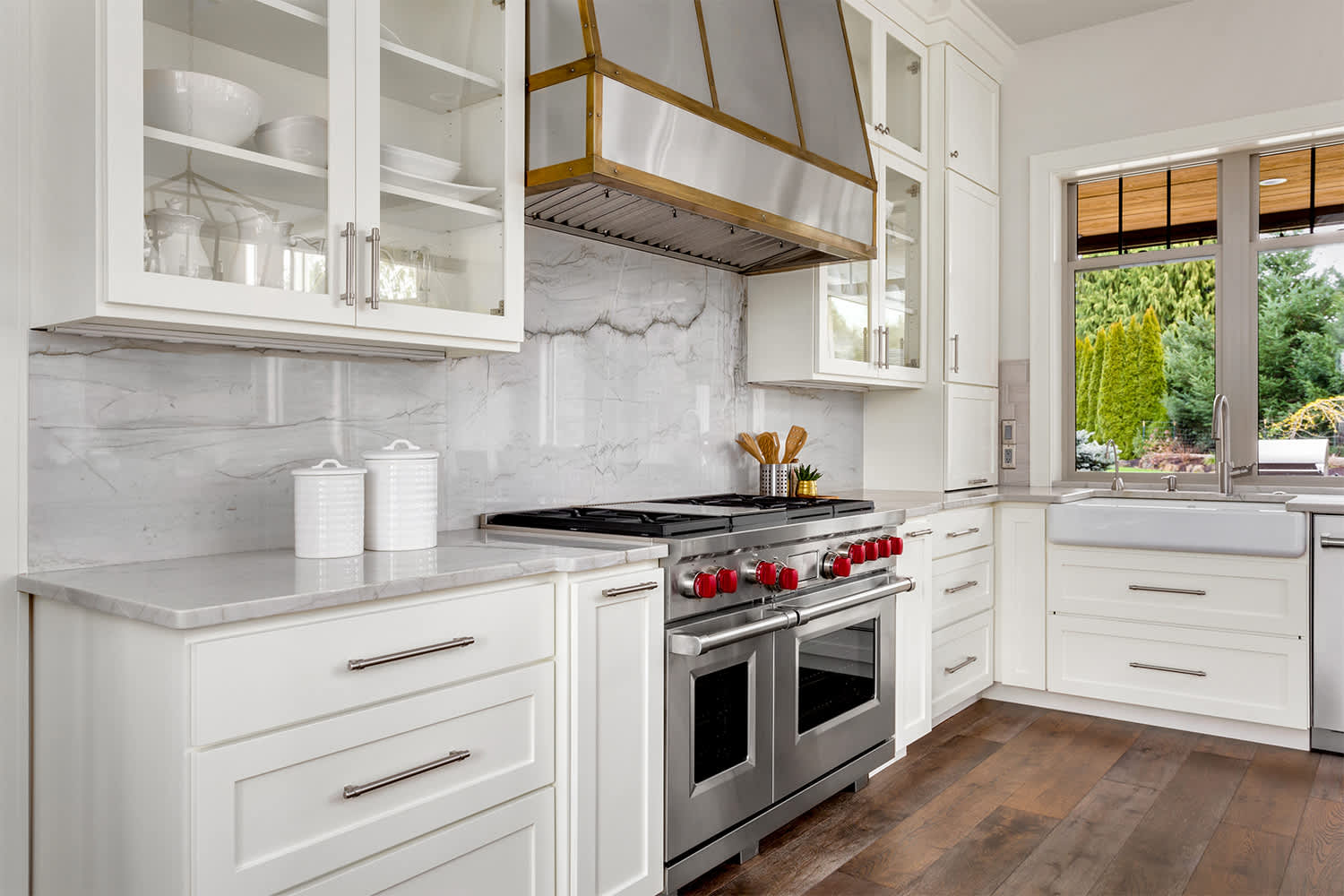
Looking to design a beautiful backsplash for your kitchen on a budget? This article gives a dozen examples of affordable, attractive materials to consider. Find inspiration and get educated about ways to spruce up your kitchen without breaking the bank.

A backsplash can make or break your kitchen. This guide will provide you with the pros and cons of every option out there, from ceramic to reclaimed wood, so you can make the most informed choice for your kitchen—and your wallet.