





Top-rated tree service pros.

Get matched with top tree service pros in North Bend, NE

Enter your zip and get matched with up to 5 pros

Need a pro for your tree service project in North Bend, NE?

Select your specific project to find the pro for you.

TRUSTED BY NORTH BEND, NE HOMEOWNERS

  • Average homeowner rating star icon4
    Average homeowner rating
  • Verified reviews icon12
    Verified tree services reviews

Find Tree service pros in North Bend

Avatar for M. S. Wiekhorst Arbor Company
M. S. Wiekhorst Arbor Company
5.0(
10
)
Tree RemovalTree Removal - For BusinessTree Stump - Remove+5 more

Serving North Bend, NE and surrounding areas

Free estimates

Emergency services offered

Warranties offered

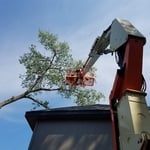
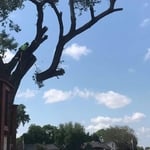
"The services performed went as smooth as expected. Mike was able to trim our biggest tree and remove an entire evergreen that had been exposed to bag worms. The work was quick and efficient and I would highly recommend him to anyone. We will definitely utilize his expertise in the future."
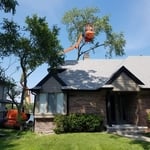
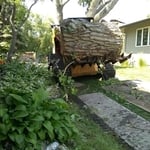
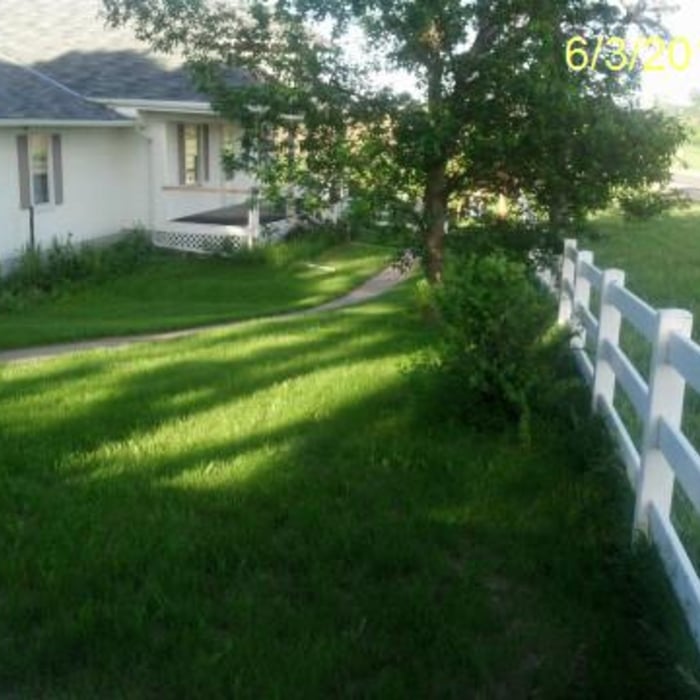
Large Cottonwood Removal

+12

Response time2 days
Response rate100%
Recommended by100%of homeowners

Tree Service questions, answered by experts

Talking with a septic pro before planting trees near your tank is best to ensure the roots won’t interfere with your septic system. However, there is an easy way to figure out where to plant a tree—but you’ll need to know how tall it can get when it’s fully grown. For instance, if the tree can reach 50 feet, plant it at least 50 feet from your septic system.

Yes, cutting a tree's roots can cause it to fall, particularly if major support roots are severed. In extreme cases, trimming roots can affect the tree's structure and stability. Many crucial roots are located just below the soil's surface. If you make severe cuts to roots more than 2 inches in diameter, you risk impacting the tree's water flow and its ability to withstand severe winds or storms. Even cutting roots less than half an inch in diameter under or outside the tree's canopy can cut off its water supply, causing it to decline, die, and eventually topple.

There are a few general rules to follow that will help you prune your trees correctly. One of the most important rules is to prune during the correct season for the type of tree you have. Typically, pruning should be during late winter. For younger trees, you should not remove more than a ⅓ of the tree's crown when pruning. Also, remember to remove dead and diseased branches first, then proceed with pruning the rest of the tree.

Tree pruning is a common and helpful tree maintenance technique that involves carefully cutting and trimming unwanted branches so that the tree can continue to grow and thrive. Pruning is done carefully and intentionally. Tree topping is a frowned-upon method that involves removing and cutting most or the entirety of the top of the tree, including structurally important branches.

You may be looking to identify maple trees to use for home improvement projects. In that case, you can tell hard maples by looking at their leaves. Leaves will have a U-shaped dip, or sinus, between the points, or lobes, of the leaves. Leaves of soft maples tend to have V-shaped sinuses.

If you already have the cut wood in front of you, look for a light, uniform color to identify hard maple wood and check for variations of red, gray, or brown streaks and an overall darker color in soft maple wood.

The North Bend, NE homeowners’ guide to tree services

From average costs to expert advice, get all the answers you need to get your job done.