First Due Land Solutions LLC is a locally owned and operated land management company based in central Nebraska, proudly serving homeowners, farmers, ranchers, developers, and commercial clients. Built on a foundation of hard work, reliability, and a first responder mindset, we bring the same dedication and urgency to every project big or small.\nWe specialize in a wide range of services including hydroseeding, land clearing, forestry mulching, tree removal, brush and pasture management, site preparation, and property cleanup. Whether it’s reclaiming overgrown land, preparing a site for construction, or improving the health and usability of your property, we have the equipment and expertise to get the job done efficiently and professionally.\nAt First Due Land Solutions LLC, we take pride in delivering high-quality results, honest pricing, and dependable service. Our goal is simple: help you take control of your land and bring your vision to life.
We're a locally owned and operated company that values honesty and integrity and treats your home as if it were our own. Our services are customized to the individual project, paying close attention to the details of each project that we're involved with. We pride ourselves on the quality of our work as well as our commitment to outstanding results. We look forward to building lasting relationships and guaranteeing your satisfaction!
Customer satisfaction is what determines our success, which is why we take a hands-on approach. When interacting with C&D Construction and tree service, you'll notice that we're particularly focused on the principles of quality workmanship, timely completion, competitive pricing and integrity in all our business dealings. We combine knowledge and research with our extensive practical experience to ensure a specialized approach for your project needs. Contact us today for a fair and accurate estimate of your project. We look forward to adding you to our long and growing list of happy customers. \n
With five years of experience, R&B Home Services is committed to excellence in every aspect of our business. We uphold a standard of integrity bound by fairness, honesty, and personal responsibility. Our distinction is the quality of service we bring to our customers. Accurate knowledge of our trade combined with ability is what makes us true professionals. Above all, we are watchful of our customers interests, and make their concerns the basis of our business!
We are a locally owned and operated company that values honesty and integrity and treats your home as if it were our own. We offer a variety of cleaning services that are customizable to each individual project. You will find us to be competitively priced, paying close attention to the details of each and every project that we are involved with. We look forward to building lasting relationships and guarantee your satisfaction!
TruGreen is the world's largest lawn and landscape company. It started as a small private company in 1974 and now serves more than 3.5 million residential and commercial customers across the U.S. with lawn care, tree and shrub care, and landscaping.\n\nFor many years, TruGreen has been the industry leader in the development of new technology for lawn care. Its two in-house research and development centers are staffed with leaders in the agronomic and horticultural fields. TruGreen devotes substantial resources to continually evaluate new products and equipment and to develop better methods for taking care of grass, trees, and shrubs. Plus, our seasonal programs will ensure a greener, thicker, and more weed-free lawn for years to come.\n\nAdditionally, TruGreen has taken an active leadership role in both developing and supporting sound environmental practices and regulatory policies. TruGreen is committed to environmentally responsible practices and products and has established its own set of environmental stewardship principles. \n\nEach TruGreen branch is insured and maintains the necessary licenses to conduct business in its city or county. In addition, all of the company's lawn specialists are tenured full-time employees who must complete a rigorous training program before they can be certified by TruGreen. Each specialist is trained to recognize and treat a variety of disease, insect, and weed problems and recommend appropriate maintenance practices for the customer's lawn.
We are a locally owned and operated company that values honesty and integrity and treats your home as if it were our own. We specialize in interior painting and provide unmatched customer service! You will find us to be competitively priced, paying close attention to the details of each and every project that we are involved with. We look forward to building lasting relationships and guarantee your satisfaction!\n
Branching Out Tree Service is great at what we do. We take pride in making your outdoor space much neater that when we arrived. We are timely and professional. With many years experience, we can do it all. Call us today.
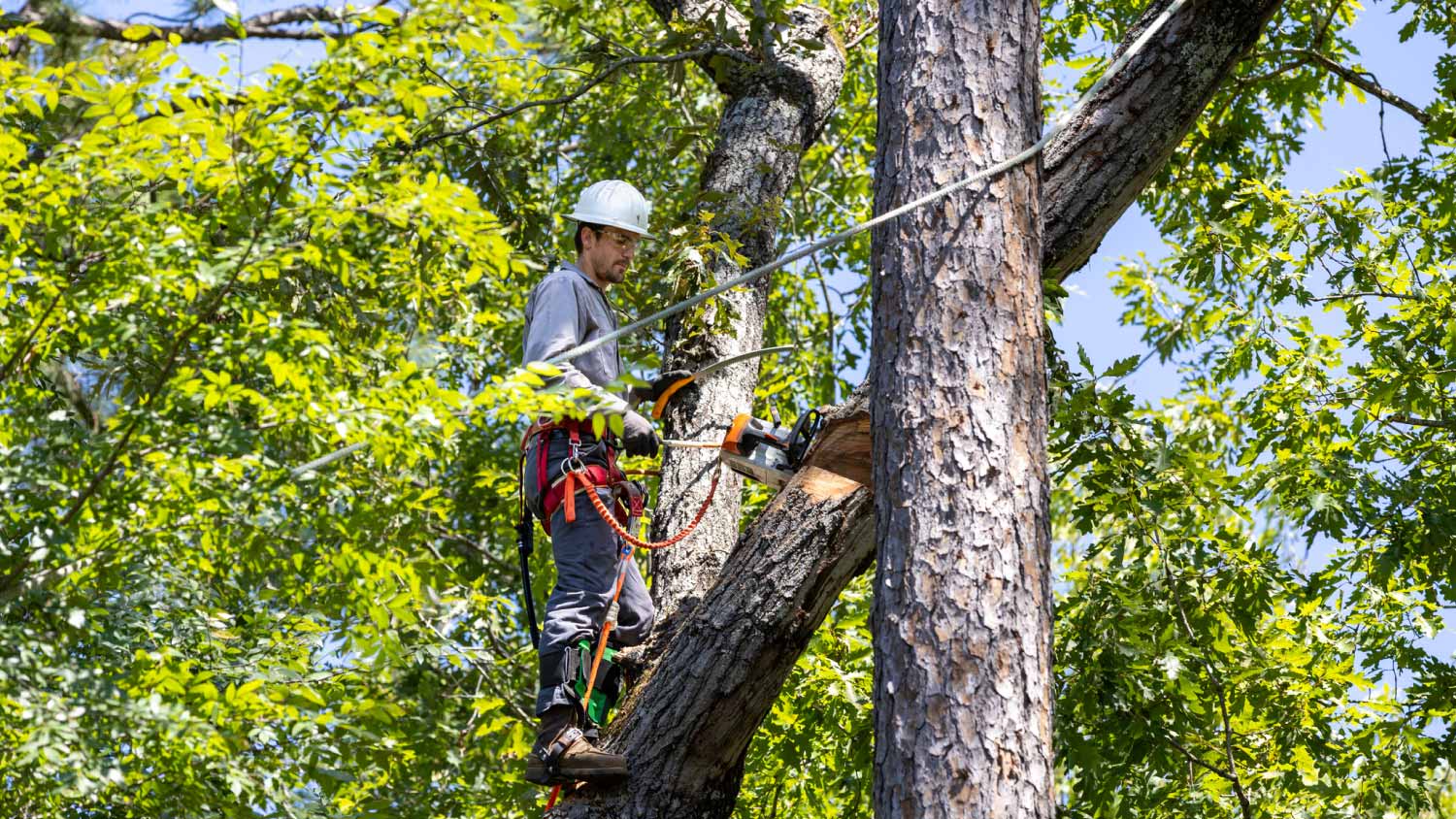
You can remove a small tree from your yard if there’s space for the tree to fall, you have the right tools and safety equipment, and you follow a clear plan of action. You’ll just want to follow the steps above carefully, and ideally, you will have experience doing similar tasks. If you have any doubts that you can do this project safely, though, you should hire a pro.
The cost of professional tree trimming averages $460, with a typical range between $200 and $760. However, prices can be as low as $75 or as high as $1,800 depending on several factors. The size and type of the tree are major cost drivers; for example, trimming Crepe Myrtle trees costs an average of $80 to $400, while trimming giant pine trees can range from $200 to $1,800. Other factors that influence the price include the time of year, as services are often more costly in the spring. The tree's accessibility and your location also play a role, as a remote or hard-to-reach tree may increase the cost. Some professionals may offer a discount if you have multiple trees to trim.
In the case that a tree is growing directly on your property line, the cost of maintaining the tree is shared and is the property of both owners in common. In this case, all decisions regarding the maintenance of the tree must be made jointly, and both parties must agree on a course of action. You will need to agree with your neighbor about the cutting of any roots before you carry it out, and your neighbor must also consult with you before doing any trimming. Coming to an agreement with your neighbor about any shared trees ahead of necessary trimming and maintenance will make this process much simpler.
Debris removal is often included in the overall cost of having a tree removed from your property. However, tree maintenance service companies do not always include debris removal in their pricing, so ask any contractors offering tree trimming cost estimates whether or not removal is included. If you want to keep the wood mulch, ask if they charge extra for it as well.
Tree removal costs typically don’t include stump removal, as that technically falls into a different service. The company you hire may offer the service for an additional fee; ask them if they offer it to ensure you get the best tree stump removal costs possible.
The Geneva, NE homeowners’ guide to arboricultural services
From average costs to expert advice, get all the answers you need to get your job done.
How much does an arborist cost? This guide explains the cost of different services, ongoing expenses, and other factors to consider when hiring an arborist.
Tree inspections can ensure your trees stay healthy and safe, preventing costly damage. Learn how much tree inspections cost and what can affect the price.
Arborists are specialized tree care experts. This guide will help you hire an arborist with all the qualifications to give your trees the best care possible.