



Top-rated electricians.

Best electricians near Melbourne, IA

Enter your zip and get matched with up to 5 pros

Need a pro for your electrical service project in Melbourne, IA?

Select your specific project to find the pro for you.

TRUSTED BY MELBOURNE, IA HOMEOWNERS

  • Average homeowner rating star icon4.8
    Average homeowner rating
  • Verified reviews icon29
    Verified electrical services reviews

Top-Rated Electricians in Melbourne - Updated Nov 2026

Avatar for Magic Electric
Magic Electric
5.0(
11
)
Electrical Switches, Outlets & Fixtures - Install or RepairElectrical Wiring or Panel UpgradeElectric Vehicle Charging Station Installation - Materials Not Provided+7 more

Serving Melbourne, IA and surrounding areas

Approved

In business since 2023

Emergency services offered

Warranties offered

"Angus with Magic Electric is the man. There really is no project too big for him and his team to tackle. We had a 350lb Chandelier hung 17 feet in the air, Angus welcomed the challenge with open arms and made it happen. His work looks fantastic and he and his team are second to none. I would highly recommend Magic Electric to anyone who needs work and will gladly use them in the future. Thanks again Angus!"
New Service
Forest City.
Response time1 day
77 neighbors recently requested a quote
Recommended by45%of homeowners

Avatar for Jensen Electric LLC
Jensen Electric LLC
5.0(
6
)
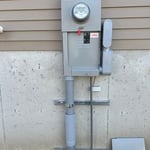
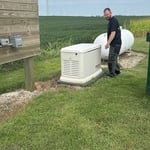
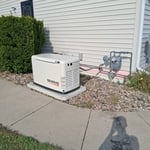
Portable Generator - RepairFixed Generator - InstallFixed Generator - Repair+1 more

Serving Melbourne, IA and surrounding areas

Approved

In business since 2023

Free estimates

Emergency services offered

The Jensen family’s history in electrical work spans three generations. It began with Kyle’s grandfather, who spent 47 years as a maintenance electrician with Mountain Bell. That dedication to craftsmanship continued with Kyle’s father, a well-respected electrical contractor in Southern Utah. Following in their footsteps, Kyle entered the trade early—starting as an apprentice at 16, earning his Journeyman license in 2002, and achieving his Master Electrician license in 2006. With that deeply rooted family foundation, he brings decades of hands-on knowledge to every project.\n\n

Gallery
Gallery
2 neighbors recently requested a quote
...
Showing 1-10 of 51
Electrical FAQs, answered by experts

Most standard residential water heaters, which are typically around 40 gallons and use 240 volts and between 3,500 and 5,500 watts, require a 30-amp, two-pole circuit breaker. For smaller, point-of-use water heaters using 120 volts and between 1,500 and 3,000 watts, a 30-amp breaker is also often adequate. However, some models may have different needs; units that use more watts than average may require a 40-amp breaker, while smaller units might only need a 20-amp breaker. Newer, tankless, or more energy-efficient models can also require a higher amperage. Having the correct breaker size is crucial for safe and efficient operation, so it's best to consult a licensed electrician to determine the specific needs of your water heater.

Incorrectly wiring a single-pole switch results in the connected light or device not turning on or tripping the circuit breaker. Although it doesn't matter which terminal the hot wire and the load wire connect to, mixing up a circuit wire with a ground or having loose connections can prevent the switch from working. 

The color of your cable will help you to identify its function. In the U.S., the National Electrical Code (NEC) designates the color code for electrical cables. “Hot” cables are black, red, and blue. In cases of higher voltage lines, orange might also be used to indicate a hot cable. White or gray indicates a neutral, and green or green with a yellow stripe indicates a ground.

By nature, two-prong outlets aren't grounded—but the box they run to might be, which makes them safer. The safest way to test if an outlet is grounded is to purchase a circuit tester, which cost about $20 at home improvement stores. 

If you discover your outlet (or outlets) aren't grounded, know that this greatly increases your risk of personal injury and electrical fires. You may want to consider installing new three-prong ground fault circuit interrupter (GFCI) outlets. On average, the cost to install GFCI outlets is about $210 per outlet.

No. Blue wires and black wires are different. Even though both are used as hot wires, they serve different functions. Black wires are far more common in residential properties. They are always hot, can be positive or negative, and usually carry electricity from a power source to an outlet. Blue wires have a specialized usage in residential properties, generally as traveler wires, and are more common in commercial properties.

The Melbourne, IA homeowners’ guide to electrical services

From average costs to expert advice, get all the answers you need to get your job done.