Top-rated electricians.

Get matched with top electricians in Elkhart, IA

Enter your zip and get matched with up to 5 pros

TRUSTED BY ELKHART, IA HOMEOWNERS

  • Average homeowner rating star icon4.5
    Average homeowner rating
  • Verified reviews icon339
    Verified electrical services reviews

Find Electricians in Elkhart

Avatar for WireOne, LLC
WireOne, LLC
4.0(
325
)
Electrical Switches, Outlets & Fixtures - Install or RepairElectrical Wiring or Panel UpgradeCeiling Fan - Install+15 more

Serving Elkhart, IA and surrounding areas

Approved

In business since 2010

Emergency services offered

Warranties offered

"I have a mixed review. There was an initial site survey done by Ron M. He gave me estimates of $48k, 23k and 13k. I almost walked away from my new Electric vehicle. I had to suggest the option I went with, to replace my electric range with a gas line run to install a gas range in my kitchen. I did so at a cost of $890 for the range and $1508 for the gas line. Before we settled on this bid, I asked about the former hot tub that was behind my garage. Ron didn?t listen to my input and said it was probably 110v and I asked since my house was bought by me from my Mom when my grandma died. I knew that it was heated and had a 220 circuit. Ron was not the installer on the day of the install, the two gentlemen that did the install did GREAT WORK! 100%! When they were done, the older electrician told me that there was good news, after me spending $2400 for a new gas stove and a gas line, that they used the hot tub line to install my EV charger Ron didn?t listen to a word I said cost me more$"

Lighting
Lighting
Custom Lighting
Recessed Lighting
Lighting

+13

Response time11 hrs
230 neighbors recently requested a quote
Recommended by82%of homeowners

Avatar for Jensen Electric LLC
Jensen Electric LLC
5.0(
6
)
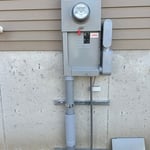
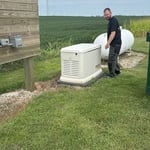
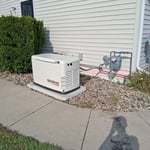
Fixed Generator - InstallFixed Generator - RepairPortable Generator - Repair+1 more

Serving Elkhart, IA and surrounding areas

Approved

In business since 2023

Free estimates

Emergency services offered

The Jensen family’s history in electrical work spans three generations. It began with Kyle’s grandfather, who spent 47 years as a maintenance electrician with Mountain Bell. That dedication to craftsmanship continued with Kyle’s father, a well-respected electrical contractor in Southern Utah. Following in their footsteps, Kyle entered the trade early—starting as an apprentice at 16, earning his Journeyman license in 2002, and achieving his Master Electrician license in 2006. With that deeply rooted family foundation, he brings decades of hands-on knowledge to every project.\n\n

Gallery
Gallery
16 neighbors recently requested a quote
...
Showing 1-10 of 106
Electrical questions, answered by experts

Type S or T fuses don’t require any special removal or installation tools. However, replacing a cartridge-style fuse is easier and safer when using a fuse-puller tool. All of these tools should be available anywhere you can buy fuses.

You can install a dimmer switch on almost any light as long as the switch, bulb, wiring, and wattage are compatible. Check what kind of light you have, the type of light bulb, and the total wattage of the bulbs to ensure your dimmer is a match. You’ll want to choose a non-neutral wire dimmer if you don't have neutral wiring. Homes built before 1985 that don't have updated electrical systems may not have neutral wiring.

Labor, materials, job complexity, and urgency affect costs for switches and outlets; expect from $150 for simple sets to $600+ for significant upgrades.

A light switch can stop working for several reasons. Typical causes include a blown fuse or tripped circuit breaker, both of which shut off power to the switch. Worn-out or faulty internal switch components can also prevent it from functioning properly. Loose or disconnected wiring within the switch or electrical box is another frequent issue. Additionally, switches may fail due to age, excessive use, or physical damage. In some cases, problems with the light fixture or bulb itself might be mistakenly attributed to the switch.

When converting a standard 120-volt outlet to a 240-volt outlet, the only components you can typically reuse are the existing electrical box and the hole in the wall. Everything else—including the wiring, breaker, and receptacle—should be replaced to ensure both safety and efficiency. Appliances designed for 240 volts have different plug configurations that won’t fit into a standard 120-volt outlet, making it necessary to install a compatible 240-volt receptacle. This design helps prevent overloading or underloading the power available to any one outlet or circuit.

The Elkhart, IA homeowners’ guide to electrical services

From average costs to expert advice, get all the answers you need to get your job done.