
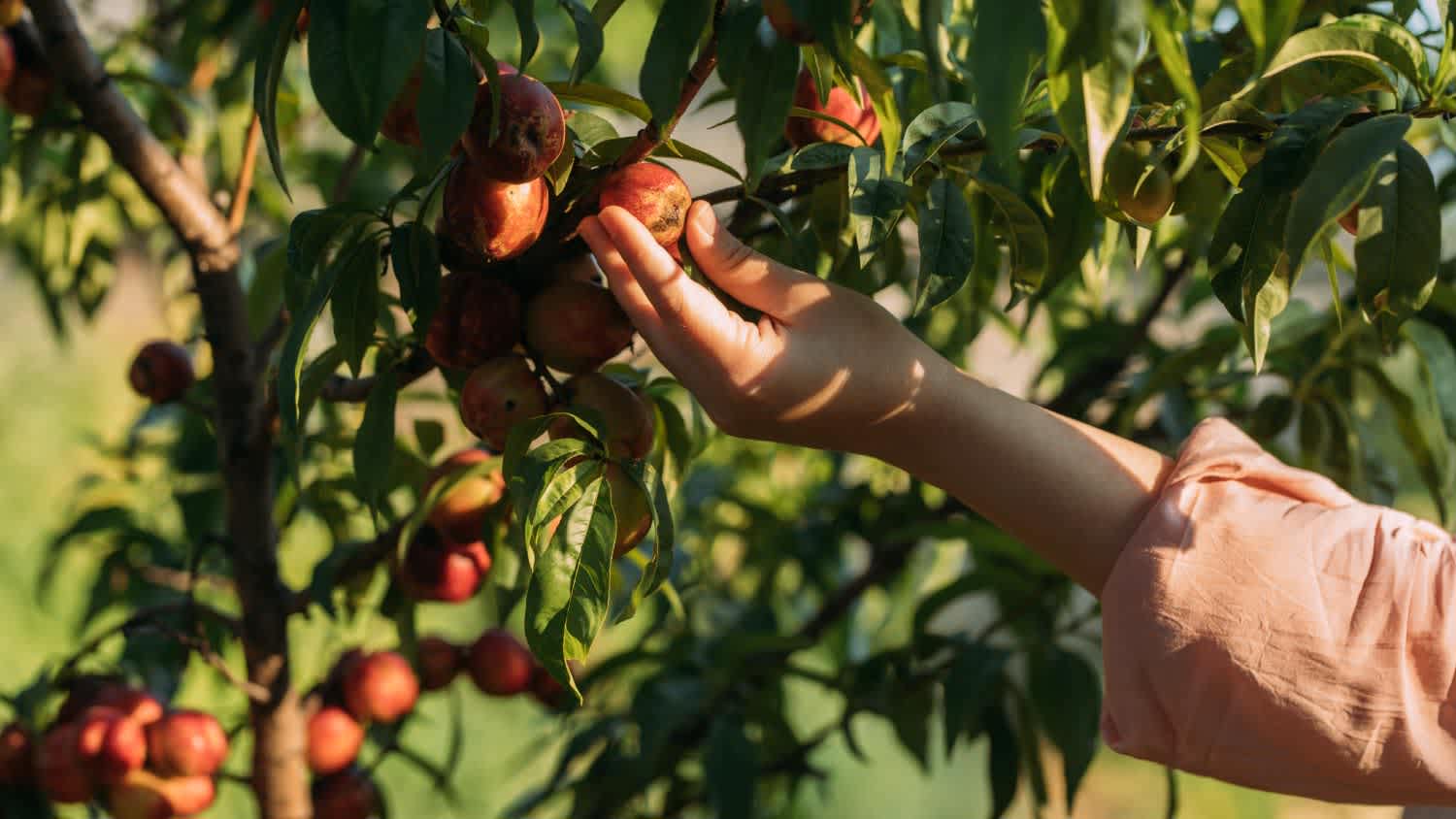
Would you pick and eat fresh, homegrown fruits? Learn about the best fruit-bearing trees that can add value to your yard with tips to grow them.
It's not a fig-ment of your imagination—you can grow a fig tree in your backyard

Planting a fig tree in the ground requires well-draining soil amended with compost, full sunlight for six to eight hours daily, and proper spacing for root growth.
Your fig tree needs consistent moisture with about 1 inch of water weekly, balancing between saturated and fully dried soil to support healthy root development and fruit production.
Container planting works well for colder climates, letting you move your fig tree indoors when temperatures drop below 25 degrees Fahrenheit to protect it during winter dormancy.
Hiring a local gardening professional provides expert guidance on soil preparation, proper planting depth, and seasonal care to help your fig tree thrive and produce fruit successfully.
There's no question that figs are a luxurious fruit, whether paired with goat cheese, roasted with veggies, or picked and tasted right from the branch. And while it's understandable to assume you can only plant a fig tree in the hottest regions of the world, there are ways to care for a fig tree in the U.S. as well.
Planting fruit-bearing trees in your yard may sound tricky, but with enough sunlight, water, and TLC, you can have tasty homegrown figs right in the center of your next cheese plate.
Fig trees grow in many warm and humid regions of the world, from northern India to the heart of the Mediterranean. In the United States, fig trees do best in USDA hardiness zones 8 and warmer, but you will find exceptions.
Many types of the common fig tree—or Ficus carica—offer varieties that can grow as far north as hardiness zone 5. In other words, you can even enjoy figs in the Windy City.
Fig trees are part of the genus ficus and members of the mulberry family. They are deciduous trees that often produce sweet purple and green fruit. Both indoor and outdoor common fig trees will produce fruit when well cared for and even when planted alone.
Here are some types of common fig trees to consider based on your hardiness zone, how tall the fig tree grows, and some unique perks of the varietal.
| Name | Zones | Features |
|---|---|---|
| Celeste fig | 6 – 10 | Disease and pest-resistant; grows 6 – 10 ft. tall |
| Brown turkey | 6 – 10 | Produces sweet fruit; grows 20 – 30 ft. tall |
| Chicago hardy | 5 – 10 | Produces fruit during first season; grows 20 – 30 ft. tall |
| Magnolia fig | 7 – 10 | Produces large fruit; grows 4 – 10 ft. tall |

Choose a variety of fig trees appropriate for your region, especially if you plan to permanently plant them in the ground. Keep in mind that even hardy fig trees may die back in harsh winters, but will regrow from their roots in the spring.
Plant a fig tree in the ground in early spring after your last frost or about six weeks before your first frost in the fall.
In either case, never transfer from a container to the frozen ground. The roots need space to spread out and get settled.
Common fig trees enjoy well-draining yet moist soil that holds enough moisture between waterings without getting soggy. The trees can survive in clay-heavy soil, but it's best to break it up with a spade to help the roots break through.
Add a bit of compost to the surrounding soil to give your new fig tree the boost it needs right after planting. In the spring, add a few inches of nutrient-rich compost around its base.
Perhaps most importantly, fig trees need a lot of direct sunlight to thrive and produce fruit. Ensure that they live in a spot where they will get six to eight hours a day without interruption.
Fig trees need room to spread out, both above and below ground. Plant trees at least 20 feet away from one another and away from large structures like your home or a garage.
Once you've found the ideal location, dig a hole several inches wider and deeper than your root ball. You should be able to cover the top of the roots with 2 to 4 inches of soil. Loosen the roots around the outside of the ball to ensure they can spread quickly once placed in the ground.
Add between 1 and 1.5 inches of water to the ground around the roots after planting. Maintain about 1 inch of water a week while finding that balance between saturated and fully dried out.
If you're concerned about harsh winters or long frosts, add a new member to your container garden. You can either start your fig tree in a large container or keep it there year-round.
The plant should still go through the natural growth and dormancy periods, but you will need to bring it inside when the temperature drops in the winter.
Consider a 15- to 20-gallon pot for a fig tree to allow it to grow properly during its first season. Some gardeners choose half barrels or large planters on dollies to plant their trees. Just be sure it is easy to move in the winter.
Encourage proper drainage in your potting soil by adding wood chips, mulch, or compost to the initial soil. You can also add perlite, sand, or limestone to encourage long-term drainage.

Place your potted fig tree outside in the sunny spot during the late spring, summer, and fall. Just like planting the fig tree in the ground, it should receive at least eight hours of direct light a day.
Transition your fig tree indoors when the air temperature drops below 25 degrees Fahrenheit. To encourage proper dormancy, store your fig tree in a dark and cool space during these months, preferably a basement, garage, or greenhouse.
While some fig tree varieties move more quickly, many will produce fruit and reach maturity within three to five years. There is very little care necessary after this initial growth and establishment phase, but it's always important to keep an eye on the temperature and seasons.
Check on your young fig tree weekly during the summer and just once every two months during the winter. You can let the top 2 inches of soil dry out in the winter before adding more water.
Fertilization is not always necessary for fig trees, especially when planted in the ground. Amend your soil with a nitrogen-heavy fertilizer if your tree has to compete with nitrogen-hungry plants in the area.
Otherwise, a layer of compost in the spring or early summer should keep its roots happy. In either case, avoid fertilizing your plans after August to discourage growth too late in the season.
As we mentioned earlier, you should have delicious fruit for your charcuterie platter within three to five seasons. Be careful about picking the figs too early, however, as they will stop ripening once harvested.
Root-knot nematodes are notorious fig tree pests, so make sure you purchase your sapling from a nursery that has checked for this parasite. And while some gardeners encounter ants, fig borers, and thrips, they are not only severe enough to warrant pesticides.
If you detect signs of disease or pest infestation, reach out to a local landscaper or a gardener in your area for safe treatments for fruit-bearing plants.
This service was great. My air conditioner went out during the heat spell that we had. My husband has health issues and they came out that night and at 9:30pm the air conditioner was fixed and running. We are sooo very thankful, this is the company I will be using from now on and would...
 Mr. Mechanical Ohio
One of my old tall evergreen trees was suddenly leaning toward the busy street in front of my house. I submitted a request for an emergency tree inspection, and Alejandro, owner of Cajete Tree Service, contacted me immediately and arrived to look at it just 20 minutes later. We agreed the...
 Cajete Tree Service LLC
1 tree was cut down and 5 others including a large willow tree were trimmed. The Grant Tree Service men were professional and cleaned up afterwards. The cost of the 6 trees were affordable. I am very happy with the results. I would hire them again.
 Grants Tree Service
D1 Roofing delivers outstanding service from beginning to end, backed by a strong warranty and expert teams. I highly recommend them for their excellence in meeting and surpassing expectations with unmatched communication. Choosing D1 Roofing was flawless decision
 Division 1 Roofing LLC
Promptly arrived for quoting! Demonstrated superb customer service, affordable pricing, and completed service swiftly! Looking forward to the spring for our service!
 All Star Paving and Sealing
Seth was very professional, prompt in responding to queries about the work required , gave sincere advice as to what would be best for tree trimming and did the job timely.
Ace Fireplace Services' chimney sweep service is truly exceptional. They used advanced technology to ensure a thorough cleaning process, and my chimney has never looked better. I highly recommend their services.
 Ace Fireplace Services
I definitely recommend Ramonaâ s cleaning service! I have booked services with her many times and she arrives on time, ready to work and provides a great service.
 Your Cleaning Solutions LLC
Webb â s was priced well, flexible on scheduling, great with communication, and detailed in their work. Iâ ll definitely use their services again.
 Webbs Pressure and Paint LLC
Great tree company, very professional and honest. Glad we found them, they had the best pricing
From average costs to expert advice, get all the answers you need to get your job done.
Would you pick and eat fresh, homegrown fruits? Learn about the best fruit-bearing trees that can add value to your yard with tips to grow them.

Clean the air you breathe and add natural beauty to your yard with these nine essential tips for growing healthy trees.

Indoor trees can be grown in direct sunlight, low light areas, and in humid and dry conditions. Not sure you’ll find a tree that fits your home and family? Learn about all the varieties of indoor trees that can spruce up every corner of your home.

If you love peaches and live in the right hardiness zone, you could be harvesting your own supply. Here’s how to grow a peach tree in your yard.

Ever wanted to learn how to grow a tree from a branch? Learn how to grow a tree from a cutting to boost curb appeal for much less with propagation.

If your tree is still giving you grief after you remove it, knowing how to stop tree roots from growing back can ease your mind and keep your home safe.