

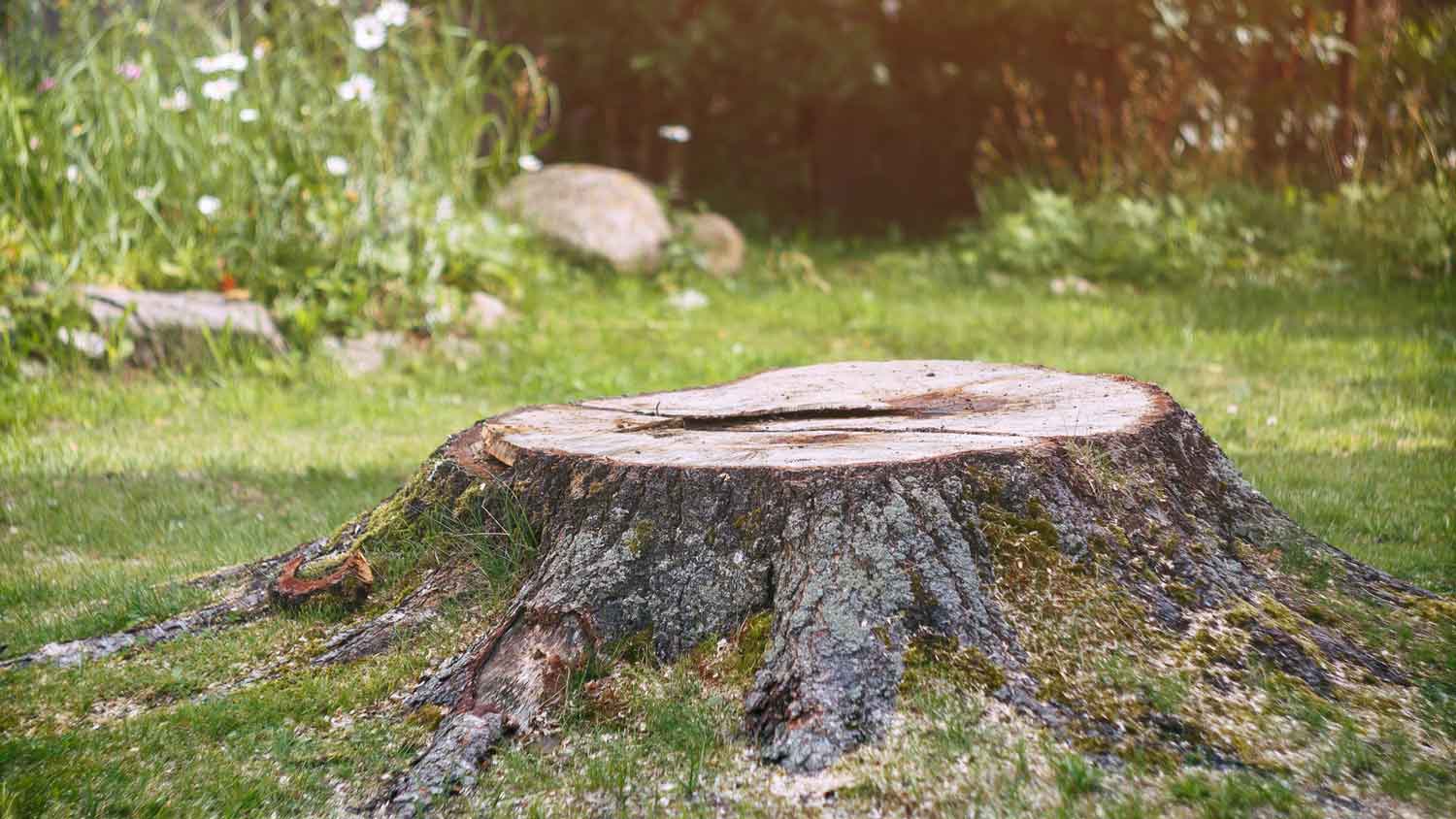
The cost of tree stump removal depends on size, removal method, location, and more. Our guide will show you how much stump removal costs.
Tree service costs depend on your project and location. Check with a local pro for your specific job.

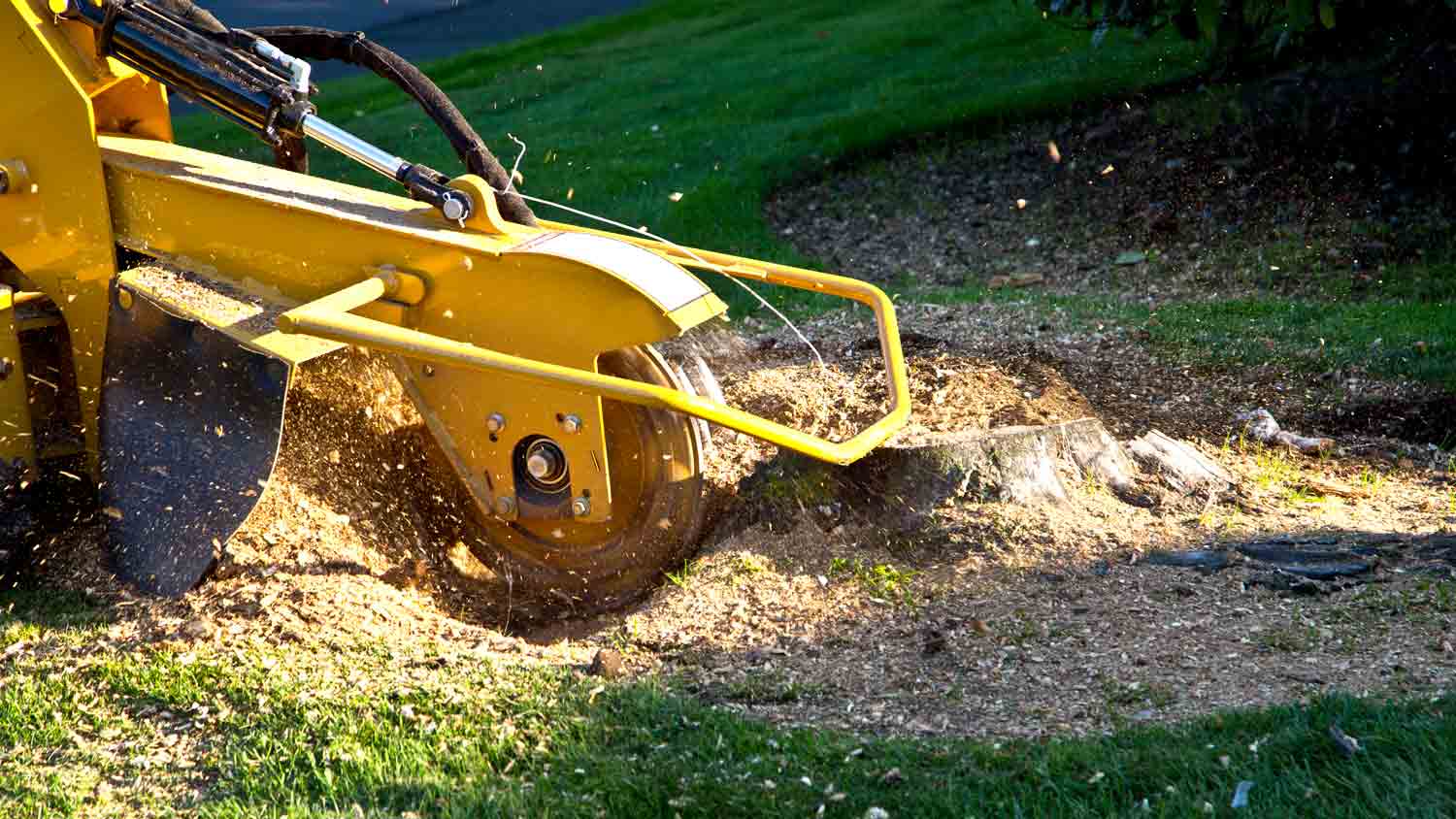
A standard stump grinding job costs $120 to $400, but large-diameter stumps can push your total up to $1,600.
Your stump's diameter, location access, and number of stumps drive labor time and equipment needs for grinding.
Budget $150 to $700 for debris hauling and permits so your stump site is cleaned up and compliant.
Hiring a local stump removal professional protects your property by locating utility lines and controlling the grinder near structures.
In 2026, the national average cost to grind a tree stump is $250. Most homeowners pay between $120 and $400, with stump diameter, wood hardness, and site accessibility being the biggest factors driving that range. If you plan to haul away debris or need a permit, budget an additional $150 to $700 to cover those extras.
Stump grinding is an alternative to stump removal, and homeowners should consider which is right for a leftover tree stump on their property.
Stump removal usually involves digging out and removing the stump entirely, either as a whole or after being cut into chunks (this often involves removing many of the roots). It can be done manually with shovels and labor or with heavy machinery, such as tractors, brought in by the pros. However, specialized equipment like stump cutters is not required.
Stump removal works best for smaller, younger stumps and cut-down shrubs that will have a minimal impact on the surrounding ground and are lightweight enough to pull out. However, after finishing the project, homeowners will still have a sizable hole to fill and landscape over.
Stump grinding works best with larger, older stumps that are too big and grown in to remove completely, and if they were, it would cause significant damage to a lawn, path, etc. Grinding removes the stump in a more targeted way but may not remove surrounding roots as a result.
Stump grinding costs depend on three main factors: the cost to grind the stump, any required permits, and the cost to sod the remaining area. Here is a breakdown of how each factor affects your total price.
Stump grinding is priced by diameter inch, with most jobs running $2 to $5 per diameter inch. Nearly all contractors apply a minimum fee of $100 regardless of stump size. The table below breaks down how the tree stump diameter affects average grinding costs:
| Stump Diameter | Average Cost in 2026 |
|---|---|
| 6-inch stump | $118–$130 |
| 12-inch stump | $124–$160 |
| 18-inch stump | $136–$190 |
| 24-inch stump | $148–$220 |
Grinding multiple stumps costs more overall, but the per-stump price drops as you add more, with contractors often charging $100 to $150 for the first stump and only $40 to $75 for each additional one. Stump diameter also factors into the final price, so larger stumps will push costs higher even when bundled together. See how the number of stumps affects your total grinding cost in the table below:
| Number of Stumps | Minimum Cost in 2026 |
|---|---|
| 1 stump | $100–$150 |
| 2 stumps | $140–$175 |
| 3 stumps | $180–$250 |
| 4 stumps | $220–$325 |
| 5 stumps | $260–$400 |

Tree species can meaningfully affect stump grinding costs, particularly for hardwoods that demand more time and more powerful equipment. Pros rarely publish species-specific rates, but hardwoods like oak, walnut, and maple often incur an additional charge on your labor cost.
A stump's age and condition influence grinding labor costs, with older, rotten stumps being easier to grind and therefore less expensive to remove. Diseased stumps should be removed quickly to prevent the spread of rot or blight to nearby trees, while healthy new stumps also warrant prompt removal since many tree species will send out new shoots if the trunk and roots remain in place.
Location is one of the most significant drivers of stump grinding costs, with high-demand or high-cost-of-living areas pushing the base price for a single stump to $150 to $170 and the per-inch rate as high as $7 for some specialists.
While the core project scope sets your baseline stump grinding cost, several specific job variables can increase or decrease the final quote.
Stump size and wood density are the primary drivers of grinding time: a straightforward job can finish in about an hour, while a project involving dense wood or complex trunk growth can take two to three hours. Longer jobs require more labor, which raises your overall cost accordingly.
Expect to incur additional fees if the tree stumps are on challenging terrain, access is limited, or the stumps are far from where the contractor can park. Some pros charge $50 per hour for the extra labor, while others charge a flat fee of up to $200 for a challenging project.
Winter is usually the cheapest time for tree removal, including stump work, since demand for tree services drops during the coldest months, saving you up to 20% on the total project cost. Keep in mind that full stump removal costs slightly more than grinding, so scheduling grinding in the off-season offers the best combination of savings.
Expect to pay $50 to $200 to haul away the waste from stump grinding. You can save by removing the debris yourself, but let the contractor handle it if you can't haul it or have no use for it. This process usually costs $2 to $4 per diameter inch.
Most stump grinding projects require a permit, primarily because utility lines beneath the stump may need extra safety measures, and permits typically cost $100 to $500. Some projects require an additional permit beyond utility-line clearance, particularly if the tree species has legal protections in your region or local ordinances limit how many trees can be removed from a property. If you belong to a homeowners association, review the bylaws on tree removal before scheduling any work to avoid unintentional violations.
Bundling additional services with your stump grinding job is a practical way to reduce overall labor costs when hiring a professional tree service. Common add-ons and their average costs are listed below.
Tree removal: If you want a full tree removal, expect to pay between $200 and $2,000, depending on the type and size of the trees and their accessibility. This cost usually does not include stump removal, but you can save money by arranging stump grinding with the same company.
Tree transplanting: If your stump work also includes repositioning other trees or replacing the stump with one of your existing trees, it will cost between $300 and $1,000, depending mostly on the tree size.
Tree pruning or trimming: Combine your stump grinding with additional tree pruning, which starts at around $450 for the average project. Tree trimming, which involves lighter work with fewer changes, starts at only $75 but can go up to $1,800, depending on the project size.
Shrub removal: Grinding a stump is also a good time to clear even more space by having shrubs removed. Removing shrubs costs $450 to $1,400 more than removing trees because shrubs can be difficult to fully dig out.
Landscaping: If you want to turn your old stump spot into a berm, water feature, or other attraction, you pay for landscaping services that fall between $1,250 and $6,300. Consider DIY landscaping after your stump is entirely removed for smaller landscaping projects.
Root removal: Not all stump grinding includes complete root removal, which can be problematic for large trees with big roots that could rot or bulge aboveground. Removing roots like these can be a DIY project, or you can hire the pros for about $100 to $200 per hour to dig them out.
Sodding: Another popular option for the leftover stump spot is to cover it with grass, preferably the same grass species as your lawn. Sprinkling seed can work here if you build up a healthy soil base that's level with the lawn, or you can buy and cut your own sod. However, others prefer to pay the pros between $1 to $2 per square foot to lay the sod.
Renting a stump grinder costs $100 to $300 per day , while professional labor costs between $200 and $500 total. In most cases, hiring a local stump removal pro is the way to go, especially if your tree stump is near a structure or utility line.
Hiring a local stump removal pro is the best option for the following reasons:
A professional has the proper tools and expertise to safely remove your stump.
Pros know how to avoid underground electrical or utility lines.
A DIY mistake could result in property damage or personal injury.
Reputable pros carry liability insurance and may offer workmanship warranties.
Pros handle cleanup, removing wood chips and debris so your yard looks tidy.
Experts can complete this task quickly and efficiently.
Many pros grind the stump below ground level, making the area ready for sod or new landscaping.
DIY stump grinding is possible, but it's hard labor and not recommended. Here's how you can save money when hiring a pro:
Remove loose wood, roots, branches, and debris before the pro arrives
Fill the hole and level the area after the stump is removed
Lay sod or plant grass seeds to restore the space
Landscape the area to improve your yard's aesthetic
If the cost of professional stump removal is high, you can try several tactics to find the lowest price.
Get several estimates: Stump grinding costs can vary across service companies. Learn about the expected costs in your area by getting different quotes from three local services. When possible, get an in-person estimate from a professional who can view the physical stump and its location.
Make stump access and removal easier: Clear undergrowth and pathways to your stump. The faster professionals can gain access and grind away, the easier the task will be. Saving time for your contractor can save you money.
Bundle tree needs: Hire one company to take care of several tree-related tasks—that can include tree removal, grinding, root removal, planting new trees, and more. It may take companies several days, but the overall costs should be lower when you bundle everything together in one package.
Take care of clean-up: To save on labor costs, agree to clean up yourself. Plan to remove wood chips and use them as mulch or pack them into the leftover hole.
Grind down to surface level only: Standard stump grinding typically goes past the surface to remove the core clump of roots. This method creates a well-like depression for future landscaping but is not always necessary. There are also options for surface-level grinding that only grinds down to the soil level. Surface-level grinding works well with a stump that's long dead or unlikely to send up new shoots, and the costs are lower for this service.
Provide accurate height and trunk diameter measurements to help the pro plan equipment and labor.
Ask what will be done with the trunk, fronds, and stump, and whether debris removal is included.
Check if services such as stump grinding, site cleanup, or landscaping repairs are available.
Inform your pro about any nearby power lines, structures, or uneven terrain that may affect the removal process.
Home is the most important place on earth, which is why Angi has helped more than 150 million homeowners transform their houses into homes they adore. To help homeowners with their next project, Angi provides readers with the most accurate cost data and upholds strict editorial standards. We extensively research project costs to develop the pricing data you see, so you can make the best decisions for you and your home. We rely on reputable sources, including the U.S. Bureau of Labor Statistics, academic journals, market studies, and interviews with industry experts—all to ensure our prices reflect real-world projects.
Want to help us improve our cost data? Send us a recent project quote to [email protected]. Quotes and personal information will not be shared publicly.
This service was great. My air conditioner went out during the heat spell that we had. My husband has health issues and they came out that night and at 9:30pm the air conditioner was fixed and running. We are sooo very thankful, this is the company I will be using from now on and would...
 Mr. Mechanical Ohio
One of my old tall evergreen trees was suddenly leaning toward the busy street in front of my house. I submitted a request for an emergency tree inspection, and Alejandro, owner of Cajete Tree Service, contacted me immediately and arrived to look at it just 20 minutes later. We agreed the...
 Cajete Tree Service LLC
1 tree was cut down and 5 others including a large willow tree were trimmed. The Grant Tree Service men were professional and cleaned up afterwards. The cost of the 6 trees were affordable. I am very happy with the results. I would hire them again.
 Grants Tree Service
D1 Roofing delivers outstanding service from beginning to end, backed by a strong warranty and expert teams. I highly recommend them for their excellence in meeting and surpassing expectations with unmatched communication. Choosing D1 Roofing was flawless decision
 Division 1 Roofing LLC
Promptly arrived for quoting! Demonstrated superb customer service, affordable pricing, and completed service swiftly! Looking forward to the spring for our service!
 All Star Paving and Sealing
Seth was very professional, prompt in responding to queries about the work required , gave sincere advice as to what would be best for tree trimming and did the job timely.
Ace Fireplace Services' chimney sweep service is truly exceptional. They used advanced technology to ensure a thorough cleaning process, and my chimney has never looked better. I highly recommend their services.
 Ace Fireplace Services
I definitely recommend Ramonaâ s cleaning service! I have booked services with her many times and she arrives on time, ready to work and provides a great service.
 Your Cleaning Solutions LLC
Webb â s was priced well, flexible on scheduling, great with communication, and detailed in their work. Iâ ll definitely use their services again.
 Webbs Pressure and Paint LLC
Great tree company, very professional and honest. Glad we found them, they had the best pricing
From average costs to expert advice, get all the answers you need to get your job done.
The cost of tree stump removal depends on size, removal method, location, and more. Our guide will show you how much stump removal costs.
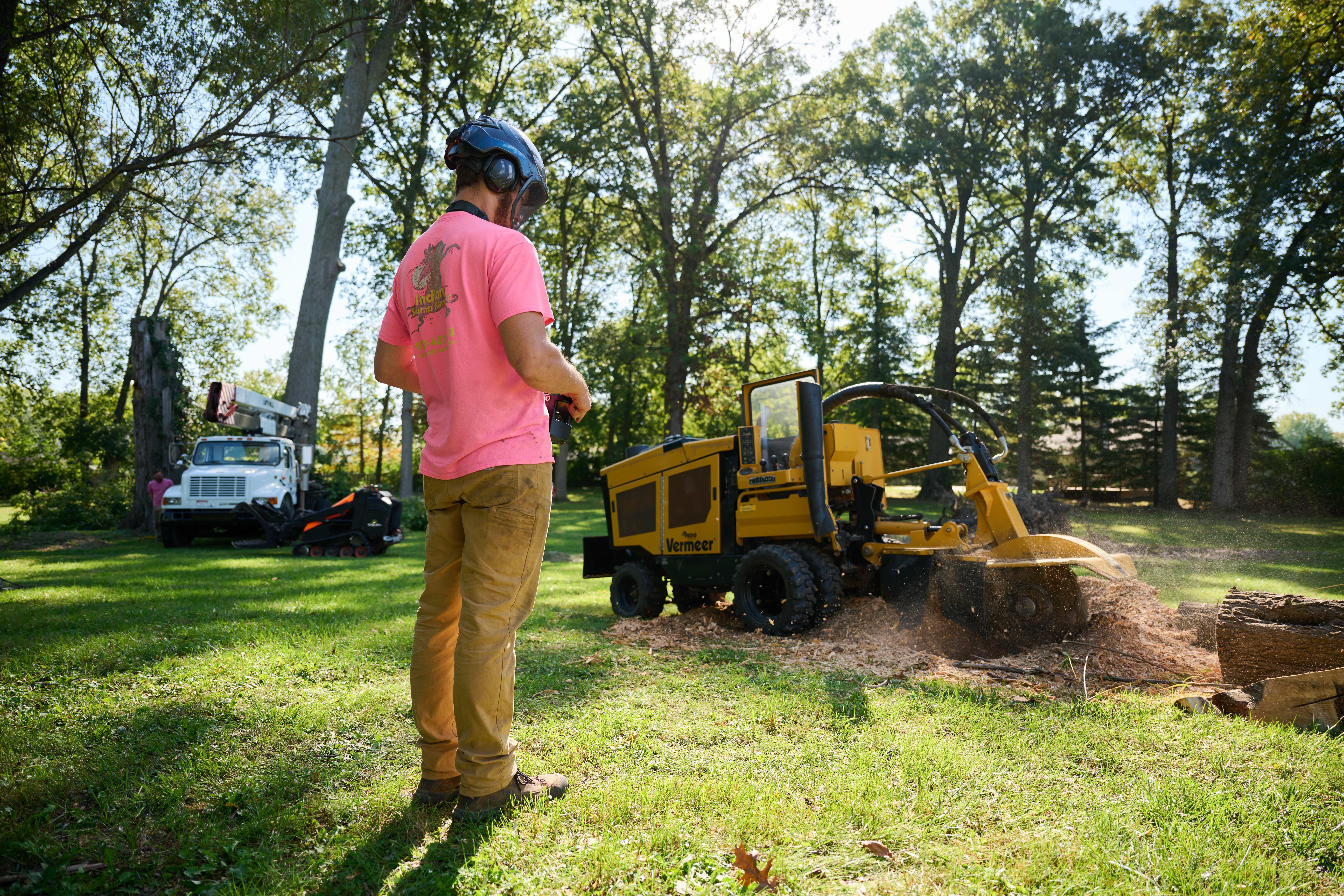
Renting a stump grinder is one way to remove stumps in your yard. Find out the average stump grinder rental cost, additional expenses, and more.
Who will pick up stump grindings? A stump removal service is the ideal pro for the job, but there are other options.
There are several things to consider when removing your tree stump. Since stump grinding is a large project, it’s important to prepare properly.

Thinking about clearing your yard? Learn about tree stump removal or grinding costs, planning tips, and how to hire the right local pro for the job.
You don’t have to hire a professional to eliminate a tree stump. Save money and learn how to rot a tree stump quickly using these methods.