

•
Discover the cost to fertilize your lawn, including average prices, key factors, and tips to help homeowners budget for a lush, healthy yard.
April showers may bring May flowers, but a great fertilizer can ensure a few more blooms

Soil tests reveal your nutrient levels and pH balance, helping you choose the right fertilizer and avoid over-application that burns plants or pollutes water.
Expect to pay $11 to $20 for a soil test and $50 to $75 per application for professional lawn fertilization services.
You'll get the best results by matching your fertilizer timing to your grass type, watering before application, and using slow-release formulas for steady growth.
Hiring a local soil testing professional provides accurate nutrient analysis and fertilizer recommendations, helping you avoid guesswork and protect your lawn from damage.
We ask a lot of our lawns, shrubs, and veggie gardens, especially when we expect them to look their best season after season. Fertilizer gives our soil—and therefore the plants themselves—the nutrient boost they need to flourish and fight disease.
But fertilizer itself can be harmful to you, your plants, and the environment if it's not used correctly. We'll walk through the basics you need to know to fertilize everything from your grass to your geraniums like a professional.
Fertilizer replenishes depleted soil with nutrients lost to runoff, overplanting, pH balance, and other factors like leaf removal. Fertilizer primarily contains a customizable balance of nitrogen, phosphorus, and potassium.
Depending on the blend or source, it may also include microorganisms and micronutrients such as magnesium, sulfur, and calcium. You will also find fillers that help stabilize the formula, break down in water slowly, even fight pests.
The three major nutrient players—marked as NPK on your garden bag—support a different process in plants. Nitrogen aids in leaf and stem growth and can speed up the growing process overall. Phosphorus tends to root growth, which is why you're more likely to find it in fertilizer for new plants and lawns. Potassium—commonly called potash—supports photosynthesis, encourages fruit and flower production, and strengthens the plants against disease.
We recommend starting your fertilization process with a soil test. You can purchase a soil test online for between $11 and $20 before fertilizing your lawn or garden each year—or call in a local soil testing pro.
The soil test results will list the pH of your soil and the level of major nutrients. These numbers help you choose the best plants for your garden—as some thrive better in acidic soil—and which fertilizer to buy.
The results will primarily keep you from over or under-fertilizing your soil. Too much nitrogen or phosphorus can run off into the water supply or burn your plants when applied too quickly.

If you're mulling through the aisles of your garden store, it's easy to get overwhelmed when you reach the fertilizer sections. Fast-release fertilizer, NPK ratios, organic versus synthetic—option overload is common and totally understandable.
Here's how to narrow down your options.
Begin by determining how quickly you need to deliver nutrients to your lawn or plants. Quick-release fertilizers are ideal after planting new turf and giving the grass seed an initial push to strengthen its new roots.
In nearly all other cases, slow-release fertilizer is best to avoid burning your plants and releasing too many chemicals into the nearby water sources.
You may find different forms of fertilizer correlated to fast and slow-release varieties as well. Liquid fertilizer acts faster than granular fertilizer—that breaks down slowly over time.
Organic fertilizer comes from animal, plant, or mineral-based products often composted down for safe application to your plants. These options often come in granular fertilizer form and provide a slow-release method to slowly adjust your soil over the season.
Synthetic fertilizers from chemicals release much more quickly in your lawn since they break down when watered. They also tend to come in higher nutrient concentrations so you can use less of them at one time.
Let's chat about those three mysterious numbers on the fertilizer bags. The NPK ratio relates to the percentage of nitrogen, phosphorus, and potassium in the bag. These numbers often look like 5-5-5, 10-10-10, or something like 3-0-5.
Why the variation? Some plants, such as leafy greens in your veggie garden, crave higher levels of nitrogen. Other plants like a slow release of low levels of nitrogen and potassium, but don't need phosphorus since their roots are already established. You'll also find all-purpose NPK ratios that safely give your lawn and garden a boost without overdoing it.
As you’re learning the basics, you’ll realize that plants benefit most from fertilizer just before and during their peak growing phase. Laying fertilizer will either prep the soil for the arrival of new plants or help it through the spring, summer, and fall when it's eating and growing the most.
You can also fertilize your lawn or garden when it's struggling, but proceed with caution. Fast-acting fertilizer can enliven patches of yellow grass or wilting flowers, but test your soil to ensure this is the cause of the problem. Moisture levels, sun, pests, and disease could also be the cause of the issue, so it's best to rule these out first.
Established lawns require different fertilizers depending on the grass species. If you're unsure, chat with a local landscaping expert to get started.
In most cases, you will have a collection of warm-season grasses if you live in a hot or temperate climate and cool-season grasses up north. Fertilize cool-season grasses in the spring after your grass has "woken up" a bit and started to become greener. You can also fertilize cool-season grasses mid-fall, about six weeks before your first frost.
Warm-season grasses are quite the opposite. Wait until late spring or early summer to fertilize it to avoid burning the grass.
As for your shrubs, vegetables, trees, and flowers, fertilize either before planting, or—depending on the plant—during its prime growing season. Vegetables and flower beds with depleted soil benefit from slow-release soil treatment before planting seeds or seedlings.
Each species will prefer different fertilizer levels at different times. Tomatoes enjoy both early-season and mid-season soil amendments, for example, but most trees and hardy shrubs won't need anything after their initial post-winter growth spurt. We recommend checking the specific instructions on your seed packets for fertilization instructions.

Now that you've hand-picked the right fertilizer and waited for the right moment, it's time to apply it to your lawn or garden.
Let's look at some fertilizer basics to get started:
Rent or purchase a drop or broadcast spreader to evenly apply fertilizer to your lawn and garden.
If you decide to spread it by hand, be sure to wear gloves during the process.
Never apply fertilizer to dry or drought-stressed plants and lawns. Water your lawn the day before applying fertilizer and all it to fully dry before starting.
Follow the dilution and application on your bag specifically and always consult your local environmental and housing associations to check for fertilization restrictions.
After application, lightly water the area to keep the fertilizer in place and activate granules.
Avoid fertilizing before a large storm to protect from runoff into groundwater and sewers.
Working with a professional landscaper your first season can cut out the guesswork for the years ahead. Professional lawn fertilization typically costs between $50 and $75 per application, depending on the size of your lawn, or just under $300 for a season package of treatments.
They did an excellent job! Super fast, helpful, and made the process so easy. Great job!
 1-800-GOT-JUNK?
1 tree was cut down and 5 others including a large willow tree were trimmed. The Grant Tree Service men were professional and cleaned up afterwards. The cost of the 6 trees were affordable. I am very happy with the results. I would hire them again.
 Grants Tree Service
Thank you very much for his professionalism and getting the job done the right way the first time. Great job!
 Alex & Alex
Great job! Friendly, timely and thorough.
 Eco Plumbers, Electricians, and HVAC Technicians
Seth was very professional, prompt in responding to queries about the work required , gave sincere advice as to what would be best for tree trimming and did the job timely.
It was a difficult job and Robert and his son worked diligently to get it done.
Window Depot did an amazing job on my deck. I wasnt sure what I wanted to do, but their composite decking was affordable and will last a long time. I am excited to have family over, and I am no longer embarrassed by my backyard. Jeff and the ground crew were polite, respectful, and caring for...
 Window Depot USA of Central Ohio
He did the work in a timely manner and I would use him again!!
 Quantum Waterworks Waterline & Drain Cleaning Services, LLC
Cameron and his crew did an excellent job. On time, professional and courteous. My driveway looks awesome!!
 All Star Paving and Sealing
The guys did an outstanding job and we had a great experience with CarifaTile. I appreciated that Joe reviewed the quotes with me and set expectations prior to the install. The crews showed up as scheduled and always left the areas clean upon leaving the house. We will definitely use...
 CarifaTile
From average costs to expert advice, get all the answers you need to get your job done.
Discover the cost to fertilize your lawn, including average prices, key factors, and tips to help homeowners budget for a lush, healthy yard.

Does it matter when you fertilize your lawn? Learn when to fertilize grass to get your lawn healthy and greener than ever.

Choosing between organic fertilizer and synthetic fertilizer? Here’s what you need to know before you invest in fertilizer for your yard.

Follow these yard maintenance tips for homeowners and renters to have a beautiful, healthy lawn and garden. Learn how to do yard maintenance the right way, build healthy soil, inspect, clean, and more with our expert tips.
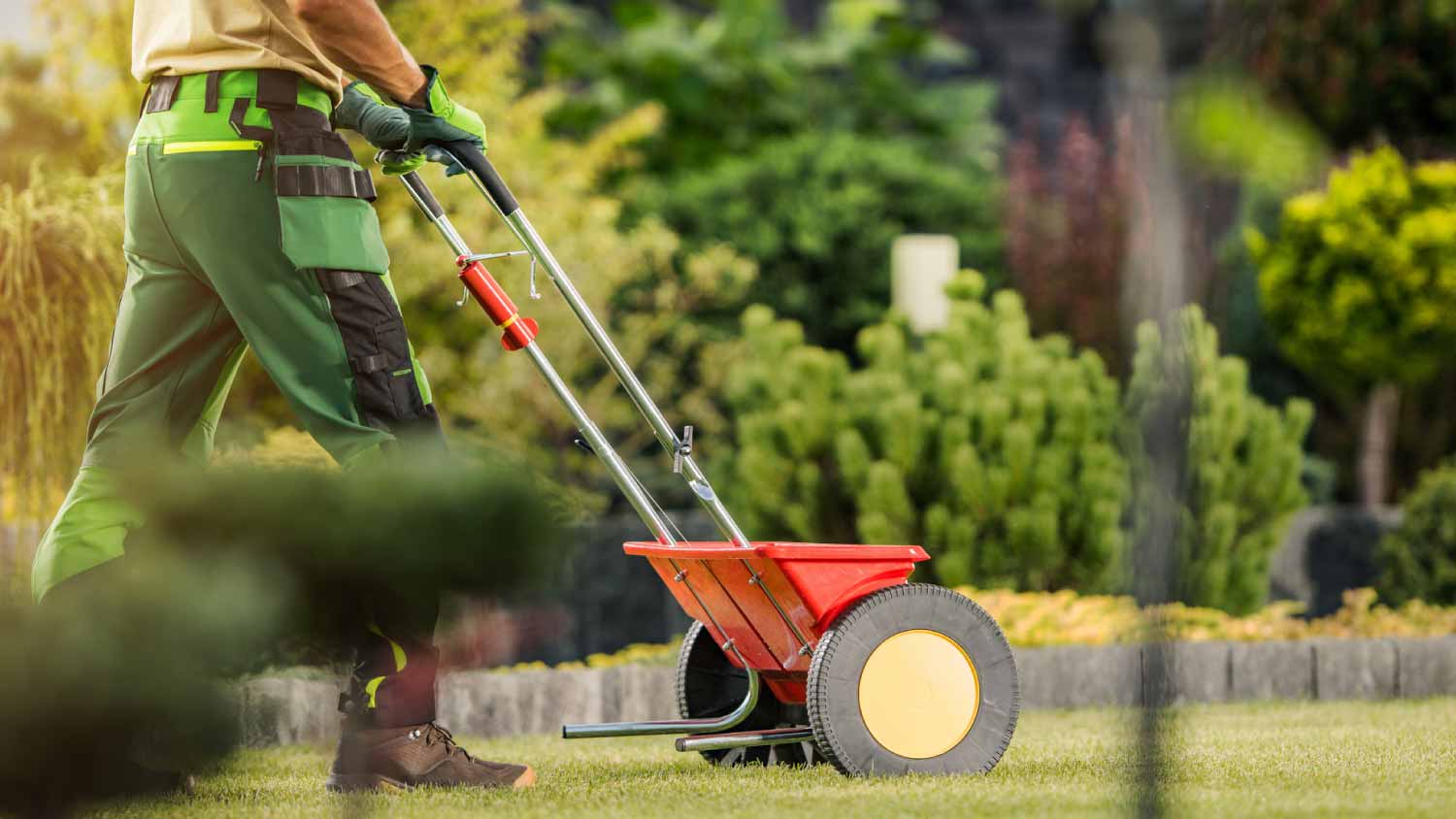
If you’re looking to apply fertilizer to your lawn, there are a few things you need to get right first. Make sure you’re ready to answer these lawn fertilizer questions before you start.
Want to know how to get rid of Johnsongrass in your lawn? Here’s how to control this noxious weed, from identifying this invasive grass to using chemicals against it.