
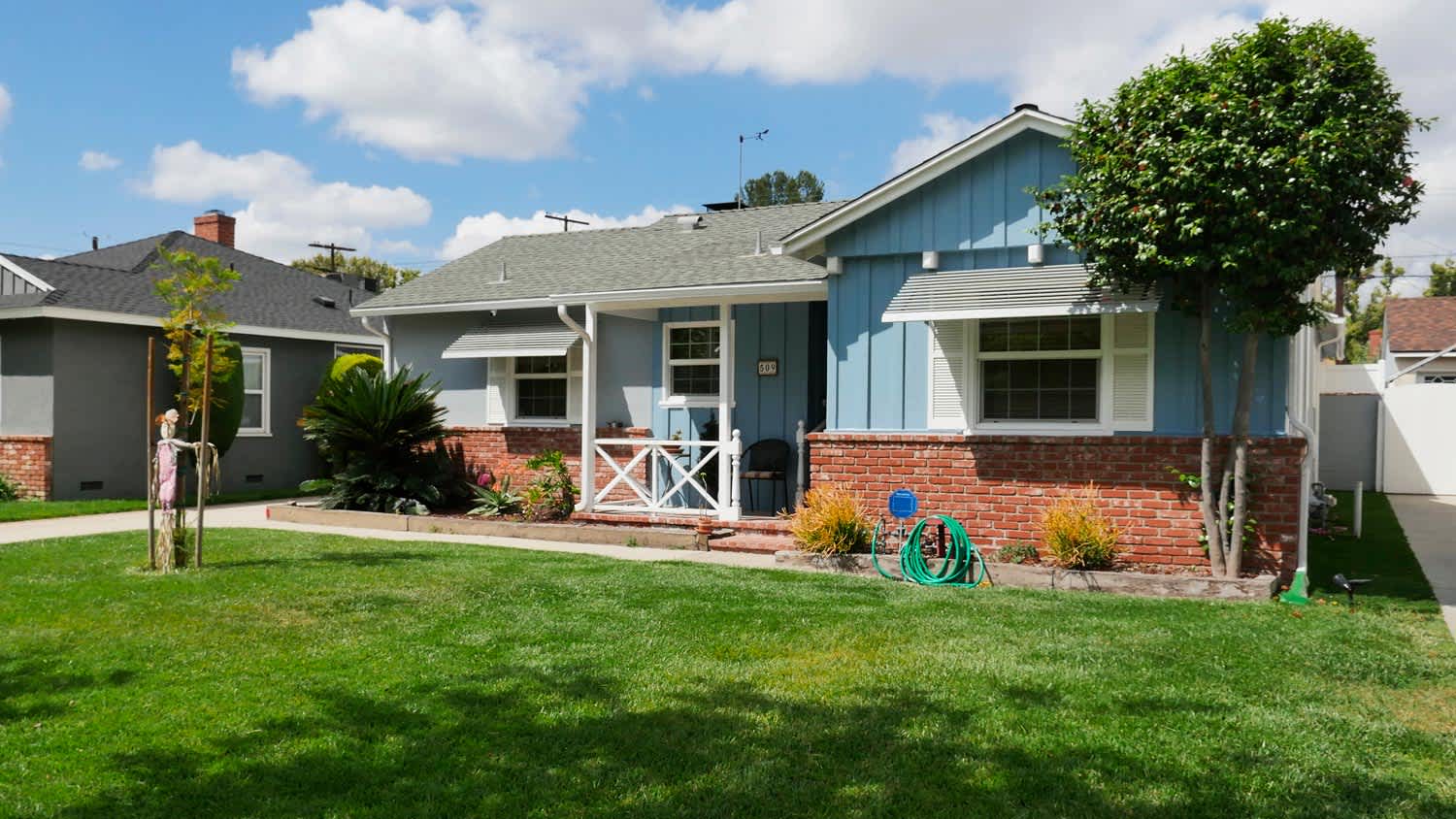
The cost to reseed a lawn can vary depending on the size of your yard and the condition of the soil. We’ll help you figure out the true cost of reseeding or overseeding your lawn, along with whether or not you should hire a professional.
Sometimes watching the grass grow is a necessary step for a healthy lawn

Even if you give your lawn doting care fit for a newborn, brown grass patches can still show up. To get your grass back on track, it’s best to learn how to reseed your lawn. Here’s a step-by-step guide for reseeding your lawn so it’s lush once again.
Reseeding your lawn is a big undertaking, so it's important to make sure that really is the right solution before you dive into killing off your grass (that’s right—to save your yard, you have to destroy it).
If your lawn is diseased, is more than ⅓ dead and brown, or is more than 50% weeds, the best course of action is most likely reseeding. But small brown patches, early-stage fungal diseases, and some weedy areas require less dramatic action.
To get a lush, green lawn and improve soil and grass health, there are a number of things you can do, including applying the right fertilizer, dethatching, aerating, and overseeding. If you've tried all these things or your lawn still has extensive problems, you might need to take a few samples.
Schedule your reseeding with the seasons based on the type of grass on your lawn. The general rule of thumb is to reseed during the grass variety's most rapid growth season.
Plant cool-season grasses in the north in the late summer and early fall, and warm-season grasses in the south in the late spring. Always wait at least a month after or before the last and first frost to ensure seeds can flourish in warm soil.
If you've had persistent problems with your lawn, taking soil samples is a smart first move. It's an inexpensive process, with kits costing less than $20, and the results help you determine what fertilizers or other soil amendments you need to add to build healthy soil.
Soil that’s in tip-top shape is the best possible foundation for your new grass. Make sure you take samples from at least four different areas of your lawn for a complete picture of what's going on below.
Replanting your turf requires making way for the new seed. There are a few methods you can try:
Use a potent herbicide from the hardware store.
Lay a thick layer of black plastic over the grass. Anchor it with bricks or rocks, and within a couple of sunny weeks, the grass underneath will die and can be raked up.
Rent a sod cutter to remove the grass and top layer of soil.
You can begin this process as you’re waiting for your soil test results.
Once the existing grass is dead, vigorously rake the surface using a rigid tine rake to pull out all the dead stuff. This bit requires a lot of hard work, so it'll definitely give you an intense upper body workout.
When you have the results of your soil test back, you'll know what amendments and conditioners you need to add. Spread the amendments evenly over the soil surface, whether you're adding well-rotted manure, compost, commercial soil improver, lime, sulfur, or gypsum, or a combination.

Just adding a layer of quality compost and amendments to the top of the old soil won't fix your lawn problems or soil health. Instead, you need to turn the amendments into the soil where they can penetrate the top layer and improve the soil’s structure and condition.
Rent a power tiller and work it over the soil, letting it bite deep and pull the amendments down. Give the area several passes with the tiller, getting the soil as even and fine as possible. This will give you the best chance of growing healthy grass and having an even lawn.
Then take a rake and work it back and forth across the soil, evening the area out. Remove any rocks or inorganic debris, too. For proper germination, grass seeds need good seed-to-soil contact and the soil needs to be smooth, even, and fine.
Even though you've already worked hard to improve soil health, to give your grass seed the best possible chance at thriving, apply a light coating of lawn starter fertilizer. If you've got a large lawn, this is much easier with a spreader.
If you're unsure of which fertilizer to choose or how to fertilize your lawn, chat with a local lawn specialist.
Choosing the right grass seed is crucial, and we recommend never picking your grass based on cost. Instead, choose one that thrives in your climate and soil type.
If in doubt, a local gardener should be your first point of contact, as these pros are intimately familiar with your area and can help you choose the right grass seed.
Take a broom rake and create shallow furrows over the soil’s surface, then lightly sprinkle the grass seed over the furrows. Don't go crazy—be conservative with your application. Too much seed reduces the overall germination rate and can result in patchy growth.
Now take your broom rake, turn it upside down, place it on the soil surface, and gently move it side to side, covering the furrows and the seed.

Now you need to compact the soil surface. This will make your lawn firm and walkable, and help with crucial soil-to-seed contact. If you skip this step, you'll also end up having to fix depressions in your lawn as the soil settles.
Fill the sod roller about halfway with water. Don't overfill it because you don't want to compact the soil too heavily, or you'll ruin the structure and have a weak lawn. Roll the entire area you seeded to firm the surface.
Grass seed accelerator is a useful substance that absorbs many times its own weight in water and slowly releases it into its surroundings. These super-absorbent little pellets help to keep the seed moist while it germinates. Plus, they naturally degrade into the soil.
To apply it, turn the spreader on the widest setting. Walk quickly across the area so you get a nice, light covering of accelerator pellets. Try to walk at an even pace without taking excessive pauses so you don't get any spots saturated with pellets. If that does happen, simply rake the heavily covered area to even out the distribution.
Right after rolling and applying the accelerator, give your new seed a drink. Keep watering light and even by using a sprinkler. Start it at one corner and set it to travel in a quarter arc. When water starts to pool on the surface, stop the sprinkler, move it to the next corner and repeat the process. Do the same with the remaining two corners.
Grass seed doesn't need constant soaking. You'll get the best germination by keeping the top 4 to 6 inches damp, but not sodden. As seedlings start to appear, water regularly—but nothing excessive.
To encourage deep, strong root growth, decrease watering frequency over the next six weeks, then move to your regular lawn watering schedule.
Patiently wait until your lovely new lawn grows to 3 inches, then give it a good trim. Remember that it's still delicate at this stage, so sharpen the mower blade before you begin to get clean cuts that minimize damage to the grass stems. But don't get carried away: Only take off the top one-half inch.
Repeat this when the new grass again reaches 3 inches. Then move to your regular mowing schedule, but never remove more than a third of the grass height.
You can reseed a lawn yourself, but be aware that it's a lengthy, time-consuming process that requires lots of physical activity and the right skills and tools. Hiring a local seeding service to reseed a lawn costs $1,000 on average. But that depends on the size of your lawn, the type of grass you choose, and how much amendment the soil needs.
If you choose to DIY it, you can save up to $350 in labor costs. However, you'll still need to purchase seed, soil conditioners, and other supplies, and unless you already have a tiller and sod roller, you'll need to pay the cost of renting those by the day, so your savings may be far less than you anticipate.
Custom Paint Jobs LLC made our home feel like a piece of art. Thank you for your creativity!
 Custom Paint Jobs, LLC
Window Depot did an amazing job on my deck. I wasnt sure what I wanted to do, but their composite decking was affordable and will last a long time. I am excited to have family over, and I am no longer embarrassed by my backyard. Jeff and the ground crew were polite, respectful, and caring for...
 Window Depot USA of Central Ohio
First of all, the gentleman I dealt with (Cam?) was very responsive to my many questions and concerns throughout the project, which is a huge plus to me. From the first time I met him for the estimate all the way til the completion of the job, he and his crew were professional and respectful....
 All Star Paving and Sealing
We had a 20+ year old landscape lighting system that needed replacement. Midwest Lightscapes worked with us to design a much improved lighting system, lighting the exterior of the house and the back yard. Installation of the 45 light system took one and one-half days, and went very smoothly....
 Midwest Lightscapes
Another great success for me on home advisor. This company did an awesome job on my landscaping and stayed within my budget. The best part, the work was complete within 2 days of my initial request. Professional and responsive. I highly recommend!
 Blue Ring Residential Services, LLC
The company no showed on me twice. The 2nd time was no call no show. They were responsive to set up the first appointment to perform the "landscape cleanup". 3 hours after their initial scheduled appointment time they called me to let me know they had some "problem" with the truck and their...
 Ruby Home and Hauling Services
Received ideas for future landscape plans...quote to do the work seemed a bit high but I did not have any other quotes to compare it to, so perhaps that is the going rates. <br />
 Landscapes By Terra, Inc
All around they have done a really great job. <br /> I have used JL Landscapes for the past 8 years. I own and operate my own commercial/residential real estate company where we own, operate, and maintain our own properties. JL Landscapes has been our exclusive landscaper for both our...
 J.L. Landscapes
Bought a half a cord of firewood from Pitzer with stacking last month. I waited to report so I could see how the wood burned. <br /> <br /> I have three pet peeves regarding landscapers, but Pitzer scored "A"s regarding all three. First, rather than having customers "leave a message" and...
 Pitzer Landscaping
I left a message on Sunday requesting to schedule a time to obtain an estimate/walk-through and received a return call in the morning of the following Monday. Mark worked with me and agreed to schedule the estimate/walk-through for the following Saturday. When Mark arrived for the...
From average costs to expert advice, get all the answers you need to get your job done.
The cost to reseed a lawn can vary depending on the size of your yard and the condition of the soil. We’ll help you figure out the true cost of reseeding or overseeding your lawn, along with whether or not you should hire a professional.

The cost to renovate your lawn depends on the extent of the damage. Our guide will show you how much lawn renovation costs.

Removing an old lawn is often necessary to plant new grass or build a new outdoor structure. Find out what to budget for your lawn removal cost.

If your lawn is looking patchy, rough, or dead, the solution is probably reseeding your lawn to restore the grass and grow a healthy new lawn. Here’s how to know when is the best time to reseed.

The best grass for high traffic lawns varies based on the planting location. These six grasses are the best choice for anyone who uses their lawn frequently.

A lush lawn doesn't have to be an unattainable luxury. Use this guide to learn how to fix patchy grass throughout your yard.