


Top-rated paving pros.

Get matched with top paving pros in Madison, NE

Enter your zip and get matched with up to 5 pros

Need a pro for your paving service project in Madison, NE?

Select your specific project to find the pro for you.

Find Paving pros in Madison

Avatar for 1 Stop Paving
1 Stop Paving
5.0(
1
)
Asphalt Paving - InstallAsphalt Paving - Install- For BusinessAsphalt Paving - Repair or Patch+1 more

Serving Madison, NE and surrounding areas

In business since 2017

Free estimates

Offers commercial services

Customer satisfaction is what determines our success, which is why we take a hands-on approach. When interacting with 1 Stop Paving, you'll notice that we're particularly focused on the principles of quality workmanship, timely completion, competitive pricing and integrity in all our business dealings. We combine knowledge and research with our extensive practical experience to ensure a specialized approach for your project needs. Contact us today for a fair and accurate estimate of your project. We look forward to adding you to our long and growing list of happy customers.

Response time9 hrs
Recommended by100%of homeowners
Paving Services questions, answered by experts

Asphalt and tarmac are not the same thing. Traditional tarmac, short for tarmacadam, uses tar as a binder to hold crushed stone together. Asphalt uses bitumen—a byproduct of crude oil—to bind aggregate. Though tarmac was once a go-to for roads, asphalt has become the modern standard. And these days, most surfaces referred to as “tarmac” are actually asphalt. So, while the names may overlap, the key distinction lies in the binder—tar for tarmac and bitumen for asphalt.

Maintaining a driveway depends on its material. For concrete and asphalt, it's best to clean the surface thoroughly twice a year with a stiff broom and a pressure washer to remove accumulated dirt and debris. Sealing the driveway is crucial to protect it from water damage and freeze-thaw cycles. Before applying a sealant, pressure wash the surface to remove any loose sealant, dirt, or stains, as sealing over them will trap them. Any cracks or expansion joints should be filled with a flexible polyurethane caulk or asphalt sealer. In colder climates, use sand instead of salt for de-icing. Sand helps melt snow and ice without accelerating the freeze-thaw process, which can cause cracks.

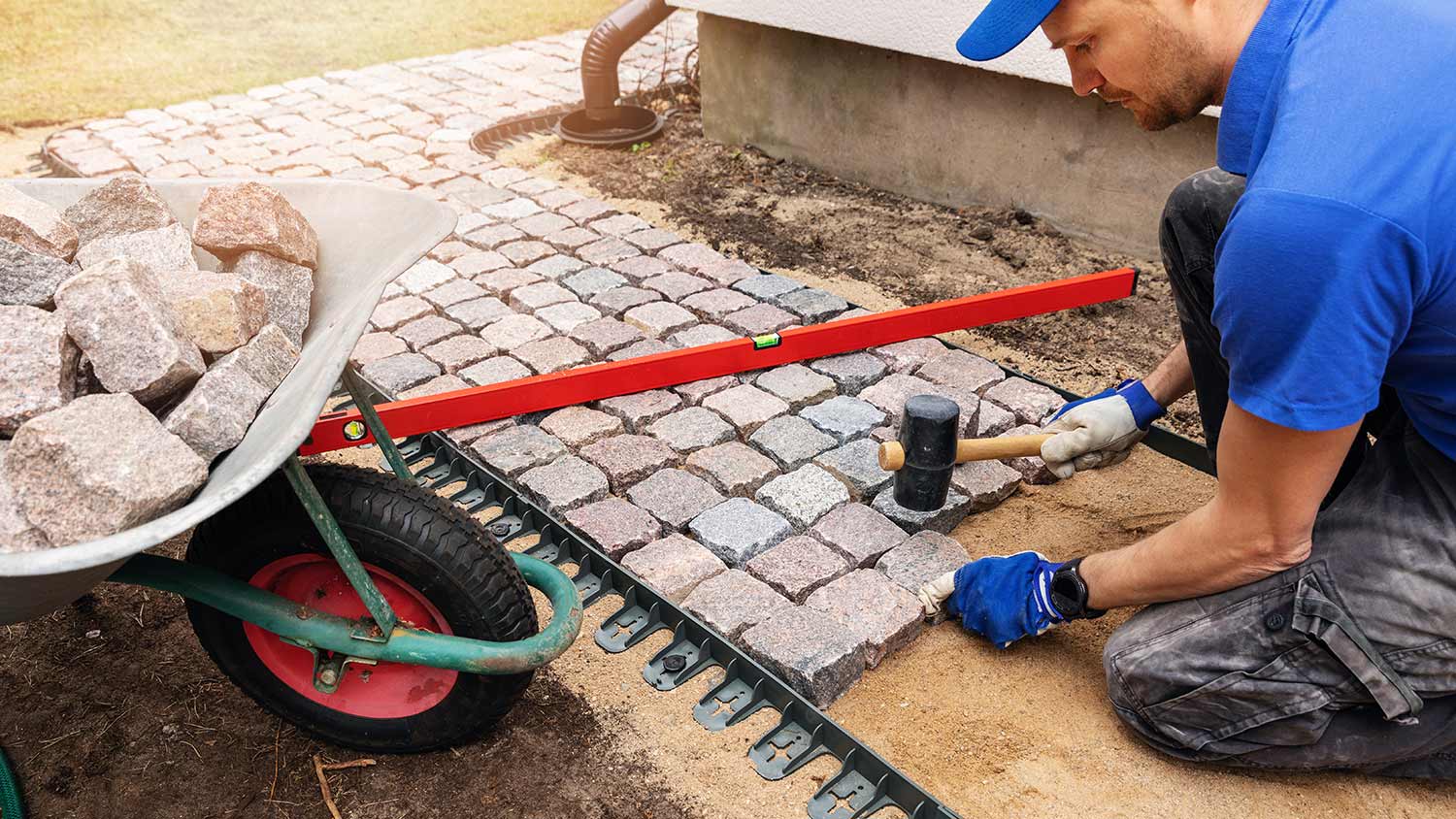
Yes, you should lightly wet the sand with a hose before laying the pavers on top. This activates the bonding agents in the sand, ensuring that your pavers don’t shift around during the installation process. However, you should make sure that the sand is not soaked; overwatering can cause the sand and pavers to not set properly.

Asphalt, which is stone mixed with tar, is the most common material for outdoor basketball courts because it’s so sturdy and versatile. However, you don't have to use it: another option is polymeric rubber, which has shock pads that can prevent injury. This option is a little more expensive, ranging between $16 and $25 per square foot.

Materials used for indoor basketball courts, such as hardwoods, aren’t really an option outdoors.

Chip seal layers gravel and a liquid bitumen one at a time on-site, while asphalt directly pours a pre-combined mixture. Asphalt must be sealed, but it will last up to four times as long as chip seal driveways. Aesthetically, chip seal has a natural, rustic look compared to the traditional asphalt slab.

The Madison, NE homeowners’ guide to paving services

From average costs to expert advice, get all the answers you need to get your job done.