




Top-rated paving pros.

Get matched with top paving pros in Humphrey, NE

Enter your zip and get matched with up to 5 pros

Need a pro for your paving service project in Humphrey, NE?

Select your specific project to find the pro for you.

Find Paving pros in Humphrey

Avatar for 1 Stop Paving
1 Stop Paving
5.0(
1
)
Asphalt Paving - InstallAsphalt Paving - Install- For BusinessAsphalt Paving - Repair or Patch+1 more

Serving Humphrey, NE and surrounding areas

In business since 2017

Free estimates

Offers commercial services

Customer satisfaction is what determines our success, which is why we take a hands-on approach. When interacting with 1 Stop Paving, you'll notice that we're particularly focused on the principles of quality workmanship, timely completion, competitive pricing and integrity in all our business dealings. We combine knowledge and research with our extensive practical experience to ensure a specialized approach for your project needs. Contact us today for a fair and accurate estimate of your project. We look forward to adding you to our long and growing list of happy customers.

Response time9 hrs
Recommended by100%of homeowners
Paving Services questions, answered by experts

Wet cutting is usually the preferred method. It controls dust, which helps protect your lungs and makes for a cleaner working environment. Plus, the water cools the blade, preventing overheating and prolonging its life while providing smoother, more precise cuts. The downside is the mess—water and asphalt sludge can be messy to clean. Dry cutting, though convenient if water isn’t available, creates a lot of dust, which can be harmful. This also increases the risk of blade damage due to overheating. So, if you have the option, wet cutting is the better method for most asphalt jobs.

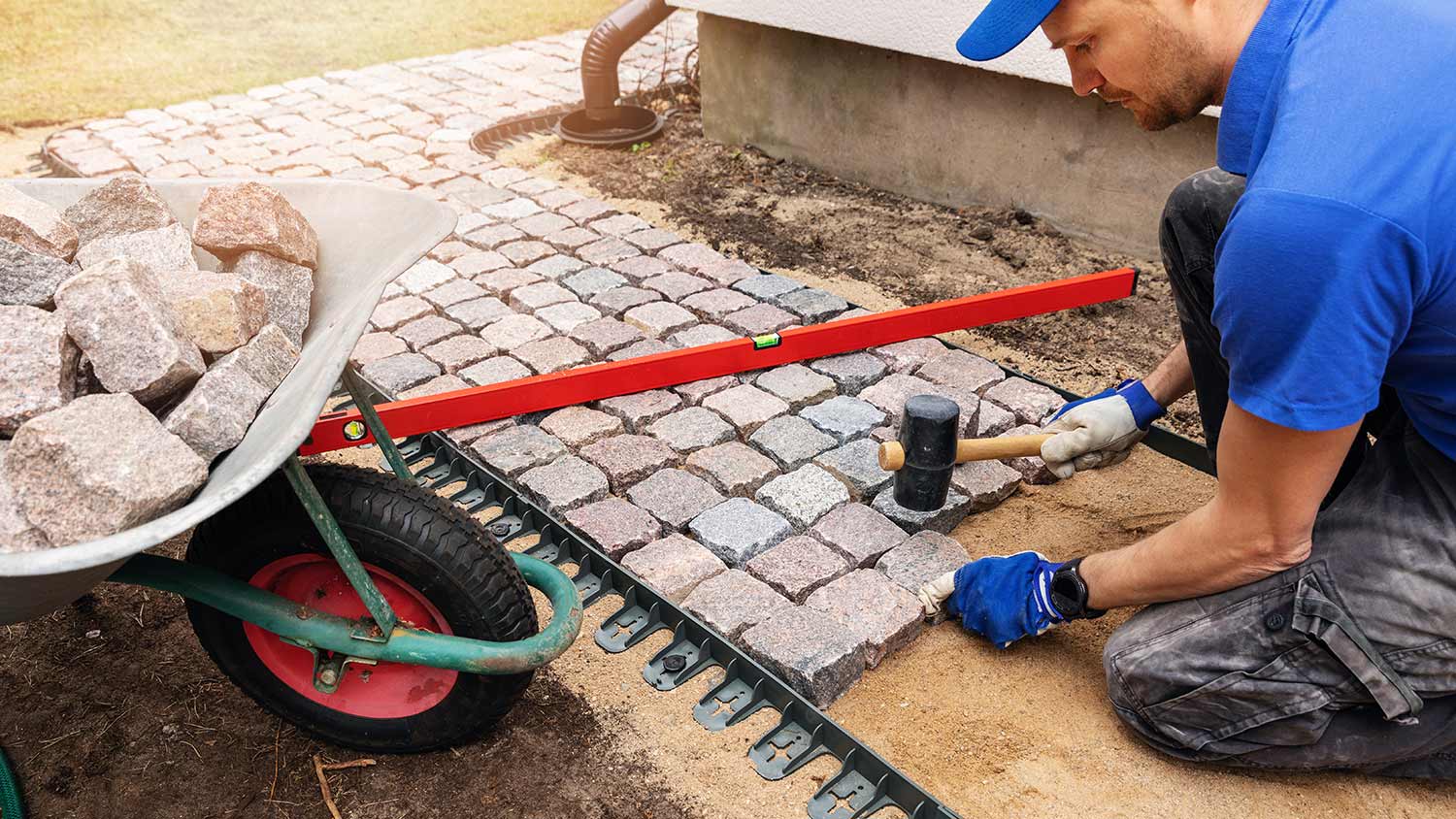
The most common causes of sunken pavers are poor base preparation and insufficient compaction. The problem could also be how your pavers were installed. If the soil beneath your patio or walkway wasn't compacted, it will pull pavers down as it settles. Additionally, using bare soil instead of making a paver bed with compacted gravel and sand can cause sinking over time. To fix sunken pavers, consider recompacting the base and addressing any drainage or erosion issues in the area.

To adhere pavers to concrete, you can use either mortar or a concrete-specific adhesive. For border pavers, a polyurethane-based adhesive is a good choice as it expands and contracts with temperature changes, keeping them firmly in place. For the non-border pavers, polymeric sand is used between the joints to prevent shifting. In most cases, it is also recommended to lay a permeable sand layer below the pavers to ensure proper stability and drainage. Before starting, always take the proper preparatory steps for a professional result.

A driveway's lifespan varies by material. Asphalt driveways typically last 15 to 30 years, while concrete driveways last longer, between 20 and 50 years. The longevity of any driveway is affected by factors like extreme temperatures, heavy traffic, and the quality of maintenance. Regular upkeep, such as filling cracks, resealing the surface, and ensuring proper drainage, can help extend its life. For gravel driveways, regrading to fill in uneven areas every year or two is recommended.

After removing existing moss, consider using paver blocking sand to fill the joints. This specialty material hardens once placed and serves as an effective barrier against moss and weeds. From there on, regularly clean your pavers and try to keep them dry. You can also seal your paver as a semi-permanent solution — just make sure you reseal every 3 to 5 years.

The Humphrey, NE homeowners’ guide to paving services

From average costs to expert advice, get all the answers you need to get your job done.