

Top-rated paving pros.

Get matched with top paving pros in Schuyler, NE

Enter your zip and get matched with up to 5 pros

Need a pro for your paving service project in Schuyler, NE?

Select your specific project to find the pro for you.

Find Paving pros in Schuyler

Avatar for 1 Stop Paving
1 Stop Paving
5.0(
1
)
Asphalt Paving - InstallAsphalt Paving - Install- For BusinessAsphalt Paving - Repair or Patch+1 more

Serving Schuyler, NE and surrounding areas

In business since 2017

Free estimates

Offers commercial services

Customer satisfaction is what determines our success, which is why we take a hands-on approach. When interacting with 1 Stop Paving, you'll notice that we're particularly focused on the principles of quality workmanship, timely completion, competitive pricing and integrity in all our business dealings. We combine knowledge and research with our extensive practical experience to ensure a specialized approach for your project needs. Contact us today for a fair and accurate estimate of your project. We look forward to adding you to our long and growing list of happy customers.

Response time9 hrs
Recommended by100%of homeowners
Paving Services questions, answered by experts

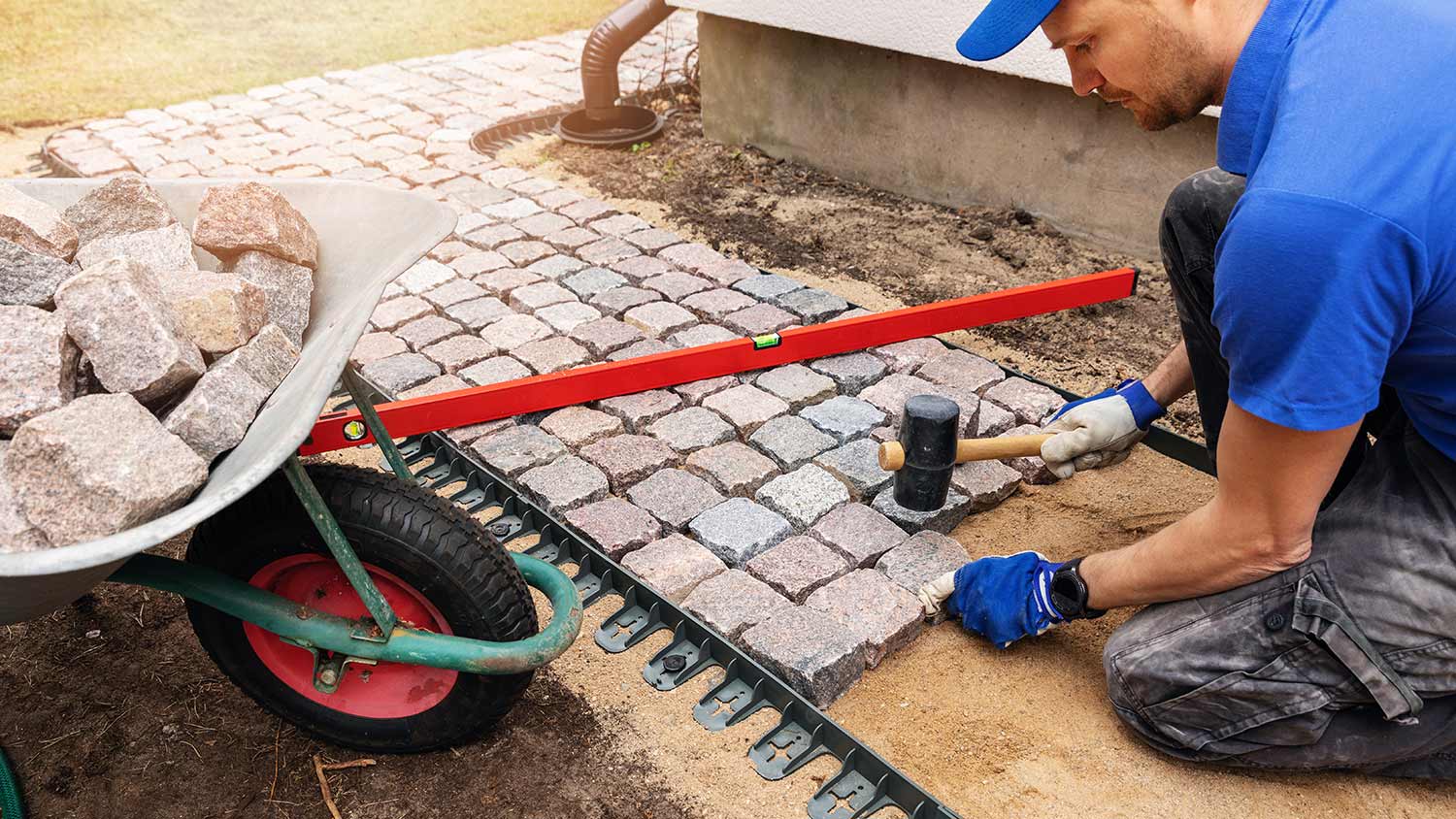
Whether you decide to DIY paver installation or want to hire a pro, it’s smart to understand the process. First, you’ll need to prepare the area by clearing away grass and dirt. Next, you’ll add the paver base of gravel and sand before laying the pavers on top. You may need to cut pavers to fit your space or the landscaping design and add edging stones.

The dimensions of a driveway apron vary based on local building codes, the width of your driveway, and the distance between the driveway and the road. On average, aprons range from 12 to 24 feet wide and 8 to 18 feet long. Typically, the end of the apron connected to the driveway matches its width—such as 10 to 12 feet for a single-car driveway—while the end at the street flares out to allow cars to turn in and out more easily. In some areas, you may not be responsible for the portion of the apron that extends beyond the sidewalk, but this depends on local laws.

The most common causes of sunken pavers are poor base preparation and insufficient compaction. The problem could also be how your pavers were installed. If the soil beneath your patio or walkway wasn't compacted, it will pull pavers down as it settles. Additionally, using bare soil instead of making a paver bed with compacted gravel and sand can cause sinking over time. To fix sunken pavers, consider recompacting the base and addressing any drainage or erosion issues in the area.

While it may be less expensive initially to lay concrete vs. pavers, the long-term expenses that come with repairing concrete may prove to be less cost-friendly than simply replacing a few damaged pavers. On top of that, stamped concrete may only last for 25 years compared to pavers, which can last over 50 years.

To adhere pavers to concrete, you can use either mortar or a concrete-specific adhesive. For border pavers, a polyurethane-based adhesive is a good choice as it expands and contracts with temperature changes, keeping them firmly in place. For the non-border pavers, polymeric sand is used between the joints to prevent shifting. In most cases, it is also recommended to lay a permeable sand layer below the pavers to ensure proper stability and drainage. Before starting, always take the proper preparatory steps for a professional result.

The Schuyler, NE homeowners’ guide to paving services

From average costs to expert advice, get all the answers you need to get your job done.