
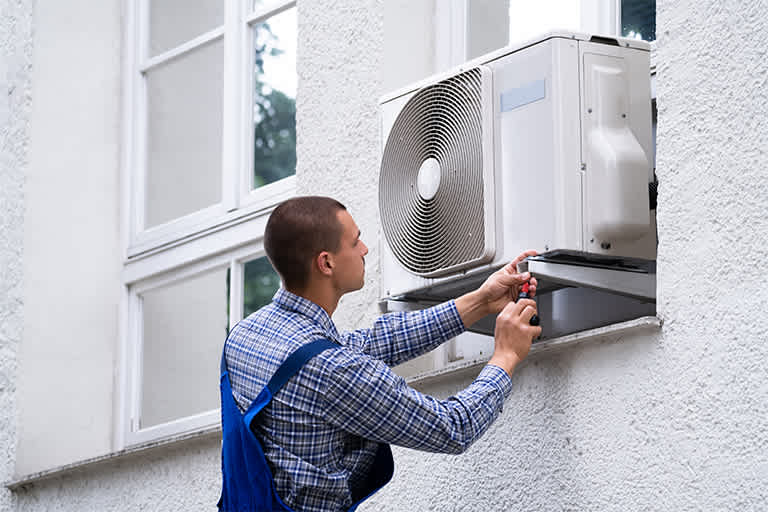
Air conditioning units can keep you and your family cool all summer long, but when they stop working, you can be left scratching your head. Read on to learn how to fix some of the most common window AC problems yourself or with the help of a pro.
Stay chill with these eight AC tips

Your AC is working properly when the temperature difference between return and supply ducts measures around 20 degrees Fahrenheit after running for ten minutes.
Expect to pay $70 to $350 for AC capacitor replacement or up to $500 for extended AC problems, with basic tune-ups costing $75 to $200.
Your air filter needs replacing if your AC feels weak or warm, as a clogged filter blocks airflow and reduces cooling performance throughout your home.
Hiring a local air conditioning repair professional provides reliable help with refrigerant leaks, compressor issues, and blower motor repairs to restore proper cooling quickly.
If you find yourself constantly turning down your thermostat, but your house isn’t reflecting a cool temperature, it’s time to examine your AC unit. Fixing your air conditioner can be costly, depending on the problem. However, you may be able to save some money if you can check out what the problem is yourself. Here’s how to tell if your AC isn’t working properly, as well as probable causes and how to fix them.
Before calling in a pro for air conditioner troubleshooting, take a look at the return and supply ducts first to determine whether an expert check-up is necessary. These elements will be located in front of and behind the filter on your indoor AC unit.
To figure out which duct is which, turn the fan on and place your hand or a piece of paper in front of the entry point. If the paper is sucked in, it’s a return vent. If it blows outward, it’s a supply duct.
From there, place a thermometer of any type (even a refrigerator thermometer) into an access hole in the return duct. If there are no existing access holes in the ducts, you may need to create one with a drill or a hole punch. Secure the thermometer to the access hole and let the machine run for ten minutes. Take note of the temperature after ten minutes and repeat this step with the supply duct.
When you have the two temperatures written down, subtract the lower one from the higher one to find out the difference between the two. On a properly functioning AC, the difference will be about 20 degrees Fahrenheit. If it’s any less or more, there’s probably something wrong with your machine.
Changing your air filter is an inexpensive, easy fix before calling out a specialist, as a filter tends to cost between $50 to $75. To start, locate your air filter, either within the unit or near a vent by your thermostat. Every unit is different, but you should be able to loosen the grill of the vent, pull the old one out, and insert the new one by looking at the arrows on the filter.
Be sure the filter is fully in place by tapping it to ensure it doesn’t move before placing the vent on again. This simple act can help keep your cooling costs down in those hot summer months.
If your air conditioner isn’t running, confirm you have not blown a fuse or tripped a circuit breaker. High-voltage breakers can shut the unit down. Flip the breaker back, and it should start blowing out cold air again.
Sometimes the problem is simpler than you think. Replace the batteries on your thermostat, which may be the solution to your problem. Periodically check for a blinking battery light or symbol on the thermostat to avoid problems in the long term. If it happens often, it could mean that replacing your thermostat is the best answer.
Head out to your unit to investigate thoroughly but carefully. If your unit is outdoors, you should be able to hear and see if the fan is on. If you can see or hear the fan moving in your unit and you feel air at the top, your blower is working, and you can rule it out as the problem with your unit. If you don’t see the blower moving or hear it working, be sure to mention that when you call an AC pro.
While you’re outside, it’s a good time to check your fan and compressor. Inspect the fan motor thoroughly and look for any signs of damage. Other issues signaling an issue with your fan include:
Slowly rotating blades.
AC unit making a loud noise when the fan is on.
Continuous rotation, even when the AC is off.
No response to the AC turning on.
It’ll be tricky to pinpoint if the fan or capacitor is the problem because the capacitor powers the fan’s motor. So you’ll need to unscrew the condenser unit’s side panel to get a better look (make sure the breaker powering the AC is off before you attempt this). The capacitor is a cylindrical battery that has cables attached to it. If it’s swollen, then you’ve found the issue. If not, then the problem lies with your fan.
Fixing this is essential because it can affect your compressor’s lifespan if left to linger. AC compressor costs are more expensive than simply replacing a fan. That’s because the compressor’s job is to manage the refrigerant's airflow between the evaporator and condenser, and it can damage important and pricey machine elements like the AC capacitor when not in working order. The cost to replace an AC capacitor ranges from $70 to $350 for everything involved, so you’ll be looking at a lot of extra fees from just one damaged part.
After you’ve inspected your unit’s blower, look for any signs of leaking. If your coil is covered in ice, you see liquid near the coil, your machine is making a whistling sound, or there’s condensation on AC, the line is likely leaking refrigerant. We don’t recommend handling refrigerants on your own. Instead, call a pro to take it from here.
In the case of a leak, have a local air conditioning repair tech conduct a professional inspection.
Is your area experiencing a heatwave? When it’s hotter outside, older units have difficulty keeping up. If you’ve checked for everything else, it’s possible your unit is on the older side or isn’t big enough to handle the heat and the size of your home. Because your unit cannot run at its maximum efficiency, it may be time for you to upgrade the unit.
After ruling out these issues, calling a local HVAC company can help identify the larger issue. On average, simple tune-up visits cost from $75 to $200, but extended problems can cost you up to $500.
Conroy Baltimore contributed to this piece.
If you’re good people wanting to do business with good people, hire Matt. He is a consummate professional and utterly competent. He installed a water heater in my home at a price that beat competitors by hundreds of dollars with a promise to support the unit for its life (even after its 6 yr...
 Greene's Plumbing Services
Corey Carr was great. I had damage from a recent storm and needed to have my mast and other components replaced. The project entailed coordinating with AEP, and Corey helped make a stressful situation a lot less stressful. I really appreciated his dedication to service and the job very well done.
 Mr. Electric of Columbus
This service was great. My air conditioner went out during the heat spell that we had. My husband has health issues and they came out that night and at 9:30pm the air conditioner was fixed and running. We are sooo very thankful, this is the company I will be using from now on and would...
 Mr. Mechanical Ohio
I normally do not leave reviews, but my experience with Worthington Air was extremely frustrating and disappointing. About 30 days ago, I had a consultation done for an HVAC replacement and was quoted approximately $15,079. Based on that quote, I applied for financing through their company...
 ARS Columbus Worthington Air
Great company! Price was competitive, technician showed up on time and completed the job (exterior electric Radon fan replacement) quickly. Would hire them again.
 MaGen Property Inspections and Radon Mitigation
As usual with ECO, tech Jordan was outstanding, very professional, very knowledgeable, and very thorough with repairs made to tankless water heaters. Very highly recommend ECO!!!
 Eco Plumbers, Electricians, and HVAC Technicians
Raven and crew does absolutely fantastic job. They are very professional if any concerns were to occur with any of her work she always took responsibility and finished out with a great job. I have worked with her business for a year and have always been satisfied. Very trusted business and...
 Creations of Transformation LLC
I would recommend this company to anyone! He showed up on time, was friendly, completed a very difficult repair on our dryer vent cover, was responsive, and pricing was extremely fair and competitive. I would have him back to do any of our repairs or cleanings without hesitation!
 U.S.A. Dryer Vent, LLC
Ace Fireplace Services' chimney sweep service is truly exceptional. They used advanced technology to ensure a thorough cleaning process, and my chimney has never looked better. I highly recommend their services.
 Ace Fireplace Services
The technician was very professional and friendly. He answered all my questions and was very thorough. He left the fireplace area very clean . He inspected from the roof and advised me as to other work that might need to be done. There was no pressure there. I was very satisfied with the...
 Supreme brick & chimney
From average costs to expert advice, get all the answers you need to get your job done.
Air conditioning units can keep you and your family cool all summer long, but when they stop working, you can be left scratching your head. Read on to learn how to fix some of the most common window AC problems yourself or with the help of a pro.

Have you ever wondered how AC works to make cold air that it pushes through your home? Follow this guide to learn air conditioning basics.
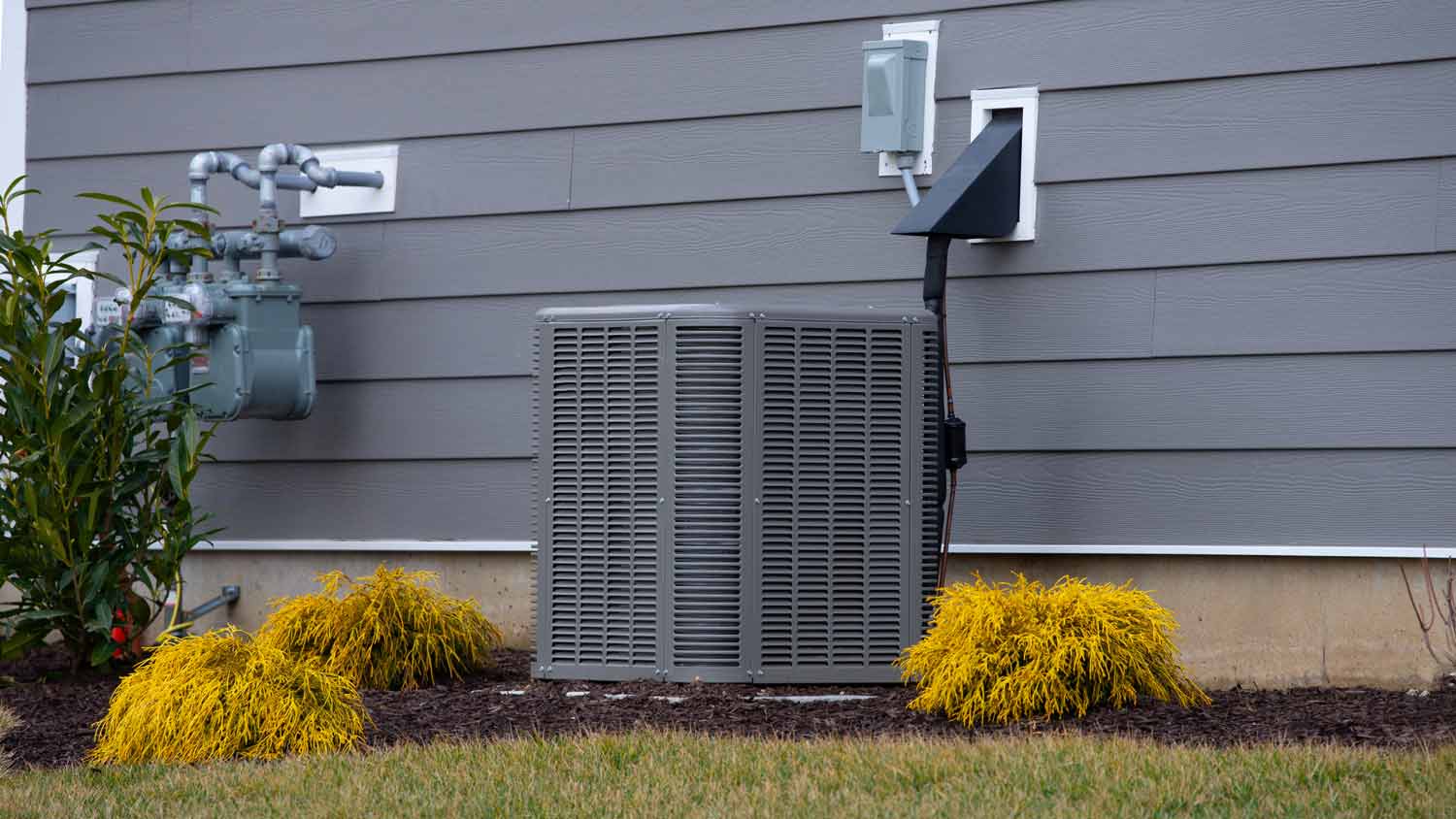
How long does an AC capacitor last? Under good conditions, your capacitor may work for up to two decades—but certain conditions can shorten its life.
If your AC went out, you probably want to have it fixed—and fast. Learn six common reasons your AC could be on the fritz and possible solutions.

A broken AC capacitor can stop your air conditioning unit in its tracks. Find out how to test an AC capacitor using a multimeter by following these steps.

When the weather’s sweltering outside, can you run your air conditioner continuously to stay cool, or does it need time to rest?