

If your air conditioner won’t turn on or makes chattering noises, you might have a bad contactor. Learn more about AC contactor replacement costs in this guide.
Don’t fire up your AC before taking these steps
Spring AC preparation starts with inspecting your outdoor unit panels to confirm they're in place, protecting electrical connections and reducing shock or fire risks.
Expect to pay thousands of dollars for HVAC repair and replacement costs when your system fails, so addressing spring prep now helps you avoid these expenses.
Your AC needs clean condenser coils and fresh indoor air filters before the first run, as winter debris and dust limit cooling performance and airflow.
Hiring a local HVAC repair professional provides reliable support when your system won't cool properly or needs electrical, thermostat, or compressor diagnostics after startup.
Ah, spring. The flowers are blooming, the days are getting longer, and the temperatures are rising. But before you fire up the AC for these first warm days of the season, there are some steps you need to take to ensure your system is ready for the summer ahead.

If spring is, well, springing, and you’re getting ready to start up the air conditioner for the first time of the season, you might think that all you need to do is turn it on and make sure it works. But failing to prep your system properly can lead to some pretty big—and costly—headaches in the months to come.
Without proper preparation, for instance, you might find yourself facing high utility bills and an underperforming system. You may even end up overworking your unit, which can cause the HVAC to fail entirely. And that can put you on the hook for thousands of dollars in repair and replacement costs!
So how do you prep your system to ensure it’s running efficiently and well on even the hottest of summer days?

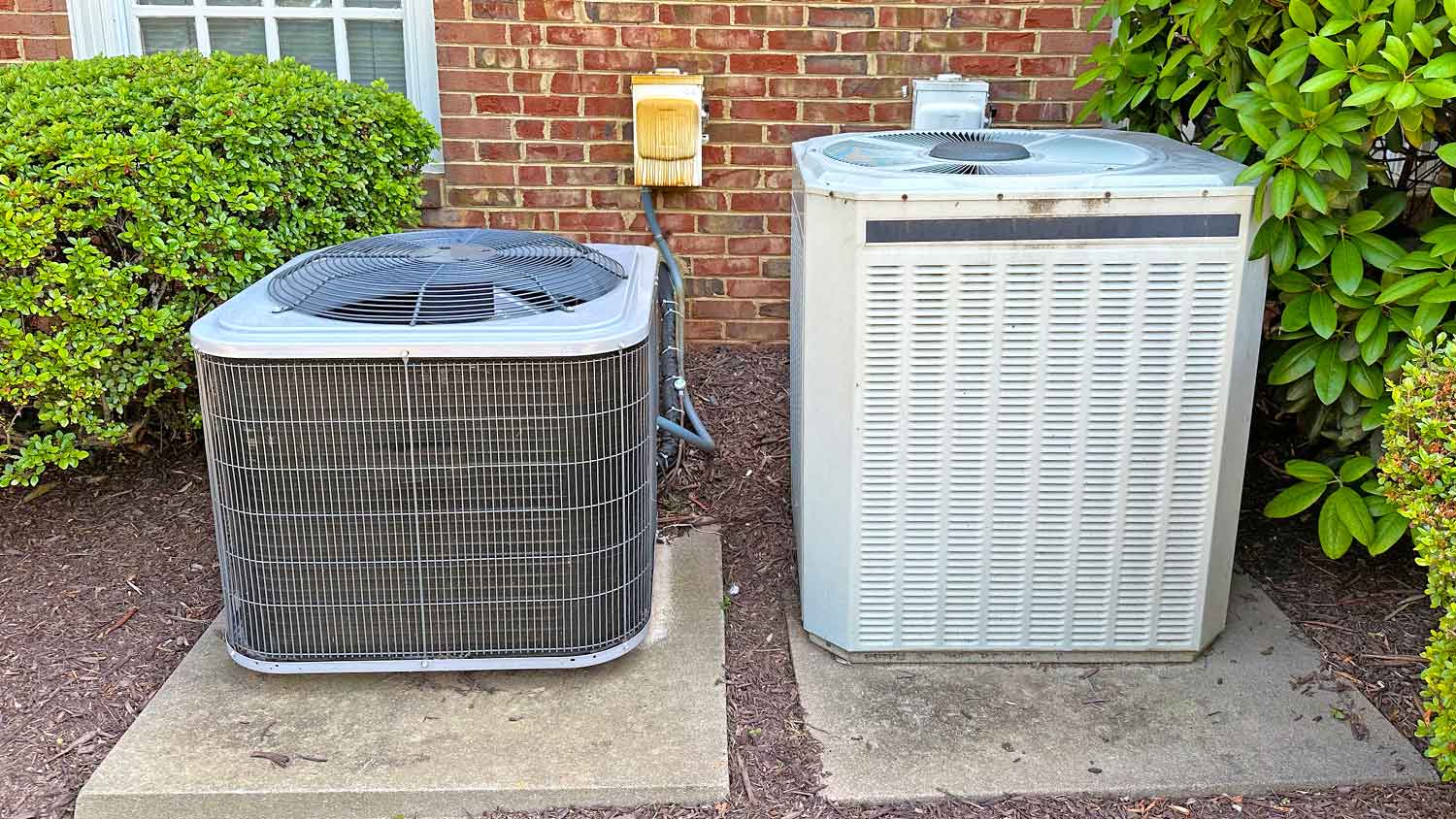
To prep your system for the first run of spring, you need to begin by thoroughly inspecting your outdoor HVAC unit, starting with the outdoor unit panels. These panels enclose the electrical connections and must be in place to help protect both you and the system. If you are missing a panel (possibly due to wind) or if the panel is misaligned, this could cause potential risks for both you and the system. If the panel covering the electrical connections is missing or out of place, you should call a qualified HVAC technician for an assessment before starting your system to reduce the risk of electric shock or fire.
You might have covered the condenser coils to protect them from winter’s cold, but you will want to ensure you remove those coverings before starting the system. These covers protect and insulate the coil, but also limit any heat transfer. Starting the system with any of these covers in place, even for a short time, could severely damage your system. Many people forget to remove their covers every year and that can spell disaster for your system!
Once you’ve removed any insulation or covers, you need to check your lines and pipes. The suction line, which is the larger copper pipe on the outdoor unit, helps to supply cool refrigerant back to the compressor in the outdoor unit. If the system’s suction pipe has damaged insulation, this could cause a loss of required cooling for the outdoor unit. This can damage your system and may also cause you to lose energy as well.
Damage to the foam insulation can be caused by lots of things, including sun rot, freezing water trapped in the foam, or winter animals looking for shelter or food. So just because you haven’t had any severe storms or other mishaps to cause damage doesn’t mean your foam insulation isn’t breaking down. And, since the foam insulation needs to be intact to maintain system cooling, you’ll want to inspect it closely before starting your system. If the insulation needs replacing, do so before starting the unit. Check the copper pipe for a size to determine the coordinate size of insulation. It might be possible to find the insulation at a local hardware store.
NOTE: The above applies ONLY the larger line, the suction line. Do NOT insulate the smaller copper line.
Depending on where you live or what side of the house your system is located on, you might find trash or vegetation blown into or against the coil. The system condenser coils work by transferring heat, so any debris that has accumulated on the coil limits this effect.
To get the best possible performance from your system, remove this debris from the coil and surrounding area and clean the coil. Also, while mulching in the spring, take care to not pack mulch around the base of the unit. This is especially important with heat pumps as there’s likely a space under the unit. This space must remain open to allow good airflow to the outdoor unit. If you use clever methods to hide your AC, make sure they're not blocking airflow.
After you’ve removed your outdoor condenser covers, checked your suction line and insulation, and cleared debris from your condenser coils, it’s time to go inside and inspect your indoor handler unit.
The change in seasons is usually a good time to replace your indoor air filters. This can be particularly important in the spring, because, during the harsh winter months, your indoor air filters tend to collect a lot more debris and dust than normal. Changing the filter will help ensure your system is ready for the cooling season.
The next step is to check the coil drainage hose. You might also know it as the “condensate line.” Usually, this is a white PVC or copper pipe that runs from the inside of your home to the outside. It can usually be found near your HVAC outdoor unit.
Since the coil’s temperature is lower than the ambient air, water will condense on the coil and drip into the tray below. This condensate needs to flow to a drain or the tray will fill up and flood the unit or potentially spill water into your basement. Check to make sure the line is in the proper place, attached, and will drain to the appropriate location.
At this point, you’re ready to do a sweep of the house, checking that all vents are clean and clear of debris and abstractions. Make sure both the supply and return air grills and vents are open and clear.
Use the vacuum to remove any pet hair or dust that might have accumulated during the winter months. Some homeowners even choose to use separate winter and summer supply grills. Some homes even have separate systems—one for heating and one for cooling. If you have a system like this you might have to put extra plastic material over the AC vents to prevent drafts during the cold months. If so, make certain that you remove these coverings before you turn on the AC or you will not have proper airflow back through the system, which can overwork your system, raise your energy bills, and even burn out your HVAC!
Once you’ve done all this, you’re nearly ready to fire up your system. But first, you should check your thermostat and circuit breaker. Make sure your circuits are flipped on and your thermostat is set After you’re sure your settings are right, it’s time to give it a go!
Now that you’ve given both your indoor and outdoor units a good going over, you just need to wait for a nice, hot day when you can be at home for a while to monitor your AC’s performance on its first seasonal run.
Check the air coming out of the indoor vents for the first few minutes after starting it, and then every few hours throughout the day. After the first few minutes, you should feel cool air coming out of the registers. If no air is coming out, or if the air coming out does not feel cool, then something is wrong and you should immediately turn the system off at the thermostat.
You can go through the checklist one more time and then try it again. If the problem persists, turn the system off and call a local HVAC contractor who can diagnose the problem. Leaving the system turned on when it’s not running properly can do a lot of damage. It never hurts to ask an HVAC professional to help diagnose the problems if your system is not working properly.
I have used Columbus Worthington Air for years and recommend them whenever I have a chance. The staff is quick, courteous, and well-trained.
 ARS Columbus Worthington Air
If you’re good people wanting to do business with good people, hire Matt. He is a consummate professional and utterly competent. He installed a water heater in my home at a price that beat competitors by hundreds of dollars with a promise to support the unit for its life (even after its 6 yr...
 Greene's Plumbing Services
Corey Carr was great. I had damage from a recent storm and needed to have my mast and other components replaced. The project entailed coordinating with AEP, and Corey helped make a stressful situation a lot less stressful. I really appreciated his dedication to service and the job very well done.
 Mr. Electric of Columbus
This service was great. My air conditioner went out during the heat spell that we had. My husband has health issues and they came out that night and at 9:30pm the air conditioner was fixed and running. We are sooo very thankful, this is the company I will be using from now on and would...
 Mr. Mechanical Ohio
Great company! Price was competitive, technician showed up on time and completed the job (exterior electric Radon fan replacement) quickly. Would hire them again.
 MaGen Property Inspections and Radon Mitigation
Raven and crew does absolutely fantastic job. They are very professional if any concerns were to occur with any of her work she always took responsibility and finished out with a great job. I have worked with her business for a year and have always been satisfied. Very trusted business and...
 Creations of Transformation LLC
I would recommend this company to anyone! He showed up on time, was friendly, completed a very difficult repair on our dryer vent cover, was responsive, and pricing was extremely fair and competitive. I would have him back to do any of our repairs or cleanings without hesitation!
 U.S.A. Dryer Vent, LLC
Ace Fireplace Services' chimney sweep service is truly exceptional. They used advanced technology to ensure a thorough cleaning process, and my chimney has never looked better. I highly recommend their services.
 Ace Fireplace Services
The technician was very professional and friendly. He answered all my questions and was very thorough. He left the fireplace area very clean . He inspected from the roof and advised me as to other work that might need to be done. There was no pressure there. I was very satisfied with the...
 Supreme brick & chimney
On time, clean and finished fast. Windows seem sturdy and the finish is good. Caulking was done with no smudges. Would recommend.
 Window Depot USA of Central Ohio
From average costs to expert advice, get all the answers you need to get your job done.
If your air conditioner won’t turn on or makes chattering noises, you might have a bad contactor. Learn more about AC contactor replacement costs in this guide.
When determining your AC coil cleaning cost, you’ll need to factor in the type, cleaning method, and more. Our cost guide will show you what to expect.

The cost of a new AC unit depends on the size and type. Our guide breaks down AC replacement cost factors so you can decide which option matches your budget.

Stay cool this summer and make sure to keep your HVAC system operating efficiently with these spring ac maintenance tips.
Insulating your garage can regulate temperature, protect stored items, and make the space more livable. Here’s why spring is the best time to do it.

What do you do with a natural spring on your property? Natural underground springs are a good source of clean, free water. But how do you tap into it? Keep reading!