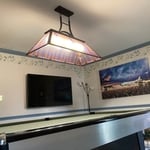
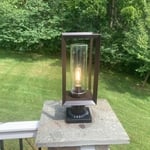
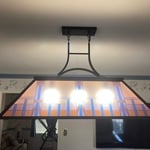
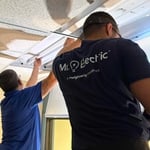
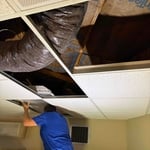
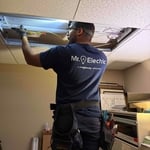
"Due to our house construction, it was difficult to install the fans where we wanted them, but Mark did it. He was honest about where the fans could and could not be placed, and gave us options. He was professional, prompt, tidy, and courteous.
We highly recommend Harda Electric! Thanks, Mark "
"I needed some help wiring my basement and Troy and his team were able to help me complete the job without a hitch. They were professional, knowledgeable, and worked fast. I take great comfort knowing that I have an electrician that I can count on. I couldn't recommend Troy and his Mr. Electric team enough for all your electrical needs."
With 25 years of experience, JCS Low Voltage LLC is here to help! We offer a variety of low voltage services. We are based out of the Shillington, PA area. Give our team a call today. We're looking forward to working with you!\n
We pride our company on reliability, great communication, integrity, and quality work. We are experts in our trade and will do our best to keep you as educated as we can on your particular task or project. We look forward to earning your business!
Whether youre a local homeowner or a business professional, tending to your propertys electrical needs requires a great deal of skill and technical know-how. At Iddings Electric, our master electricians proudly offer the superior residential and commercial electrical solutions that Central PA residents and business owners trust. From service panel upgrades and rewiring services to whole-home generators and landscape lighting, our electrical contractors offer the the comprehensive solutions you need to ensure safe, reliable power for your property!
As a residential electrician you never know what you’re going to get into, that is why I love giving my customers a free estimate to help prepare them for the upgrade, repair, or new installation they’ve been thinking about. From panel upgrades just a simple dimmer switch installation, I bring a quality of work and up-to-code knowledge to help you improve your home.
According to the National Electrical Code® (NEC®), the electrical code for kitchen outlets states that electrical outlets in a kitchen should be installed no more than 48 inches apart. This ensures that a receptacle is no further away than 24 inches from any place on the countertop. Countertops wider than 12 inches need an outlet on the wall above the countertop.
If it’s called a USB outlet without any further designation, it likely refers to a USB-A port. These are the original USB connections and are commonly integrated within power outlets. In recent years, USB-A cables have slowly been usurped by faster and more reliable USB-C cables. USB-C connectors are small and ultra-thin with a reversible design, while USB-A connectors are slightly larger and bulkier.
Window AC units use a fair amount of electricity, but significantly less than central AC systems. Because they are more energy-efficient for cooling individual rooms or small spaces, their usage is comparatively low. On average, a window AC unit consumes between 500 and 1,400 watts, while a central AC system uses over 3,500 watts—meaning a window unit uses about one-third of the energy. This typically translates to a monthly running cost of $15 to $40, although this can vary depending on external factors.
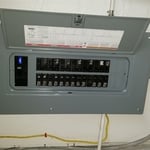
Yes, placing an electrical panel in a bedroom is perfectly acceptable, so long as it meets other space requirements as indicated by OSHA and related agencies. When installed in a bedroom, electricians typically place it in the area directly behind the door swing. This method allows for easy access when conducting electrical panel repairs.
Yes, the majority of appliances that run at 240v will work with a 220v outlet, but will often run slower and may have a slight delay in turning on. This could also cause long term damage to the appliance being used, so it’s recommended to always use the correct voltage for your appliance and upgrade to a 240v outlet if needed.
The Wyomissing, PA homeowners’ guide to electrical services
From average costs to expert advice, get all the answers you need to get your job done.
Before you hire a licensed electrical contractor, you should learn the cost to run electric from the road to your house so you can budget for the project.
Whether you’re shopping for a new home or simply doing a safety check on your current place, learn what factors influence an electrical inspection cost.
Is it time to upgrade your electrical panel? For the sake of safety, find out sooner than later by exploring our top signs that it’s time for an upgrade.