


Top-rated arborists.

Get matched with top arborists in Coburg, OR

Enter your zip and get matched with up to 5 pros

Need a pro for your arboricultural service project in Coburg, OR?

Select your specific project to find the pro for you.

TRUSTED BY COBURG, OR HOMEOWNERS

  • Average homeowner rating star icon4.7
    Average homeowner rating
  • Verified reviews icon1.7k+
    Verified arboricultural services reviews

Find Arborists in Coburg

Avatar for J&J Tree Removal and Concrete LLC
J&J Tree Removal and Concrete LLC
5.0(
23
)
Tree RemovalTree TrimmingTree Stump - Remove - For Business+1 more

Serving Coburg, OR and surrounding areas

Approved

In business since 2022

Offers commercial services

Customers say: True professional

"Jose has successfully helped me on several projects over the last few years on my home and rental properties. He is very interested in making certain he understands the scope of the project and outcome I am seeking. I would highly recommend Jose and his company for property maintenance and landscape development. He and his crew are very pleasant to work with. michael Devereux"
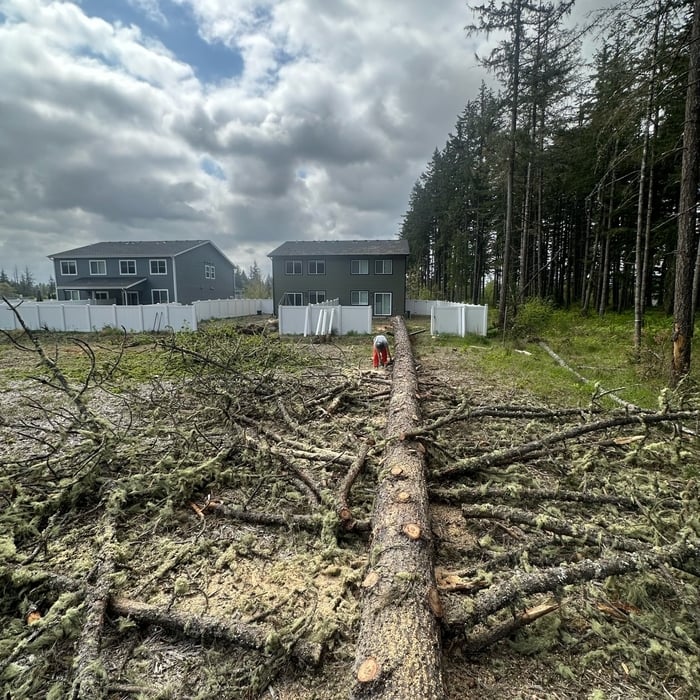
Recent Photos
Recent Photos
Recent Photos
Recent Photos
Recent Photos

+25

5 neighbors recently requested a quote
Recommended by82%of homeowners
Avatar for Advanced Tree Management
Advanced Tree Management
5.0(
5
)
Tree RemovalTree Stump - RemoveTree Removal - For Business+2 more

Serving Coburg, OR and surrounding areas

Approved

In business since 2021

Free estimates

Emergency services offered

Advanced Tree Management LLC is a family-owned tree care company based in Lebanon, OR. With over 10 years of experience, we specialize in safe, efficient, and professional tree services for homes and businesses across Linn County. Our team is led by an arborist, and we’re available 24/7 for emergency tree service.\n\nOur mission at ZYHLKA LLC is to continue the growth of our business by doing right by all of our clients. We love seeing that one of a kind smile on a home owners face at the end of a project! ZYHLKA LLC stacks up with the competition and surpasses it with competitive prices, second to none workmanship and a prompt/responsive team! We give you quality that you can measure, and a finished product that will enhance your home forever. Call us today!
Logo
2 neighbors recently requested a quote
...
Showing 1-10 of 65
Arborists questions, answered by experts

Once you confirm a tree is dead, you should remove it. Dead trees eventually fall, and larger trees in particular can cause damage to rooftops, fencing, flowers, and other objects. As we mentioned, letting decayed wood stay in your yard also invites risks to the surrounding landscaping and vegetation.

You can trim just one side of the tree, especially when that side is growing near something like a power line or a home. Pros will carefully trim the tree back until it is safe from that structure. While this is common, it also needs to be done with the utmost care, as pruning or trimming away at one side of the tree may make it structurally unsound. This instance is yet another where hiring a pro is wise, especially if power lines are involved.

You may be looking to identify maple trees to use for home improvement projects. In that case, you can tell hard maples by looking at their leaves. Leaves will have a U-shaped dip, or sinus, between the points, or lobes, of the leaves. Leaves of soft maples tend to have V-shaped sinuses.

If you already have the cut wood in front of you, look for a light, uniform color to identify hard maple wood and check for variations of red, gray, or brown streaks and an overall darker color in soft maple wood.

The best time to prune Japanese flowering cherry trees depends on where you live and the type of flowering cherry tree. Some trees benefit from being pruned toward the end of winter or early spring, after the last freeze. Meanwhile, other trees do well after blooming, in late spring or early summer. Avoid pruning your flowering cherry tree in the early winter, as this encourages open wounds that can lead to infections or infestations. 

You can use the formula mentioned earlier to calculate the depth of tree roots. Each inch of width of a tree trunk translates to six inches of depth within the root system. Large trees extend anywhere from 2 to 6 feet into the ground, with some magnificent specimens going even deeper.

The Coburg, OR homeowners’ guide to arboricultural services

From average costs to expert advice, get all the answers you need to get your job done.