



Top-rated arborists.

Get matched with top arborists in Beatrice, NE

Enter your zip and get matched with up to 5 pros

Need a pro for your arboricultural service project in Beatrice, NE?

Select your specific project to find the pro for you.

TRUSTED BY BEATRICE, NE HOMEOWNERS

  • Average homeowner rating star icon4.3
    Average homeowner rating
  • Verified reviews icon17
    Verified arboricultural services reviews

Find Arborists in Beatrice

Avatar for Doerr Enterprises, LLC.
Doerr Enterprises, LLC.
5.0(
5
)

Serving Beatrice, NE and surrounding areas

Approved

In business since 2024

Offers commercial services

"We contacted Doerr Enterprises this last fall to trim our tree in our front yard that was looking a little sad. He was very prompt to get to the job, get it done and cleaned up! We have also hired him for the first snow we got so far this year and he cleaned our drive in no time! Would highly recommend his services!"
3 neighbors recently requested a quote
Avatar for M. S. Wiekhorst Arbor Company
M. S. Wiekhorst Arbor Company
5.0(
10
)

Serving Beatrice, NE and surrounding areas

Free estimates

Emergency services offered

Warranties offered

"The services performed went as smooth as expected. Mike was able to trim our biggest tree and remove an entire evergreen that had been exposed to bag worms. The work was quick and efficient and I would highly recommend him to anyone. We will definitely utilize his expertise in the future."
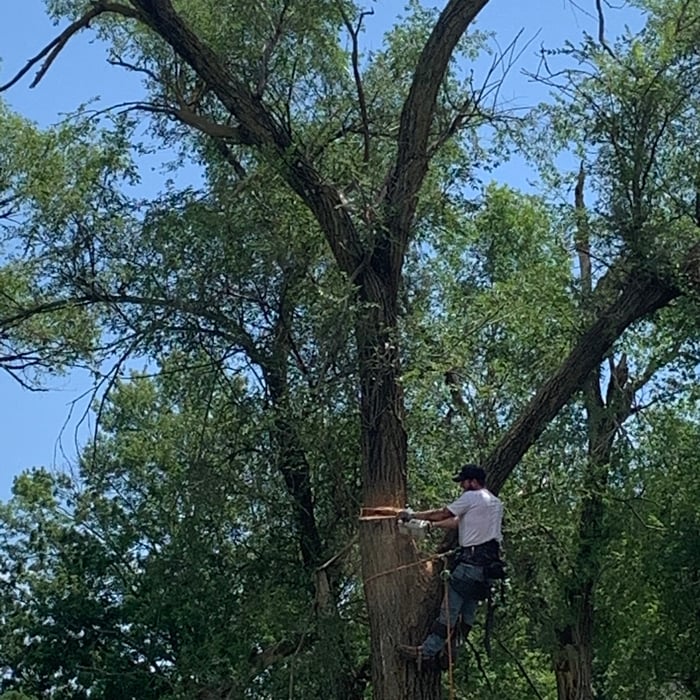
Large Cottonwood Removal

+12

Response time2 days
Recommended by100%of homeowners
Arborists questions, answered by experts

Ivy eventually kills trees by restricting its growth, blocking sunlight, absorbing nutrients and water from the soil, and weakening the tree. Trees with ivy are more likely to experience diseases, pests, rot, and fungi growth. When ivy weighs down tree branches, the tree is more likely to break during a storm and cause damage.

No, you should never top maple trees. Topping injures the tree and leads to the rapid growth of a weak canopy, which can be hazardous to rooftops and utility lines. Removing the crown can also leave the interior bark vulnerable to sun damage, leading to insects and disease. A topped tree can also reduce property value and permanently damage the appearance of a tree.

Completely topping a plum tree is a risky business. Cut too much, and you’ll kill your tree. That said, you do need to trim the top of your tree to encourage bushy growth, maintain your tree’s vase shape, and limit size. 

A plum tree's central leader (or trunk) should never extend more than 3 feet above the highest branch. When you first plant your tree, cut the central leader so it’s 2 to 3 feet tall. As it grows, cut it back 12 to 20 inches until it reaches its desired height. Never prune more than one-third of the new growth.

There are several signs that may indicate a tree needs to be cut down. These include visible damage to the trunk or branches, a hollow trunk, extensive storm damage, or a significant lean to one side. Other warning signs are pest infestations or the tree growing too close to a house, power lines, or other structures. It is best to hire a professional arborist to inspect the tree, as they can determine if it can be saved or if removal is necessary.

It depends on where you live—but in most areas, leaves begin falling in September and continue falling until January or February. Warmer regions, such as Southern states, may see leaves fall a bit later in the calendar year. It also depends on the type of trees in your yard and their maturity. 

The Beatrice, NE homeowners’ guide to arboricultural services

From average costs to expert advice, get all the answers you need to get your job done.