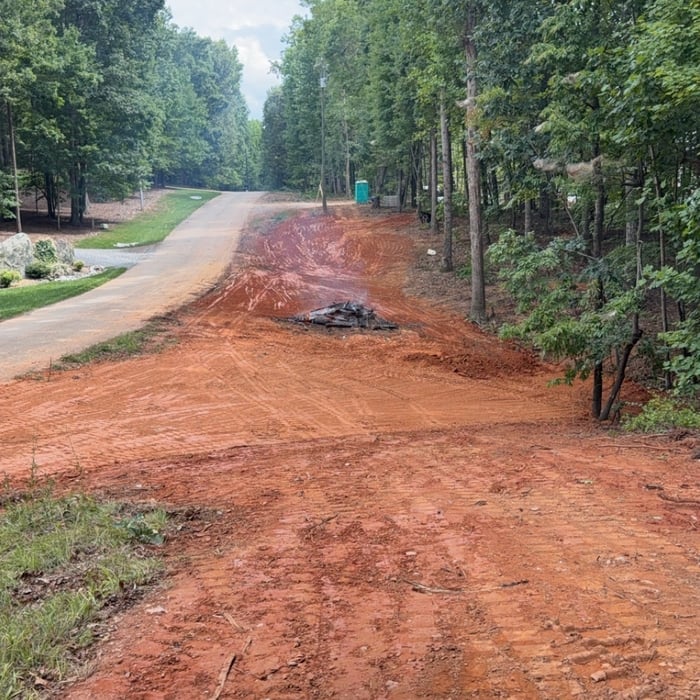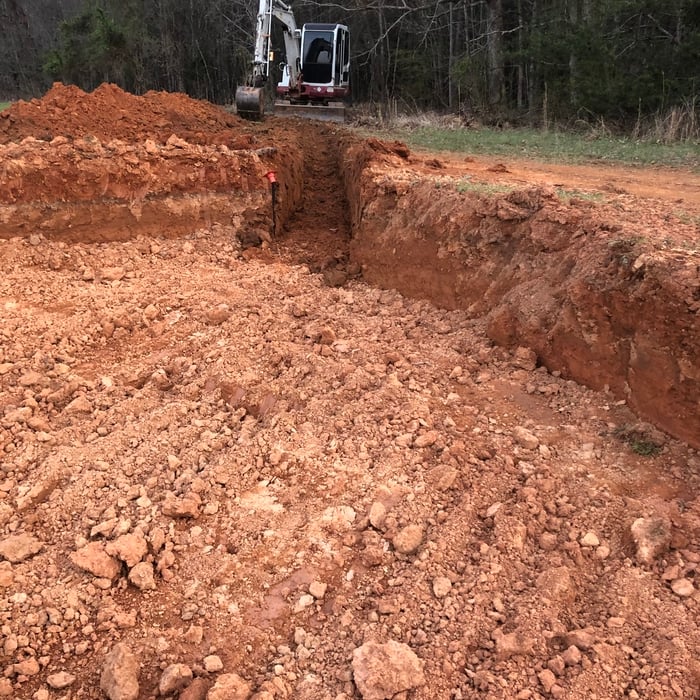





Top-rated excavation pros.

Get matched with top excavation pros in Burlington, NC

Enter your zip and get matched with up to 5 pros

Need a pro for your excavation project in Burlington, NC?

Select your specific project to find the pro for you.

TRUSTED BY BURLINGTON, NC HOMEOWNERS

  • Average homeowner rating star icon4.8
    Average homeowner rating
  • Verified reviews icon24
    Verified excavation services reviews

Find Excavation pros in Burlington

Avatar for Allison's Welding
Allison's Welding
5.0(
11
)
Building Site - Preparation and ClearingLandscape - Minor Grading or Resloping

Serving Burlington, NC and surrounding areas

Approved

In business since 2018

Free estimates

Emergency services offered

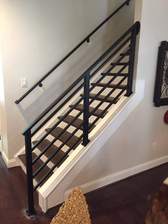
"Josh replaced our wooden porch railing with wrought iron. He did exactly as we wanted based on pictures we sent him, at a reasonable price, and exactly in the timeframe he said he could do it. He is very meticulous and professional and we would recommend him to anyone and use him again if we have a need. Thank you Josh!"
Response time3 days
Recommended by100%of homeowners
Avatar for Pro Serv Enterprises
Pro Serv Enterprises
5.0(
7
)
Landscape - Minor Grading or Resloping

Serving Burlington, NC and surrounding areas

Approved

In business since 2000

Free estimates

Credit card accepted

"ProServ does many different things for our business. Cleans our building each night. Cleans carpets as needed. Does General maintenance in our office and takes care of our landscaping /mowing/snow removal.."
Response time2 hrs
45 neighbors recently requested a quote
Recommended by100%of homeowners
...
Showing 1-10 of 190
Excavating questions, answered by experts

You can bury underground electrical wire six inches deep—but only if you use a rigid metal electrical conduit. For rigid, non-metallic conduits, bury the wire at least 12 inches deep. If using an underground feeder cable rated for direct burial, you'll need to place it at least 18 inches deep, as it has no conduit for extra protection.

Directional drilling is complex and requires training to use the advanced machinery. It can be challenging to monitor the position of the drill since there’s no direct line of sight. Directional drilling can also be more expensive with a cost of $10 to $30 per linear foot compared to $5 to $12 per linear foot for trenching. 

In the United States, a depth of 36 inches (three feet) for underground water lines is the accepted industry standard. This depth varies from location to location based on local conditions. In areas with colder winters, they may be buried deeper to prevent frozen well water pipes : This is usually at least six inches below the frost level. The International Plumbing Code calls for a minimum of 12 inches below grade.

Trenching and boring are two distinct methods for installing underground utilities. Trenching involves digging a channel using equipment like an excavator, trencher, backhoe, or shovel. While it is a simpler process, it causes significant disruption to the surface, landscaping, and surrounding ecosystems.

Boring, also known as directional boring, is a less invasive alternative that uses a drill to create a tunnel for utility lines without disturbing the surface. This method is more precise and is ideal for installations that need to go underneath buildings, roads, or bodies of water. Although boring is less disruptive, it is generally more expensive than trenching.

Depending on the severity of the freeze and the method used, thawing frozen underground pipes can take anywhere from 30 minutes to several hours. Applying heat directly to the pipe using heat tape, infrared lamps, or hot water jetting can speed up the process. However, patience and careful monitoring are key to avoiding pipe damage.

The Burlington, NC homeowners’ guide to excavation services

From average costs to expert advice, get all the answers you need to get your job done.