Top-rated excavation pros.

Best excavation pros near Burlington, KY

Enter your zip and get matched with up to 5 pros

Need a pro for your excavation project in Burlington, KY?

Select your specific project to find the pro for you.

TRUSTED BY BURLINGTON, KY HOMEOWNERS

  • Average homeowner rating star icon4.7
    Average homeowner rating
  • Verified reviews icon32
    Verified excavation services reviews

Top-Rated Excavation pros in Burlington - Updated Nov 2026

Trax Excavating, LLC
4.7(
3
)
Landscape - Minor Grading or ReslopingBuilding Site - Preparation and ClearingExcavation - Major Grading or Resloping+1 more

Serving Burlington, KY and surrounding areas

Approved

In business since 2023

Free estimates

Credit card accepted

"This company is the only one that showed up to look at the work I needed done in person. Had 4 acres I needed cleared and graded, not only did they do the work but they also showed me a couple other things they could do to really get the most out of my property! I will definitely use them again for future work now that I know that they can run my water and sewage lines for my new house.. Thanks Chad!!"
Response time1 day
13 neighbors recently requested a quote
Recommended by100%of homeowners
K&M PROPERTY MAINTENANCE LLC
5.0(
10
)
Building Site - Preparation and ClearingExcavation - Major Grading or Resloping

Serving Burlington, KY and surrounding areas

Approved

In business since 2017

Free estimates

Credit card accepted

We pride our company on reliability, great communication, integrity, and quality work. We are experts in our trade and will do our best to keep you as educated as we can on your particular task or project. We look forward to earning your business! \n

8 neighbors recently requested a quote
Avatar for C Kirk Enterprises, LLC
C Kirk Enterprises, LLC
4.8(
14
)
Excavation - Major Grading or ReslopingExcavation - Major Grading or Resloping - For Business

Serving Burlington, KY and surrounding areas

Approved

In business since 2020

Free estimates

Emergency services offered

"Our home owners association was responsible for getting a structure torn down. We contacted a few places for estimates. C. Kirk enterprises returned my call and got a quote together very quickly. We used them for the project and they did a great job. Communication was excellent. They did what they agreed to do and kept us informed every step of the way. We will definitely contact C. Kirk enterprises for any and all jobs we have in the future. Thanks again!"
My work
My work
My work
My work
My work

+3

Response time1 day
Response rate94%
1 neighbors recently requested a quote
...
Showing 1-10 of 177
Excavating FAQs, answered by experts

Preparation involves site assessment, clearing debris, grading surfaces, and compacting soil to support stable construction.

The best way to protect tree roots is to avoid the roots entirely by excavating outside the root radius of the tree. For nearby projects, it’s a good idea to construct a temporary retaining wall. But that’s not always possible, depending on the project and the root system. In these cases, consider using alternative equipment like an auger to tunnel under the ground.

Remember, tree roots can damage nearby cement foundations as they grow. If a tree is close enough to interfere with large excavations, it may be better to remove the tree than risk future problems.

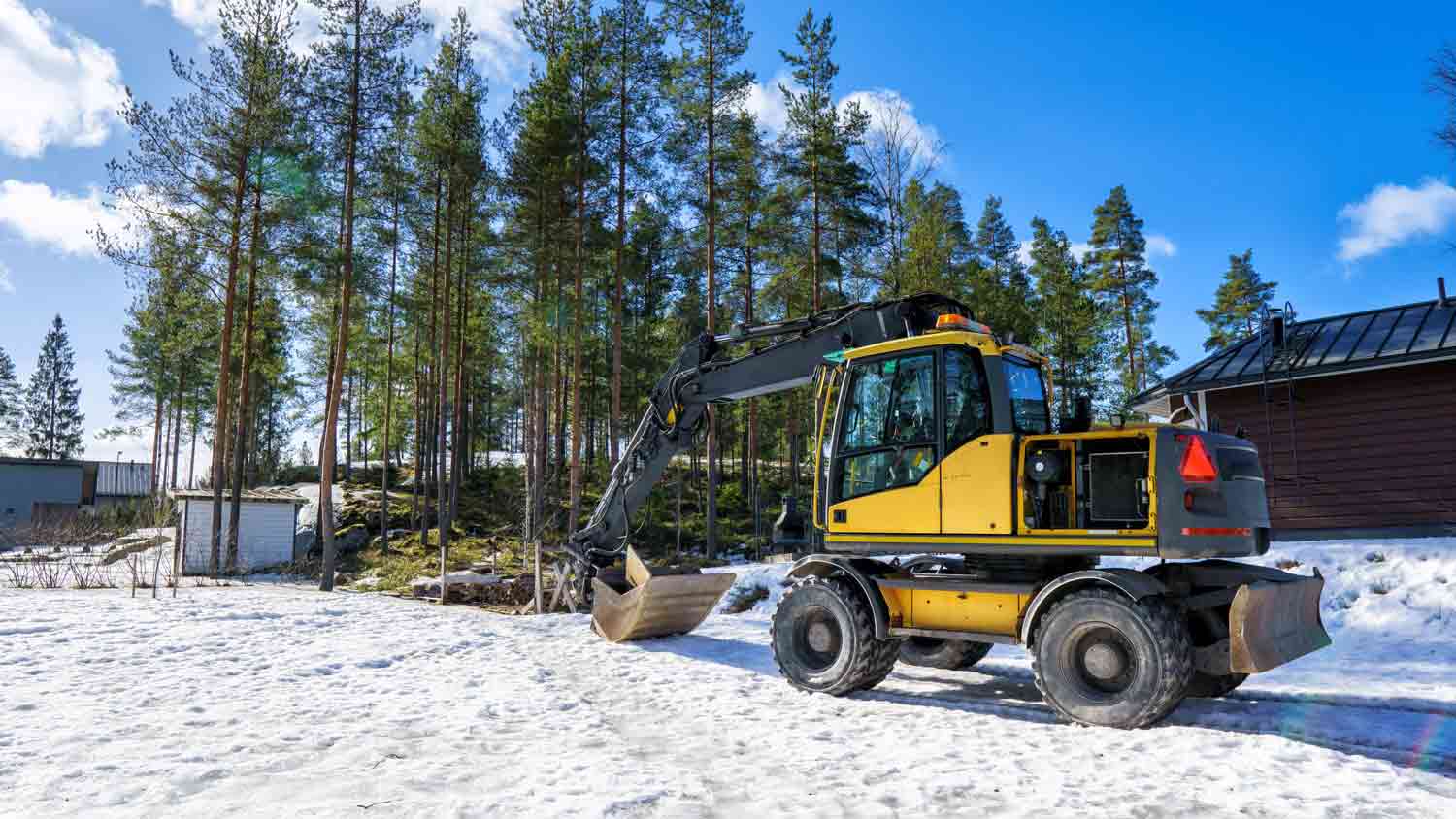
Yes, you can excavate in the winter, but it might make the job harder. Frozen ground is harder to dig, and snow or ice can make the work site more hazardous. A contractor may need special equipment and techniques, such as ground-thawing methods, to break through frozen soil. Although winter excavation is possible, it may take longer and be more costly than excavating during warmer months.

Trenches are typically 12 to 24 inches deep and 8 inches wide. However, the required depth depends on the specific project and local ordinances. For example, a French drain may need to be 18 inches deep, while a water pipe might require a depth of 24 inches and a drainage pipe 36 inches. Your city or county may have specific regulations, so it's wise to consult with an excavation professional to determine the correct depth for your project.

The best type of soil to build on is a mixture of sand and clay, known as loam soil. Loam soil has the best combination of these soil types to build a foundation on. The clay particles help with water retention, so it won’t erode like sandy soil might, and the sandy particles help with drainage, so you won’t see unsafe soil expansion or have an increased risk of leaks from water sitting against your foundation.

The Burlington, KY homeowners’ guide to excavation services

From average costs to expert advice, get all the answers you need to get your job done.