









Top-rated arborists.

Get matched with top arborists in Lincoln, ID

Enter your zip and get matched with up to 5 pros

Need a pro for your arboricultural service project in Lincoln, ID?

Select your specific project to find the pro for you.

TRUSTED BY LINCOLN, ID HOMEOWNERS

  • Average homeowner rating star icon4.5
    Average homeowner rating
  • Verified reviews icon242
    Verified arboricultural services reviews

Find Arborists in Lincoln

Woods Stump Removal LLC
4.9(
16
)
Tree Stump - RemoveTree Stump - Remove - For Business

Serving Lincoln, ID and surrounding areas

Approved

In business since 2023

Free estimates

Offers commercial services

"Austin was exceptional! He removed 63 tree stumps in a little under 5 hours. The stumps ranged from 6 inches to 30 inches. Not only did he remove all of the stumps, he backfilled the holes and raked and cleaned up any other debris left by the grinder. He was very professional and had great costumer interface. I would strongly recommend. Woods Stump Removal LLC to anyone that needs tree stumps removed. Don't try and do this yourself. Save yourself time and money by hiring this Pro! Oh, by the way the price was super reasonable!"
Response time7 hrs
Response rate96%
7 neighbors recently requested a quote
Avatar for Weed Man
Weed Man
3.6(
7
)
Tree Trimming - For Business

Serving Lincoln, ID and surrounding areas

Approved

In business since 1981

Free estimates

Warranties offered

"Their aeration costs for a very small yard was over $70. In this area, you can get aeration done for $25 with the size of my yard. Also, they never ended up contacting me. I had to call them twice."
Weed Man Lawn Care
Save on Lawn Care
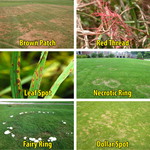
Lawn Disease
Recommended by75%of homeowners
Big Dog Irrigation, LLC
New to Angi
Tree RemovalTree TrimmingTree Trimming - For Business

Serving Lincoln, ID and surrounding areas

Approved

In business since 2022

Free estimates

Credit card accepted

We are a locally owned and operated company that values honesty and integrity in all aspects of our business. We offer a variety of irrigation and landscaping services that are customizable to each individual property. We pride ourselves on the quality of our work as well as our commitment to outstanding results. We look forward to building lasting relationships with our clients and guarantee your satisfaction!

...
Showing 1-10 of 52
Arborists questions, answered by experts

There are several methods to hollow out a tree stump, and the best one depends on your tools, experience, and priorities. Common methods include using a chisel and hammer, a chainsaw, or burning.

  • Chisel and Hammer: This is often considered the easiest approach for those with limited tools or experience, though it is the most time-consuming.

  • Chainsaw: Using a chainsaw is the fastest method, but it comes with significant safety risks, especially for inexperienced users.

  • Burning: This can be an effective method, but it is not recommended unless you can first drill holes into the stump. Without holes, the stump will be difficult to light and may not burn completely through.

A power drill with at least a ⅜-inch diameter bit can make the job quicker and easier, regardless of the primary method. While you can use a chisel or chainsaw without a drill, it will require more time and effort. Always wear protective goggles and thick gloves, as splinters are an inevitable risk.

Whether tree roots will continue to grow after a tree has been cut down depends on the species. Some tree roots will eventually die because they can no longer get nutrients through photosynthesis. However, other species that reproduce through root sprouts can continue to grow and produce new sprouts for seven years or more. For example, the roots of elms, ficus, and willows tend to regrow aggressively, while the roots of pines, oaks, and maples will typically die. To determine if a root system is still active, look for new sprouts on the old trunk, stump, or any exposed roots.

Generally, you should prune around 20% of an apple tree’s growth—and never more than 30%. This means that if you have a severely overgrown tree, it can take a few seasons to prune it back enough to produce the healthiest fruit. 

If you’re dealing with a newly planted or juvenile tree, hold off on pruning beyond the initial shaping. Wait at least a couple of seasons into fruit production since pruning can increase the number of water sprouts and unproductive foliage.

Your local government is usually in charge of pruning trees on public property, and the power company is responsible for trees near power lines (even if they’re on your property). Whether or not they top these trees depends on their approach to pruning. You won’t be able to do much to control this, but you can contact them to find out more about their pruning process.

Consumers typically do not need to worry about the cost of tree insurance, as professional tree service companies pay for their own coverage. For a tree service business, an average U.S. policy covering about $1 million in general liability costs roughly $40 a month or $500 a year. More extensive policies, providing between $500,000 to $2 million in coverage, can cost between $3,000 and $6,000 annually, depending on the company's size and scope of work. Tree service professionals should speak with an insurance company to determine the right plan for their business.

The Lincoln, ID homeowners’ guide to arboricultural services

From average costs to expert advice, get all the answers you need to get your job done.