
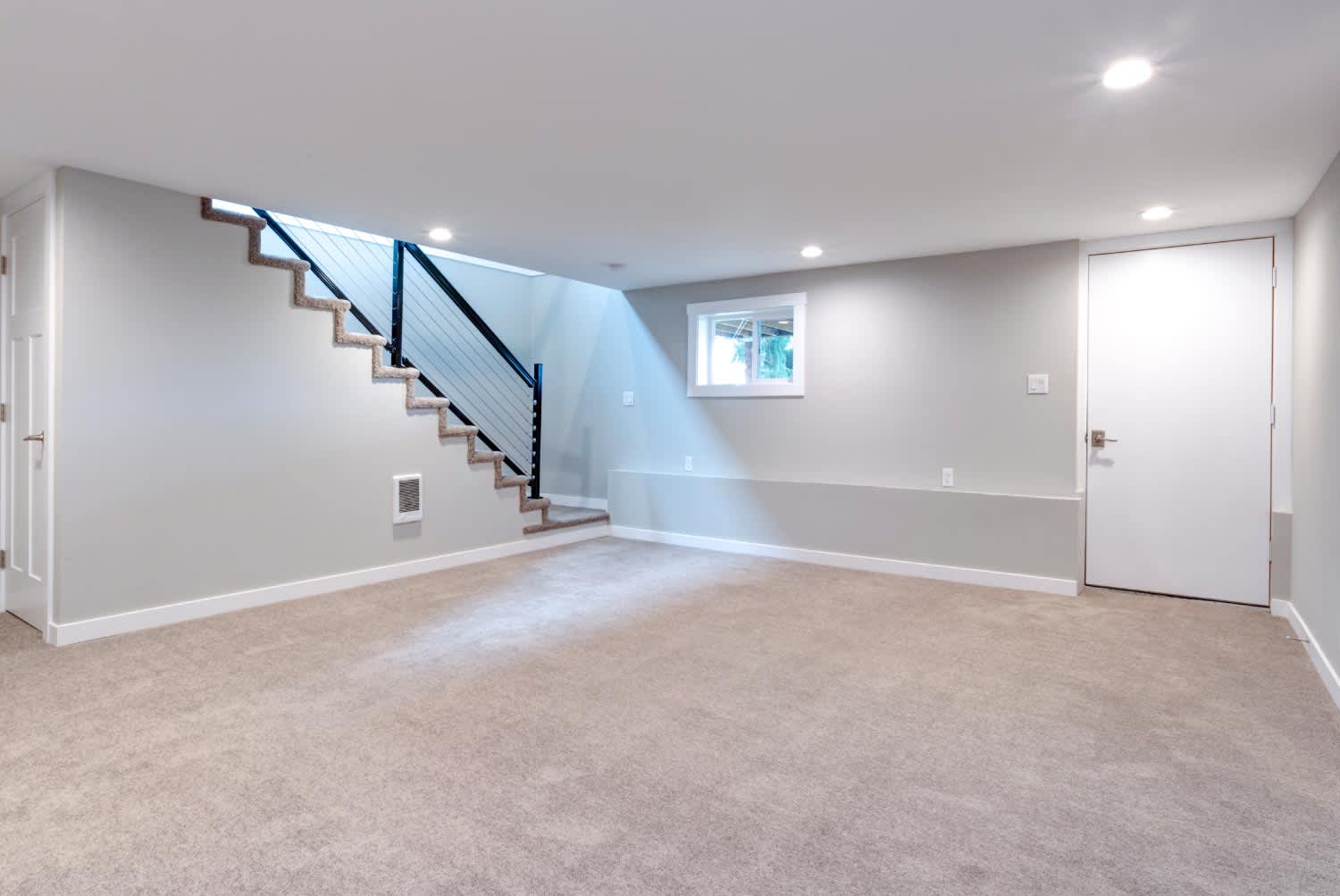
Construction jobs are messy, so you’ll need a good cleanup when finished. Use this guide to budget for your post-construction cleaning cost.
Understanding overhead and profit are crucial to keeping your company profitable

Construction overhead includes direct project costs, like materials, and indirect operational expenses, such as office rent and marketing.
Precise budgeting is vital—underestimating overhead causes losses, while overestimating makes project bids uncompetitive to potential clients.
While the "10 x 10" rule targets 10% profit and 10% overhead, many contractors now utilize a 30% markup.
Sustainable growth depends on distinguishing gross from net profit by accurately tracking all monthly business expenses against total revenue.
Construction companies that have a strategic plan with clear goals and targets make 33 percent more profit than those that don’t, according to a study by the Construction Financial Management Association.
While it’s important to stay busy, a construction company’s primary goal should be to make a profit. In 2019, the Builders’ Cost of Doing Business Study showed that profit margins increased, reaching their highest point since 2006.
To show a positive profit margin in your business, you’ll need a firm understanding of your direct and indirect overhead costs. You’ll also need to make adjustments as necessary to achieve your goals.
Every estimate or remodel project includes overhead costs—ongoing expenditures related to running your business. Although these expenses generate no revenue, they amount to a sizable portion of every project, so calculating overhead correctly is essential to earning a profit.
There are two types of overhead costs: direct and indirect.
These charges relate to a specific project and do not include expenses tied to your day-to-day costs of doing business.
Direct overhead costs might include:
Labor costs, including project-specific wages
Raw materials
Equipment
Temporary offices and utilities
Other miscellaneous costs, including site photos, surveying, and cleanup
These are the expenses related to doing business on a day-to-day basis. Typically, you would share these costs proportionally across all projects.
Examples of indirect costs may include:
Employee benefit and perks
Office expenses like office technology, office supplies, rent, utilities, equipment, insurance, accounting/payroll services, and taxes
Traveling from one job site to another
Marketing and advertising costs (like your Angi account)
Profit margin is the amount of money you make on a project after subtracting all of your expenses.
There are three fundamental ways to measure profit margins:
Gross profit margin: Your total revenue minus cost of goods (COGs)
Operating profit margin: This is the revenue you make minus operating expenses and cost of goods
Net profit margin: Revenue minus all expenses, including taxes and interest. Your net profit will depend on how efficiently you run your business when you take both direct and indirect overhead expenses into consideration.
Your direct material costs, direct labor expenses, and overhead combined make up your construction project expenses. To break even, you have to budget at the project level to cover your overhead costs. Budget too much and you can’t compete. Budget for too little overhead and you can see a negative profit margin (loss).
Understanding typical overhead expenses in construction can ensure there is no negative impact on your profit margin. That’s because an increase in overhead will lower your profit margin.
Indirect labor is typically the most significant overhead expense for construction companies. These costs refer to employees who are not involved in projects but are active in the day-to-day running of your business, like an office manager or accountant.
Construction projects have many indirect material costs, such as lubricants, nails, welding supplies, adhesives, and staples. Some of these expenses may be traceable to a specific job, but it is rarely profitable to do so. That’s because the money you’d spend to trace every screw needed for one project would be a waste of time.
Construction businesses also have expected fixed overhead costs that change very little from one job to the next. These costs might include insurance premiums, safety equipment, and licensing fees.
Generally, variable overhead relates to supplies and utilities, like gas and electricity, that can change from one job to the next. For instance, site cleanup is a variable cost for general contractors because it can fluctuate from project to project.
It’s not uncommon for construction companies to calculate overhead and profit a bit differently. Some companies mark up both labor and materials, while others focus their markup on labor only. Some companies consider employee benefits and taxes as direct job costs, while another company may consider these as overhead costs.
Whatever method you use to calculate overhead and profit, it’s vital that you make enough money to cover your expenses and pay yourself out of your overhead, not your profit.
The Construction Services Industry shows a net profit margin (before taxes) of 17.22 percent for the first quarter of 2021. That’s up considerably from the 8.46 percent margin in the last quarter of 2020.
While the traditional '10x10' rule was once the industry standard, 2026 market dynamics require a more robust cushion. Most successful residential remodelers now target a minimum 30% to 40% total markup. This typically breaks down into 15%–18% for overhead and 10%–15% for net profit to ensure the business can withstand labor volatility and financing costs.
To achieve a 25% profit margin in 2026, you cannot simply add 25% to your costs. You must apply a 33.3% markup. Using the wrong formula in a high-cost environment will leave you with a 'paper profit' that vanishes once your 2026 overhead is actually paid.
As a contractor, if your overhead rate is 20 percent, you essentially spend 20 percent of your revenue on providing your services.
When calculating your overhead percentage, you’ll want to add up all your monthly fixed costs (or you can add up your annual expenses and divide that number by 12 to get your monthly costs).
This figure is the amount of money you’ll need each month to keep your doors open. However, this figure does not include any contractor direct costs, such as project payroll or materials. That’s because you will only incur these costs when you’re working.
Profit is the amount of money your company makes during any given accounting period. Don’t include overhead costs in gross profit (except if it’s directly tied to a specific project).
In the construction industry, gross profit margins averaged between 17 percent and 19 percent for all of 2018. Suggested margins can reach as much as 42 percent for remodeling, 25 percent for new home construction, and 34 percent for specialty work. Profits vary based on labor expense, materials, location, and several other factors.
Tracking costs ensure better profitability. As a contractor, once you understand how to reduce your overhead and increase profits, you’ll be on your way to growing your business.
Highlight your talents and expertise on a platform trusted by millions. Sign up for a pro account today and get more qualified leads on Angi.
Jason has helped me with multiple household projects, with the most recent being new door installation. He has always showed up on time and organized and has done an incredible job! Jason is very professional and he's now my go-to for anything around my house that needs to be fixed or...
 Huff Garage Rescue, LLC
Cole has been handling plumbing and general contracting for our four properties over the past three years, and he’s always done a great job. Most recently, he installed a sink and countertop in our retail store where none existed before, and it turned out exactly how we needed. He’s...
 ANB Renovations LLC
1st Choice Renew is simply the best! We hired them for a complete home renovation, and they transformed our space into something truly amazing. The team attention to detail and commitment to quality were evident throughout the project. They were easy to work with, very responsive, and always...
 Save A Dime
This company went above and beyond with their work, chimney sweeps are usually pretty messy, but the clean up was spot on.!! Josh explained every thing that he was doing, and the things that he was checking to make sure the chimney was safe for me and my family. He was very professional,...
 Supreme brick & chimney
Custom Paint Jobs LLC turned our outdated bathroom into a modern masterpiece.
 Custom Paint Jobs, LLC
Excellent customer service and knowledge. I was recommend to him from my neighbour. My front door and window came in great and were installed beautifully perfectly, I m very satisfied with their excellent work, so decided to order one more big bow window for my living room. I cant wait for...
 Window Depot USA of Central Ohio
If I could give 10 stars for Kitchen Tune Up, I would. I cannot say enough good things about my experience with Kitchen Tune Up and the entire team involved in the process of my kitchen project. They went above and beyond as far as service and quality with my cabinets, paint, countertops, and...
It was wonderful working with Yordy and his team. They were very professional and are experts in what they do. They have completed the work on time, with better quality and with in fairly reasonable price. We just started with backsplash work , but liking his work, we went on to provide...
 Flooring Solutions
We were having 2”x 2” tile installed . There was a small installation error and the new additional replacement tile was from a different lot and the colors didn’t match. Joe assured us that he would rectify everything , which he did without hesitation. We decided to go with the 18” x 36” tile...
 CarifaTile
They work that 360 did on my kitchen cabinets is nothing short of amazing. I still cannot believe the difference from before and after. Jon and Jeff were both so incredibly professional throughout the whole process and their communications with me were constant and consistent. These guys...
 360 Painting Columbus
From average costs to expert advice, get all the answers you need to get your job done.
Construction jobs are messy, so you’ll need a good cleanup when finished. Use this guide to budget for your post-construction cleaning cost.

When your home project requires a professional at the helm, how much are construction management fees, and how do they determine their rate? Let's break it down.

If the profit margin for your construction company is low, you’re not alone. Learn how to calculate and increase your profit margin today to keep your company thriving in both good times and bad.

Need a little help learning how to price construction jobs? If you’re a general contractor looking for some guidance on how to win the bidding process and make more profit per job, we’ve got you covered. Keep reading for more.

General conditions in construction are costs that can quickly chip into a new home construction project’s profit margin. This guide will help you understand these costs, how to identify them, and how to keep them under control.

Worried about charging too much—or too little—as a general contractor? Learn what factors go into markup, how to calculate it, and how to communicate pricing to customers.