



Top-rated energy efficiency auditors.

Best energy efficiency auditors near Stephenson, VA

Enter your zip and get matched with up to 5 pros

Need a pro for your energy efficiency auditing project in Stephenson, VA?

Select your specific project to find the pro for you.

Top-Rated Energy efficiency auditors in Stephenson - Updated Nov 2026

Avatar for Renewable Engineered Systems
Renewable Engineered Systems
4.7(
12
)
Energy Audit - For BusinessHome Energy Audit

Serving Stephenson, VA and surrounding areas

In business since 1998

Free estimates

Emergency services offered

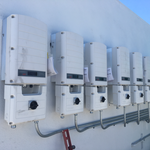
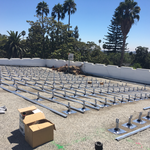
"Wonderful, it was a very quick and easy process. Brian talked us through it and in no time we had a 3KW system mounted on a frame in the garden and the invertor installed in the basement. Brian talked us through working with our power company to get the system checked and approved and we now get credits from the power company for power we provide to the grid. In addition we are set up to get Solar Renewable Energy Credits (SRECs) payments for providing clean energy. We also got a free Energy Audit which helped locate some problems areas we were able to fix. The system has basically cut our energy costs in half. I have hesitation in recommending them to anyone interested in solar energy."
Additional Photos
Additional Photos
Additional Photos
Additional Photos
Additional Photos

+14

Recommended by100%of homeowners
Avatar for Home Services-VA
Home Services-VA
4.5(
47
)
Energy Audit - For BusinessHome Energy Audit

Serving Stephenson, VA and surrounding areas

In business since 1990

Free estimates

"He's very knowledgeable and very good. He's excellent. He did a lot of job in different places. He did many job, way more than 10 on different houses and he can do everything. He's really a handyman. He's very honest and he's can do everything. He can do electrical, plumbing and all. He never refuses to do anything and he really knows, that's very rare in a handyman."
Before
After
Recommended by92%of homeowners
Avatar for Noba Electric LLC
Noba Electric LLC
5.0(
3
)
Energy Audit - For BusinessHome Energy Audit

Serving Stephenson, VA and surrounding areas

In business since 2014

Free estimates

Credit card accepted

"Noba, and its owner, Frank, is very reliable, very knowledgable, very competent, and responsive.  The prices are also reasonable.  I've used Noba many times and would use them again when needed.  I highly recommend the company."
.
.
.
.
Recommended by100%of homeowners
Avatar for 3 Pros Basement Systems
3 Pros Basement Systems
5.0(
6
)
Energy Audit - For BusinessHome Energy Audit

Serving Stephenson, VA and surrounding areas

In business since 2013

Free estimates

"They helped with my crawl space and got it insulted and dried up. Great service and great communication from start to finish. Would HIGHLY recommend them to anybody! Fast, reliable, quality work and extremely fair pricing."
Work in progress.  SilverGlo insulation panels on the walls and CleanSpace floor covering being laid in place.
Crawl Space Gets A Makeover
Crawl Space Goes From Nasty to Nice
CleanSpace floor covering and SilverGlo wall insulation panels along with upper rim joists sealed with spray foam.
Crawl Space Gets A Makeover

+52

Recommended by100%of homeowners
Showing 1-10 of 13
Energy Efficiency Auditing FAQs, answered by experts

Motion-sensor lights use one watt while on standby and five watts while turned on. They’re usually on for one hour over a 24-hour period, bringing the total wattage to about 28 watts per day. LED lights use around 6.5 to 8 watts while on. If you leave an LED light on all night, with night ranging from 10 to 14 hours, you’re looking at using 65 to 112 watts a night. You can minimally cut your wattage in half by switching to a motion-sensor light.

Setting your AC unit to 78 degrees can, indeed, help you save energy. In fact, according to experts, every degree you turn the unit up could save you between 1% and 3% on your energy bills. That said, turning your unit off entirely while you’re out might actually be less efficient than keeping it on at a higher temperature. Why? The unit will need to work extra hard to cool the house back off again after all those hot hours. 

To determine the right size generator for your house, you should calculate the total wattage of the appliances and devices you want to power during an outage. List all essential items, note their start-up wattages, and add them together.

Here are some typical wattage requirements for common appliances:

  • Refrigerator: 600 watts

  • Large dehumidifier: 700 watts

  • Large window air conditioner: 1,400 watts

  • Water heater: 3,000 to 4,500 watts

  • Electric furnace: 5,000 to 25,000 watts

A 7,500-watt generator might be sufficient for essentials like a refrigerator, freezer, well pump, and lighting circuits. However, for high-demand items like a water heater or furnace, a whole-home generator is a better choice. A portable generator may be enough if you only need to power a few critical items.

While home square footage can offer a rough estimate, it is not always a reliable indicator. For reference, here are some typical generator sizes based on square footage:

  • 1,000 sq ft: 6–9 kW

  • 1,500 sq ft: 7–10 kW

  • 2,000 sq ft: 10–14 kW

  • 2,500 sq ft: 12–16 kW

  • 3,000 sq ft: 16–20 kW+

For the most accurate sizing, consult a professional who can calculate your home's peak and average power consumption and recommend the optimal generator.

You can increase your home’s load factor by replacing fuse boxes with a circuit breaker, hiring a licensed electrician to upgrade your electrical panel, upgrading wiring, or installing subpanels. An electrical inspection by an expert can help determine the state of your current electrical systems and how they can be improved.

R-value measures an insulation material's thermal resistance, indicating its ability to resist heat transfer. A higher R-value signifies better insulation performance because the material is more effective at slowing heat flow. The R-value depends on the type, thickness, and density of the insulation material, such as fiberglass, foam, or cellulose. Each inch of insulation typically provides an R-value between 3 and 8. There is no single universal R-value; the optimal choice depends on your climate zone. Colder climates require a much higher R-value than warmer ones to maintain energy efficiency, keep the home warm in winter and cool in summer, and manage costs.

The Stephenson, VA homeowners’ guide to energy efficiency auditing services

From average costs to expert advice, get all the answers you need to get your job done.