Top-rated drywall pros.

Get matched with top drywall pros in Curtice, OH

Enter your zip and get matched with up to 5 pros

Need a pro for your drywall service project in Curtice, OH?

Select your specific project to find the pro for you.

TRUSTED BY CURTICE, OH HOMEOWNERS

  • Average homeowner rating star icon4
    Average homeowner rating
  • Verified reviews icon24
    Verified drywall services reviews

Find Drywall pros in Curtice

TMG
New to Angi
Drywall - RepairDrywall - Install

Serving Curtice, OH and surrounding areas

Approved

In business since 1995

Free estimates

Offers commercial services

We are committed to excellence in every aspect of our business. We uphold a standard of integrity bound by fairness, honesty, and personal responsibility. Our distinction is the quality of service we bring to our customers. Accurate knowledge of our trade combined with ability is what makes us true professionals. Above all, we are watchful of our customers' interests, and make their concerns the basis of our business.

42 neighbors recently requested a quote
Avatar for Meyers Top Notch Contracting
Meyers Top Notch Contracting
New to Angi
Drywall - InstallDrywall - Repair

Serving Curtice, OH and surrounding areas

Approved

In business since 2023

Free estimates

Small jobs welcome

We are a locally owned and operated company that values honesty and integrity in all aspects of our business. Not only are we focused on quality work and outstanding results, we are also committed to educating our clients through our wide range of expertise, in turn creating a level of value unmatched by any of our competitors. We look forward to building lasting relationships with our clients and guarantee your satisfaction!

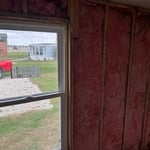
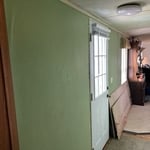
tear out
before tear out
before tear out
before tear out
before tear out

+6

Response time1 day
...
Showing 1-10 of 117
Drywall questions, answered by experts

Although they have similar applications, spackle and joint compound are not the same. Their primary differences lie in their composition, consistency, and ideal use cases.

Spackle is composed of gypsum and binding agents, making it thicker than joint compound. It dries quickly and is easy to sand, which makes it ideal for small wall repair projects like filling nail holes or patching minor damage.

Joint compound, also known as drywall mud, consists of limestone and gypsum. It is primarily used for large-scale projects, such as taping and finishing the seams on newly installed drywall. It tends to shrink more than spackle and can be more difficult to spread.

While both products can be used to fill small depressions and cracks, spackle cannot replace joint compound for taping and mudding new drywall. Conversely, you can often use joint compound for small patching jobs typically done with spackle.

Yes, professionals often repair minor wall openings made for insulation injection to restore the surface.

Whether you need drywall anchors depends on your specific project, particularly where you are hanging an item. Drywall anchors are not necessary if you can drive a screw directly into a wooden stud behind the wall, as the stud provides sufficient support. However, since studs are not present everywhere in a wall, you will need to use drywall anchors if you are hanging an object in a location without a stud. For very lightweight items, picture hanging strips can also be a suitable alternative.

A local drywall contractor can texture your drywall for you. Drywall contractors are a better choice than general handy people because the contractors have a lot of experience working with drywall mud. The process is somewhat of an art thanks to the complexity of working with the mud, so call in a drywall pro who knows what they’re doing.

There are six levels of drywall finish, from 0 to 5, that refer to the amount of work performed during the finishing process.

Level 0: Drywall is hung with no finishing work.

Level 1: Tape is placed over the seams between drywall sheets.

Level 2: A thin layer of mud is applied over the tape and screw holes. This level is common for utility rooms or walls that will be covered.

Level 3: A full coat of mud covers the screw holes and tape, but the surface is not sanded. This is often used in garages.

Level 4: This is the most common finish for visible interior walls. It involves applying two coats of mud over seams and screw holes, with sanding between each coat, creating a smooth surface ready for flat paint.

Level 5: This is a high-end finish for luxury homes. It includes full taping, mudding, and sanding, plus a final skim coat over the entire surface before painting.

The Curtice, OH homeowners’ guide to drywall services

From average costs to expert advice, get all the answers you need to get your job done.