



Top-rated tree service pros.

Get matched with top tree service pros in Schuyler, NE

Enter your zip and get matched with up to 5 pros

Need a pro for your tree service project in Schuyler, NE?

Select your specific project to find the pro for you.

Find Tree service pros in Schuyler

Avatar for M. S. Wiekhorst Arbor Company
M. S. Wiekhorst Arbor Company
5.0(
10
)

Serving Schuyler, NE and surrounding areas

Free estimates

Emergency services offered

Warranties offered

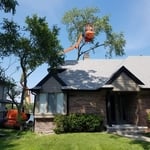
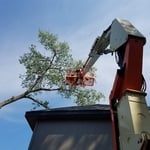
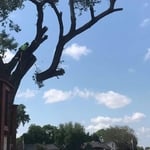
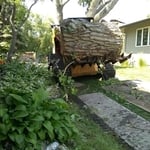
"The services performed went as smooth as expected. Mike was able to trim our biggest tree and remove an entire evergreen that had been exposed to bag worms. The work was quick and efficient and I would highly recommend him to anyone. We will definitely utilize his expertise in the future."
Large Cottonwood Removal

+12

Response time2 days
Response rate100%
Recommended by100%of homeowners
Tree Service questions, answered by experts

Any tree that needs to be pruned should be pruned to remove dead branches at least once a year. You may need to prune far more often if you’re trying to maintain a certain shape or to save a tree that suddenly becomes infected.

It's easy to misidentify trees that appear to be maple trees due to similarities in leaf shapes. Sweetgum, sycamore, and yellow poplar all have leaf shapes and appearances similar to maples. The fact that around a dozen maple tree varieties exist, only about half of which are considered common, makes misidentification an often typical occurrence.  

Trees don’t usually grow back after being cut down. Some particularly robust tree species may start sending up new stems from a stump to recover, but those stems won’t become a “tree” like before. Generally, trees don’t recover from being entirely cut down, which is why it’s important to be careful when making a decision. When you cut down a tree, it’s a good idea to make plans to remove the stump, even if it’s unlikely to grow back.

Palm trees are unique in that their roots don't grow straight down; they grow horizontally. Typically, palm tree roots go down between 12 and 36 inches deep. The roots grow far and wide from the base of the palm tree to absorb as much water and soil nutrients as possible. In addition, the horizontal roots are also very strong—keeping palm trees stable and helping them sway during storms.

Stump grinding consists of removing the visible part of the stump, but the roots remain intact. Depending on the tree and root system, the roots may still grow after stump grinding. If you are concerned about root growth and damage, you may want to consider having a stump removed completely.

The Schuyler, NE homeowners’ guide to tree services

From average costs to expert advice, get all the answers you need to get your job done.