


Top-rated paving pros.

Get matched with top paving pros in Broken Bow, NE

Enter your zip and get matched with up to 5 pros

Need a pro for your paving service project in Broken Bow, NE?

Select your specific project to find the pro for you.

Find Paving pros in Broken Bow

Paving Services questions, answered by experts

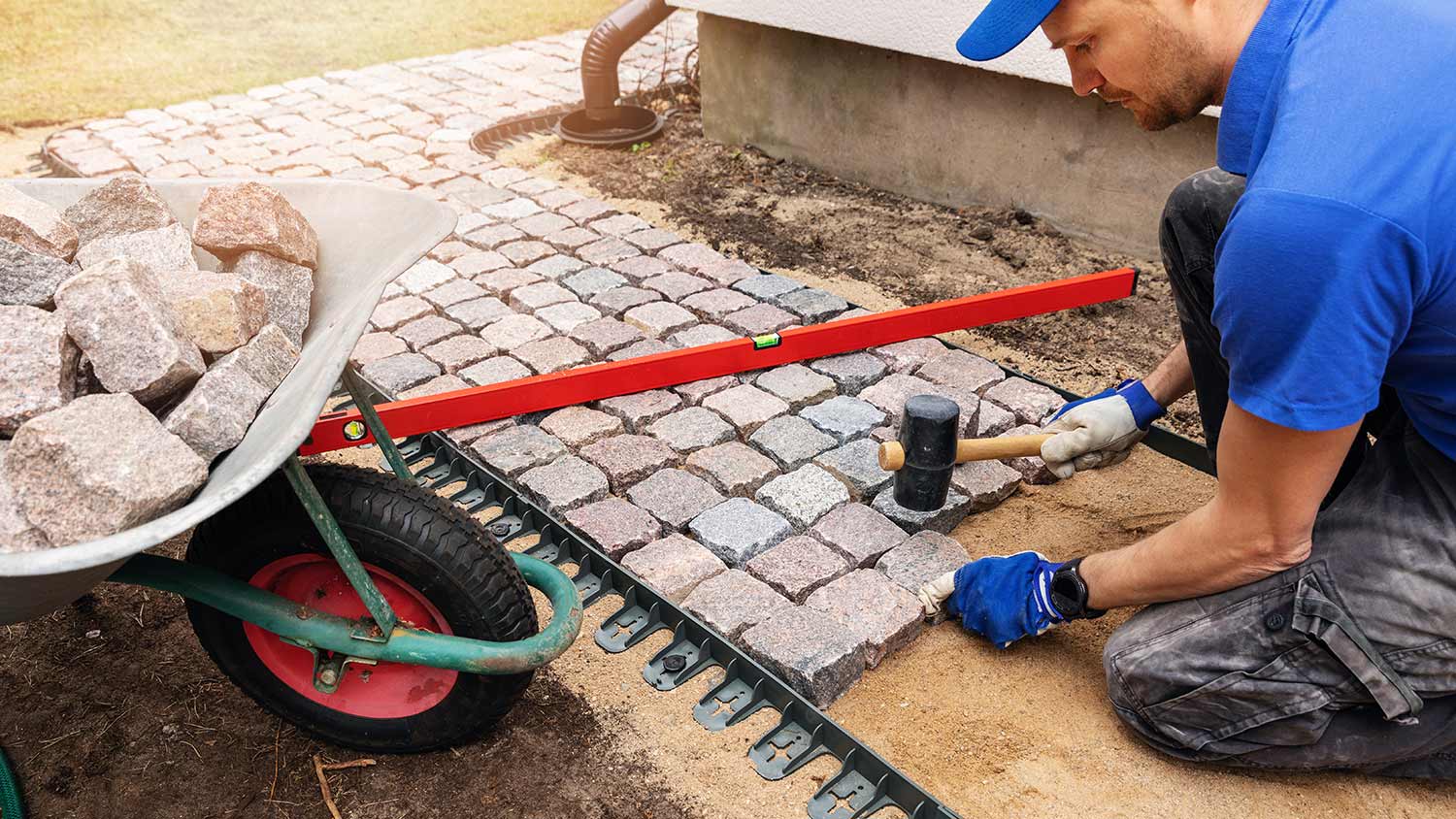
Yes, you should lightly wet the sand with a hose before laying the pavers on top. This activates the bonding agents in the sand, ensuring that your pavers don’t shift around during the installation process. However, you should make sure that the sand is not soaked; overwatering can cause the sand and pavers to not set properly.

To adhere pavers to concrete, you can use either mortar or a concrete-specific adhesive. For border pavers, a polyurethane-based adhesive is a good choice as it expands and contracts with temperature changes, keeping them firmly in place. For the non-border pavers, polymeric sand is used between the joints to prevent shifting. In most cases, it is also recommended to lay a permeable sand layer below the pavers to ensure proper stability and drainage. Before starting, always take the proper preparatory steps for a professional result.

The best way to stop your pavers from sinking is to ensure you've properly compacted the base layers. Use your paver compactor and work over the base layer several times to create the hardest possible base. If the soil and sand of your base are compact, you’ll experience less shifting and sinking.

Like brick, paver, and cobblestone driveways, resin driveways can have intricate patterns using different colors. Aggregates can be laid to create curves, shapes, letters, or numbers. When using custom colors or patterns, homeowners can expect to add an extra $2 to $6 per square foot to achieve their desired look.

Wet cutting is usually the preferred method. It controls dust, which helps protect your lungs and makes for a cleaner working environment. Plus, the water cools the blade, preventing overheating and prolonging its life while providing smoother, more precise cuts. The downside is the mess—water and asphalt sludge can be messy to clean. Dry cutting, though convenient if water isn’t available, creates a lot of dust, which can be harmful. This also increases the risk of blade damage due to overheating. So, if you have the option, wet cutting is the better method for most asphalt jobs.

The Broken Bow, NE homeowners’ guide to paving services

From average costs to expert advice, get all the answers you need to get your job done.