




Top-rated arborists.

Get matched with top arborists in Agency, MO

Enter your zip and get matched with up to 5 pros

Need a pro for your arboricultural service project in Agency, MO?

Select your specific project to find the pro for you.

TRUSTED BY AGENCY, MO HOMEOWNERS

  • Average homeowner rating star icon4.4
    Average homeowner rating
  • Verified reviews icon140
    Verified arboricultural services reviews

Find Arborists in Agency

Avatar for K&S Quality Landscape & Tree Care LLC
K&S Quality Landscape & Tree Care LLC
5.0(
7
)

Serving Agency, MO and surrounding areas

Approved

Free estimates

Emergency services offered

Small jobs welcome

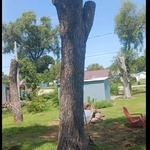
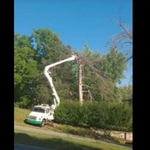
"I hired them to remove a hanging tree branch tangled in power lines and while they were there to get the debris pile out of my yard. They had a low bid and they were able to get to me the same day! They told me they also do landscaping. I’ll probably be hiring them again in the future. Oh, and they didn’t just get the debris pile, they raked all the sticks up from the whole yard!"
98 neighbors recently requested a quote
Avatar for Doerr Enterprises, LLC.
Doerr Enterprises, LLC.
5.0(
5
)

Serving Agency, MO and surrounding areas

Approved

In business since 2024

Offers commercial services

"We contacted Doerr Enterprises this last fall to trim our tree in our front yard that was looking a little sad. He was very prompt to get to the job, get it done and cleaned up! We have also hired him for the first snow we got so far this year and he cleaned our drive in no time! Would highly recommend his services!"
3 neighbors recently requested a quote

...
Showing 1-10 of 68
Arborists questions, answered by experts

You may be looking to identify maple trees to use for home improvement projects. In that case, you can tell hard maples by looking at their leaves. Leaves will have a U-shaped dip, or sinus, between the points, or lobes, of the leaves. Leaves of soft maples tend to have V-shaped sinuses.

If you already have the cut wood in front of you, look for a light, uniform color to identify hard maple wood and check for variations of red, gray, or brown streaks and an overall darker color in soft maple wood.

Most trees can be successfully transplanted while they are young, but pines, walnuts, and some oak tree varieties are more difficult to move because their root systems grow deeper than most other trees. Also, trees adapted to sandy soil with wide root systems like beeches, willows, and aspens are harder to dig out because their roots spread much farther out from the trunk. In these cases, unless the trees are very young and small, it’s a good idea to consult a tree planting professional.

Licensing requirements for arborists, also known as tree surgeons, vary by state and municipality. Many areas require a license, which often involves specialized education and experience. Even if not mandated, it's wise to hire a licensed professional as they tend to have more experience. Beyond licensing, look for certifications from organizations like the International Society of Arboriculture (ISA) or the Tree Care Industry Association (TCIA), as this indicates a higher level of expertise. Certified arborists must typically pass a comprehensive exam. Always confirm that the arborist has a business license and is fully insured to protect yourself from liability. Seeking positive recommendations from local homeowners is also a good step in finding a qualified professional.

Hiring an arborist or tree surgeon is usually more expensive than a standard tree company, but it is often worth the investment. Arborists have education and certifications that standard companies typically lack, leading to a more professional, expert-level service. Their expertise is particularly valuable for diseased or infested trees, as they can ensure safer removal and help prevent the issue from spreading. Additionally, arborists may be necessary for work near power lines, as uncertified companies are often not permitted to service these trees. If your goal is to preserve the health of your trees, an arborist is the best choice. Their services, such as stump grinding, are also performed with greater expertise to ensure a safe depth that won't cause your lawn to collapse over time.

In most cases, you should not use a pruning seal on trees after trimming. Applying a sealant can interfere with the tree's natural healing process, and it does not guarantee protection from pathogens. Instead of sealing the cut, the best practice is to support the tree's natural recovery by providing it with plenty of water and a dormant-style fertilizer. However, there are exceptions. Pruning seals may be recommended for very vulnerable species, like elm trees, in areas where dangerous diseases such as Dutch elm disease are prevalent. In these specific situations, the protection offered by a sealant can outweigh its downsides. For advice tailored to your situation, especially after cutting large branches, it is best to consult a local tree trimming professional.

The Agency, MO homeowners’ guide to arboricultural services

From average costs to expert advice, get all the answers you need to get your job done.