
Top-rated arborists.

Best arborists near Gower, MO

Enter your zip and get matched with up to 5 pros

Need a pro for your arboricultural service project in Gower, MO?

Select your specific project to find the pro for you.

TRUSTED BY GOWER, MO HOMEOWNERS

  • Average homeowner rating star icon4.4
    Average homeowner rating
  • Verified reviews icon53
    Verified arboricultural services reviews

Top-Rated Arborists in Gower - Updated Nov 2026

Avatar for Marvin Tree and Lawn Service, LLC
Marvin Tree and Lawn Service, LLC
5.0(
11
)
Tree RemovalTree Stump - RemoveTree Removal - For Business+3 more

Serving Gower, MO and surrounding areas

Approved

Super Service Award Winner

In business since 2005

Free estimates

Emergency services offered

"Marvin and his crew were punctual, professional, did an amazing job on our landscaping. Removed 3 trees and replaced what was needed. He was very patient and worked well with me on ideas and layout. I would highly recommend Marvin’s company to anyone."
Response time8 hrs
2 neighbors recently requested a quote
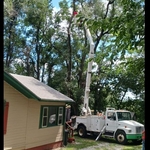
Recommended by18%of homeowners
FRAZER'S TREE SVC
4.3(
11
)
Tree RemovalTree Removal - For BusinessTree Stump - Remove+5 more

Serving Gower, MO and surrounding areas

Approved

Customers say: True professional

"

Was a slight delay because of bad weather but very prompt as soon as the weather permitted. I felt it was a little pricey but they

did quality work for their money. Owners and workers were professional and courteous. Would use them again if needed.


"
1 neighbors recently requested a quote
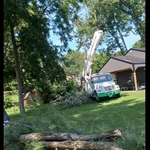
Recommended by100%of homeowners
...
Showing 1-10 of 89
Arborists FAQs, answered by experts

Generally, you should prune around 20% of an apple tree’s growth—and never more than 30%. This means that if you have a severely overgrown tree, it can take a few seasons to prune it back enough to produce the healthiest fruit. 

If you’re dealing with a newly planted or juvenile tree, hold off on pruning beyond the initial shaping. Wait at least a couple of seasons into fruit production since pruning can increase the number of water sprouts and unproductive foliage.

It is possible to cut down a tree on your property yourself, but it is generally not recommended unless specific conditions are met. You should only consider this project if the tree is small (e.g., under 4-5 inches in diameter and short enough that you don't need a ladder to reach the branches), and you are experienced in handling a chainsaw. The tree must also be located far from any power lines, fences, homes, or other structures. Even for small trees, the work can be dangerous, and it's always advisable to have a spotter to ensure the tree falls correctly and no branches fall on you.

For any tree that is large, requires a ladder to access, or is near electrical lines or structures, you should always hire a professional. Attempting to remove a large tree yourself is extremely dangerous, poses a risk of serious injury, and could result in significant damage to your property.

Before any tree removal, it's also important to check your local and state regulations to ensure the tree is not historic or otherwise protected by your city.

It’s not as common for Dutch elm disease to affect other types of trees, especially if the surrounding trees aren’t elms. However, it is possible for DED to spread to other trees, particularly in northern states, like Minnesota. In fact, it’s a good idea to use geography to identify wood and determine which types of trees are in your yard. 

Unfortunately, the complex and shallow root system of elm trees makes surrounding elm trees particularly vulnerable to DED. Early discovery is key!

Whether you should remove the roots of a dead tree depends on whether they’re damaging nearby areas. For instance, if the roots continue to grow near sidewalks, driveways, or the foundation of your home, they can cause damage. If you want to plant something else in that spot, removing the roots can make it easier for the new tree or plant to grow.

Planting trees far enough from your foundation will protect your home from root damage, but if you’re dealing with existing trees, you can still guard against roots. Root barriers form a physical boundary that will prevent roots from encroaching on your foundation and can help save you from expensive foundation repair costs.

The Gower, MO homeowners’ guide to arboricultural services

From average costs to expert advice, get all the answers you need to get your job done.