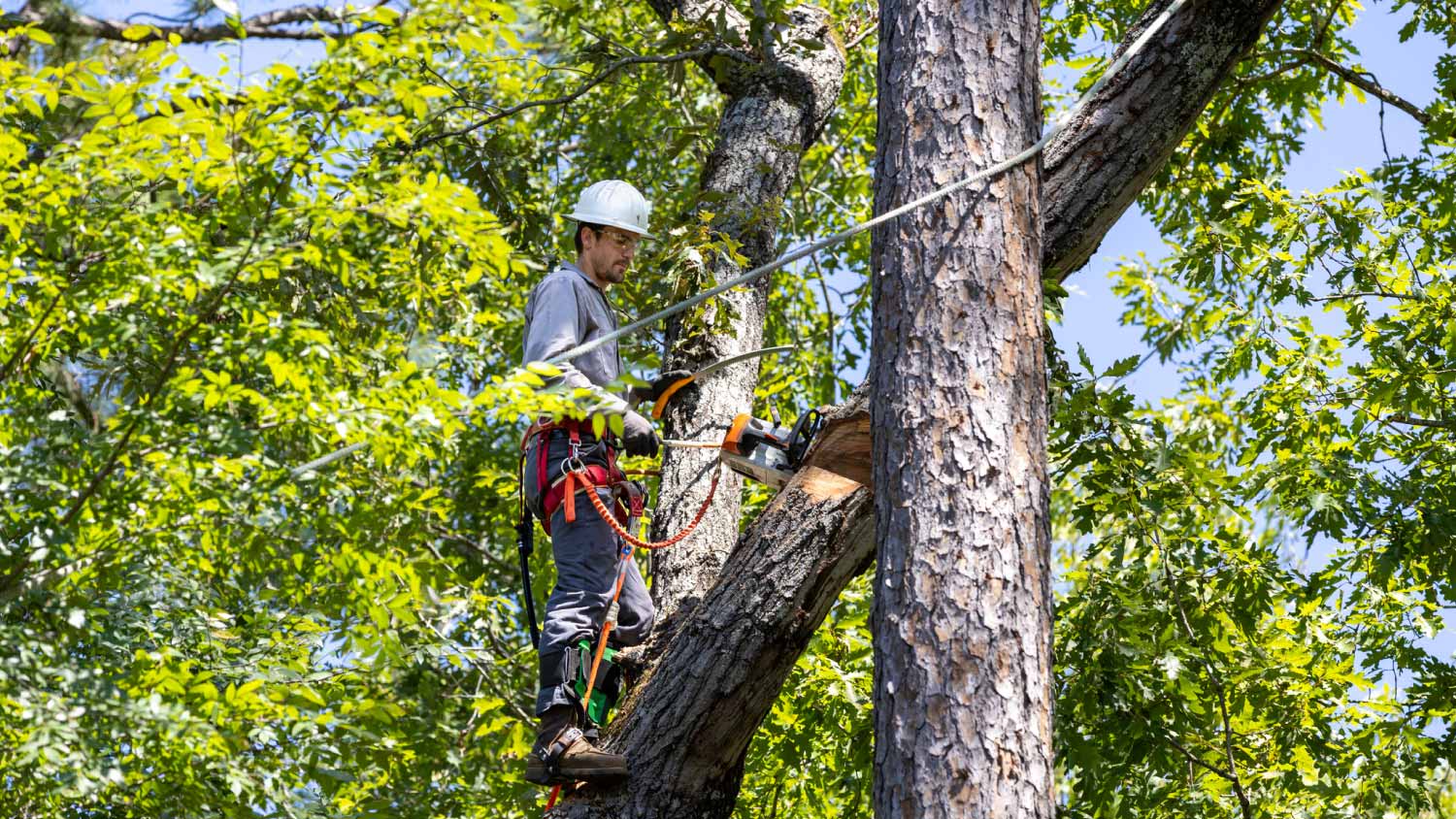








Top-rated arborists.

Best arborists near Oregon, MO

Enter your zip and get matched with up to 5 pros

Need a pro for your arboricultural service project in Oregon, MO?

Select your specific project to find the pro for you.

Top-Rated Arborists in Oregon - Updated Nov 2026

FRAZER'S TREE SVC
4.3(
11
)
Tree Stump - RemoveTree RemovalTree Removal - For Business+5 more

Serving Oregon, MO and surrounding areas

Approved

Customers say: True professional

"

Was a slight delay because of bad weather but very prompt as soon as the weather permitted. I felt it was a little pricey but they

did quality work for their money. Owners and workers were professional and courteous. Would use them again if needed.


"
1 neighbors recently requested a quote
Recommended by100%of homeowners
Avatar for Doerr Enterprises, LLC.
Doerr Enterprises, LLC.
5.0(
5
)
Tree RemovalTree Removal - For BusinessTree Trimming - For Business

Serving Oregon, MO and surrounding areas

Approved

In business since 2024

Offers commercial services

"We contacted Doerr Enterprises this last fall to trim our tree in our front yard that was looking a little sad. He was very prompt to get to the job, get it done and cleaned up! We have also hired him for the first snow we got so far this year and he cleaned our drive in no time! Would highly recommend his services!"
3 neighbors recently requested a quote
Showing 1-10 of 33
Arborists FAQs, answered by experts

The recovery time for pruning depends on how much you prune, the species of tree, and how well you care for it afterward. All trees grow new wood and often sprout additional branches after pruning. Ideally, trees should recover from normal pruning after one or two years. Heavy pruning or slow-growing trees may take several years to fully recover.

Planting a palm tree close to your home can provide shade while elevating the beauty of your yard. However, there are a few safety concerns to consider before doing so. You’ll want to opt for a smaller tree with a non-invasive root system. Select a species that won’t grow too tall and choose a planting location that won’t damage your home.

Some trees, such as silver maples, birches, sycamores, and scotch pines, shed their bark naturally. If your tree is not one that does this, it might have fallen prey to pests, fungi, or diseases. It could also simply be suffering from an extreme weather change, such as a snowstorm or heat wave. If you’re still stumped, consulting with a pro can help you diagnose your tree’s specific problem.

If executed correctly your tree should survive after being transplanted to a new spot. However, effective transplanting requires six months, careful root pruning, safe transport to the new location, and replanting in prime soil conditions. You’ll also need an appropriately sized root ball for a complete tree transplant. A good rule of thumb is that, for every inch in diameter, your tree’s root ball needs to be around 11 inches. So a tree with a diameter of six inches needs a root ball of approximately 66 inches.

Deciduous shade trees (the type of trees whose leaves fall off in autumn) need to be pruned in late winter—between February and March. That’s because it’s easier to find and remove sick or dead branches when no leaves are present. And wounds close and heal faster in colder temperatures so pruning them at this time also makes them less prone to infection.

The Oregon, MO homeowners’ guide to arboricultural services

From average costs to expert advice, get all the answers you need to get your job done.