




Top-rated arborists.

Get matched with top arborists in Easton, MO

Enter your zip and get matched with up to 5 pros

Need a pro for your arboricultural service project in Easton, MO?

Select your specific project to find the pro for you.

TRUSTED BY EASTON, MO HOMEOWNERS

  • Average homeowner rating star icon4.5
    Average homeowner rating
  • Verified reviews icon125
    Verified arboricultural services reviews

Find Arborists in Easton

Avatar for K&S Quality Landscape & Tree Care LLC
K&S Quality Landscape & Tree Care LLC
5.0(
7
)

Serving Easton, MO and surrounding areas

Approved

Free estimates

Emergency services offered

Small jobs welcome

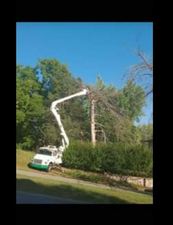
"I hired them to remove a hanging tree branch tangled in power lines and while they were there to get the debris pile out of my yard. They had a low bid and they were able to get to me the same day! They told me they also do landscaping. I’ll probably be hiring them again in the future. Oh, and they didn’t just get the debris pile, they raked all the sticks up from the whole yard!"
89 neighbors recently requested a quote
...
Showing 1-10 of 66
Arborists questions, answered by experts

Trees naturally want to grow upward, so one may straighten all by itself, though this only comes into play when a tree is leaning just a small amount. For trees growing into an awkward position or those leaning heavily in one direction, the above steps are necessary to ensure the tree gets back on the right path. This also holds true for trees planted in a spot with unstable soil.

There are a few differences between tree guying and tree staking. Tree guying requires anchor stakes that are shorter and stronger than regular stakes and are driven deeper into the ground at an angle away from the tree. Tree staking uses longer stakes that are set parallel to the tree and are used for smaller trees. Consult a local tree professional to determine which method is best for your tree.

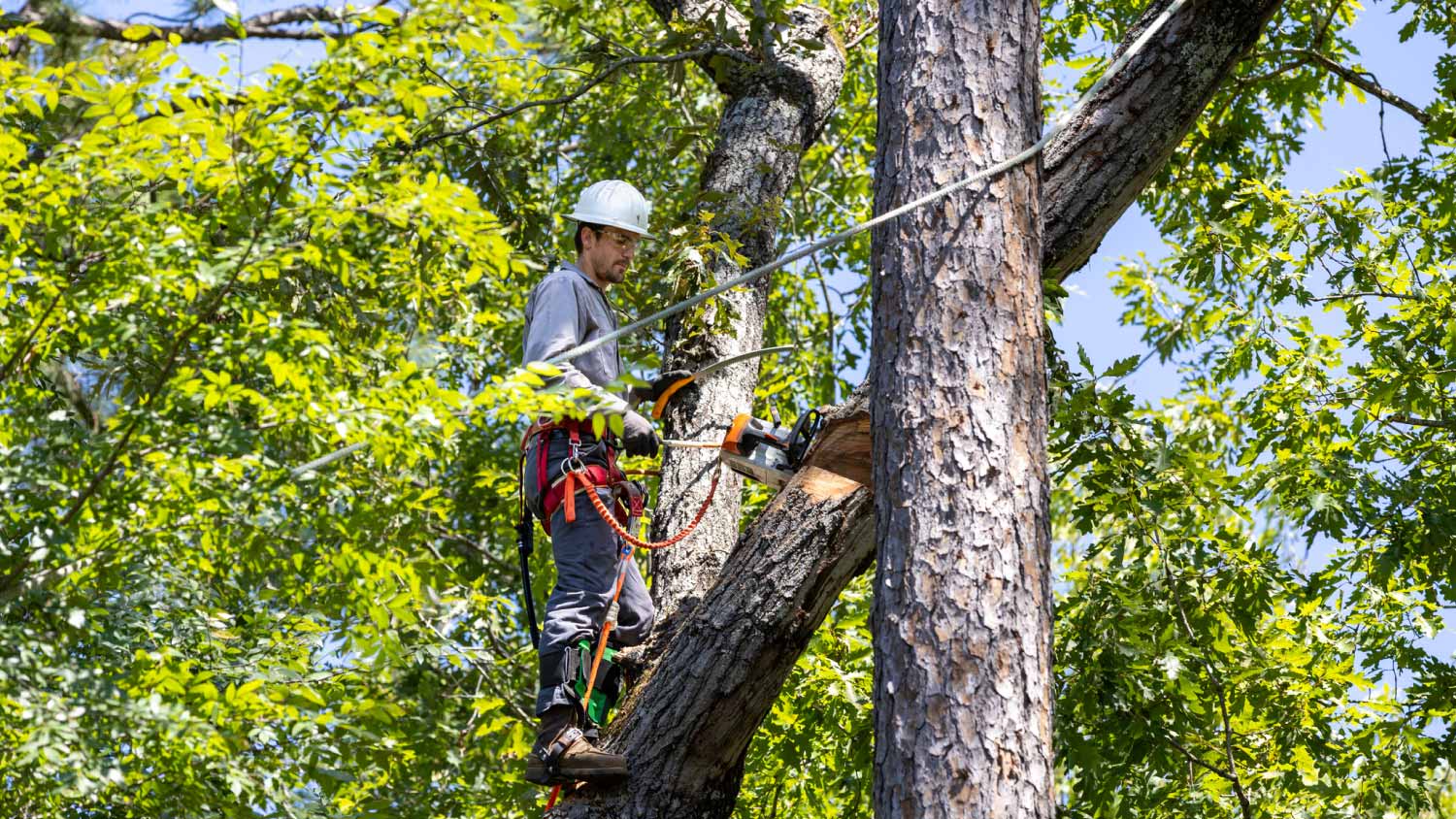
A chainsaw is the best tool to cut down a tree, but you may also use a handsaw or ax. You may also want to use a lopper or pole saw to remove limbs before cutting down the tree. Wear chainsaw chaps and protective gear, including eyewear and earplugs if you use a chainsaw. Again, if you’re unsure about how to use this tool, this project may be one to skip.

How often and long you should water a tree depends on the species and if it is mature or newly planted. The amount of water is also based on the tree's size. A good rule of thumb is approximately 5 gallons per inch of the trunk's diameter.

Adjusting watering to the recommended suggestions for the tree type and weather conditions is vital. For instance, watering trees during a drought is necessary, and you may need to water more frequently than usual.

If the roots are still alive, the dead tree will usually try to put out new shoots. That doesn’t mean the tree will survive or that the dead parts of a tree will come back to life. If parts of the tree have died and turned gray or rotten, nothing will bring them back to life and they need to be safely removed.

The Easton, MO homeowners’ guide to arboricultural services

From average costs to expert advice, get all the answers you need to get your job done.