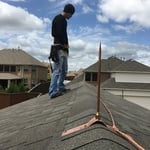
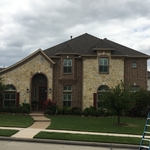
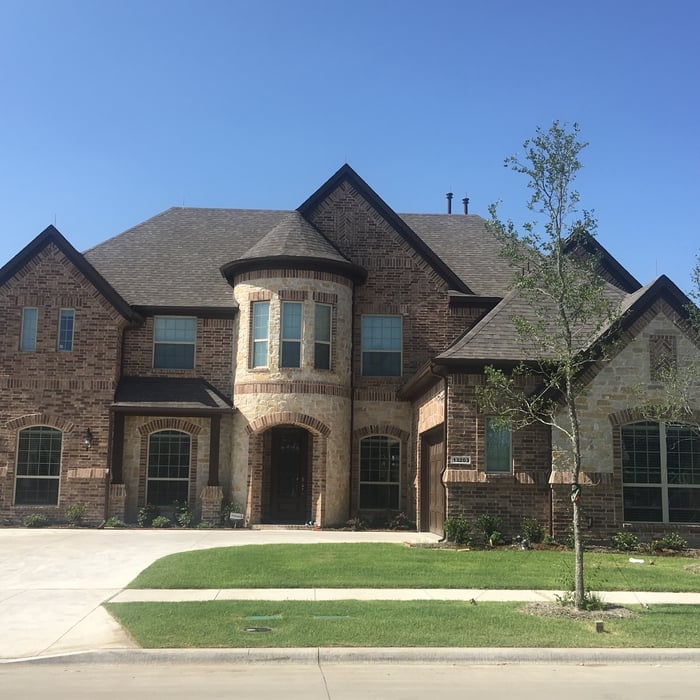
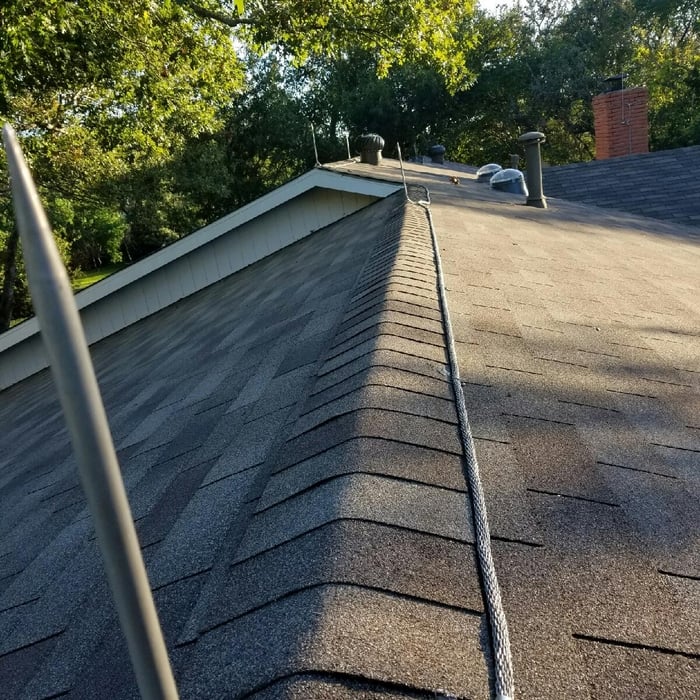
"John Corrigan and his sons are outstanding! They did outstanding work installing our lighting rods at a reasonable price. They were prompt, very professional and honest. I would call them again and recommend them to anyone."
"We were contacted immediately regarding adding a lightning protection system on our home. Seamus was very thorough and knowledgeable regarding our concerns. He and his crew showed up and were very professional and efficient. We are very pleased with the installation and highly recommend Donahue’s."
"The problem turned out to be a burned out small electric door switch. I believe the price was way too expensive for the service performed and the price of the door switch. What more can I say? It got done."
"He came and installed a new kitchen faucet for us. He even installed 2 faulty valves that he noticed were bad that we didnâ t know about. Honest guy that did honest work!"
No. Do not use a 14-gauge wire on a 20-amp outlet. A certified licensed electrician would know that the National Electrical Code (as per Section 240.4(D) subsection 3) requires 14-gauge wires to be used with a maximum amplitude of 15. Therefore, you should only use 12-gauge wires on 20-amp outlets.
Whether you need electrical upgrades depends on the electronics your game room includes. If your game room will have high-powered electronics, arcade machines, or a home theater, you may need to upgrade your electrical panel or add dedicated circuits. An electrician can assess your current system and provide an estimate for any necessary upgrades.
No, wiring does not need to be redone to get a dimmer switch, as they work with single-pole and three-way switches. Just ensure you choose a dimmer that is compatible with your wiring, fixture, and lightbulbs. Most homes built after 1985 have neutral wiring and work with almost all dimmers. If your home was built before 1985 and you don’t have an updated electrical system, you may have to use a non-neutral wiring dimmer.
Upgrading your amp service could possibly be a solution to tripped breakers. Circuit breakers in an electrical panel trip as a safety measure when something goes wrong with the current, and that’s often caused by plugged-in devices trying to draw too much current. Replacing the electrical panel with a new model and new breakers designed for higher amps can fix this problem.
Yes, you can use a 3/0 AWG wire for a 200 amp service, but only if it is made of copper, as 3/0 copper wire has an allowable ampacity of 225 amps. If you are using aluminum or aluminum copper-clad wire, you need to use at least 4/0 AWG.
The Swartz, LA homeowners’ guide to electrical services
From average costs to expert advice, get all the answers you need to get your job done.
Before you hire a licensed electrical contractor, you should learn the cost to run electric from the road to your house so you can budget for the project.
Whether you’re shopping for a new home or simply doing a safety check on your current place, learn what factors influence an electrical inspection cost.
Is it time to upgrade your electrical panel? For the sake of safety, find out sooner than later by exploring our top signs that it’s time for an upgrade.