Top-rated arborists.

Best arborists near Lakeside Park, KY

Enter your zip and get matched with up to 5 pros

Need a pro for your arboricultural service project in Lakeside Park, KY?

Select your specific project to find the pro for you.

TRUSTED BY LAKESIDE PARK, KY HOMEOWNERS

  • Average homeowner rating star icon4.5
    Average homeowner rating
  • Verified reviews icon740
    Verified arboricultural services reviews

Top-Rated Arborists in Lakeside Park - Updated Nov 2026

AM Tree & Landscape
4.7(
46
)
Tree RemovalTree TrimmingTree Removal - For Business+5 more

Serving Lakeside Park, KY and surrounding areas

Approved

In business since 2007

Free estimates

Emergency services offered

"Mike and AM Tree and Landscaping were wonderful! They listened to our concerns, made suggestions and explained WHY they were going to trim the way they did. They touched base with us regularly to make sure we were all on the same page! They went above and beyond what tree services we’d ever had before! Clean up was spot on and all at a very reasonable price. We definitely recommend them to everyone!"
Response time7 hrs
2 neighbors recently requested a quote
Recommended by90%of homeowners
Avatar for Max Effort Services
Max Effort Services
4.8(
22
)
Tree RemovalTree Removal - For Business

Serving Lakeside Park, KY and surrounding areas

Approved

In business since 2009

Free estimates

Offers commercial services

"This was one of the best experience ever! They took down my 20 foot evergreen very professionally, cleaned up great! They are great! Having them do estimates to remove bushes now! Can’t say enough about the work they did!"
Beautiful day out to be doin tree work
And she’s down ready to chopped for fire woo
Small landing zone
Almost there
It’s goin

+17

Response time5 hrs
Response rate94%
1 neighbors recently requested a quote
Avatar for K&G Tree Service
K&G Tree Service
4.5(
11
)
Tree RemovalTree Removal - For BusinessTree Stump - Remove+5 more

Serving Lakeside Park, KY and surrounding areas

Approved

In business since 2018

Free estimates

Warranties offered

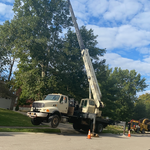
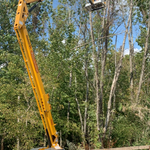
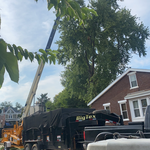
"The best tree removal I've ever experienced. I had a 50+ foot maple overhanging my garage and another just as tall close by. Bernie examined the second tree and suggested that it be removed, as well, because there were indications that the "heart" of the tree had rotted. Turned out he was right. Bernie's crew arrived on time. They were courteous, efficient, and they were well-equipped. Because of the location of the trees, they had to be de-limbed before they were cut. Their Track-Lift made the operation safer than climbing and cutting. Once the limbs had been cut and lowered to the ground, they cut lengths of the tree off from the top. All well controlled, well coordinated, and safe. After that, per contract, they removed the limbs. We kept the trunks for fire wood. Then they raked the debris from the driveway and used a leaf-blower to finish the job. I couldn't have asked for better service. It was a pleasure watching them work."
Additional Photos
Additional Photos
Additional Photos
Response time1 day
3 neighbors recently requested a quote
Recommended by80%of homeowners
...
Showing 1-10 of 216
Arborists FAQs, answered by experts

A tree growing close to a house can pose several risks, but removal isn't always the only or best solution. Potential problems include roots growing into the foundation and causing structural cracks, branches damaging the roof or promoting moss growth, and debris clogging gutters, which can lead to water damage. Trees can also provide access for pests and encourage mold. However, a small, healthy tree may not be a problem, and for larger, established trees, strategic trimming can be a cheaper and more beneficial alternative to removal. It is generally recommended to take action for trees within 10 to 20 feet of your home, especially if they are unhealthy or encroaching. Your best bet is to consult a professional arborist who can assess the specific situation and provide expert advice.

If executed correctly your tree should survive after being transplanted to a new spot. However, effective transplanting requires six months, careful root pruning, safe transport to the new location, and replanting in prime soil conditions. You’ll also need an appropriately sized root ball for a complete tree transplant. A good rule of thumb is that, for every inch in diameter, your tree’s root ball needs to be around 11 inches. So a tree with a diameter of six inches needs a root ball of approximately 66 inches.

It's easy to misidentify trees that appear to be maple trees due to similarities in leaf shapes. Sweetgum, sycamore, and yellow poplar all have leaf shapes and appearances similar to maples. The fact that around a dozen maple tree varieties exist, only about half of which are considered common, makes misidentification an often typical occurrence.  

It is possible to cut down a tree on your property yourself, but it is generally not recommended unless specific conditions are met. You should only consider this project if the tree is small (e.g., under 4-5 inches in diameter and short enough that you don't need a ladder to reach the branches), and you are experienced in handling a chainsaw. The tree must also be located far from any power lines, fences, homes, or other structures. Even for small trees, the work can be dangerous, and it's always advisable to have a spotter to ensure the tree falls correctly and no branches fall on you.

For any tree that is large, requires a ladder to access, or is near electrical lines or structures, you should always hire a professional. Attempting to remove a large tree yourself is extremely dangerous, poses a risk of serious injury, and could result in significant damage to your property.

Before any tree removal, it's also important to check your local and state regulations to ensure the tree is not historic or otherwise protected by your city.

A dead tree should always be cut down, because it could fall and cause injuries or damage, and it can also attract insects like carpenter ants. A tree that’s diseased beyond repair should also be cut down, but it’s not always easy for a homeowner to tell. Signs of disease include dying branches, a hollow trunk, leaning, and discolored or missing leaves, but your best bet is to hire a local arborist who can evaluate the tree and tell you if it can be saved or should be cut down.

The Lakeside Park, KY homeowners’ guide to arboricultural services

From average costs to expert advice, get all the answers you need to get your job done.