






Upgrading your electrical system can save you money on your monthly utility bills by powering your home more efficiently. Electrification nonprofit Rewiring America estimates that a household could save $1,800 per year on energy bills by upgrading to a modern electric heat pump, switching to a heat pump for their water, installing solar panels on the roof, and converting to an electric vehicle.
Switching the hot and neutral wires in an outlet or receptacle, a condition known as reverse polarity, is dangerous. While the outlet will still function and provide power, it creates a significant electrical shock hazard because anything plugged into it will remain electrified even when switched off. If you touch a conductive part of the appliance, such as the metal components of a toaster, you could receive an electric shock.
No, it is not safe to use an outlet that sparked. A spark from an outlet could indicate a short circuit, loose or frayed wiring, or other serious damage. Continuing to use an outlet that sparks can increase the risk of electrical shock, electrical fires, and other hazards. It's important to turn off the power to the outlet at the circuit breaker if possible and avoid using the outlet until a licensed electrician has inspected and repaired it.
According to the National Electrical Code® (NEC®), the electrical code for kitchen outlets states that electrical outlets in a kitchen should be installed no more than 48 inches apart. This ensures that a receptacle is no further away than 24 inches from any place on the countertop. Countertops wider than 12 inches need an outlet on the wall above the countertop.
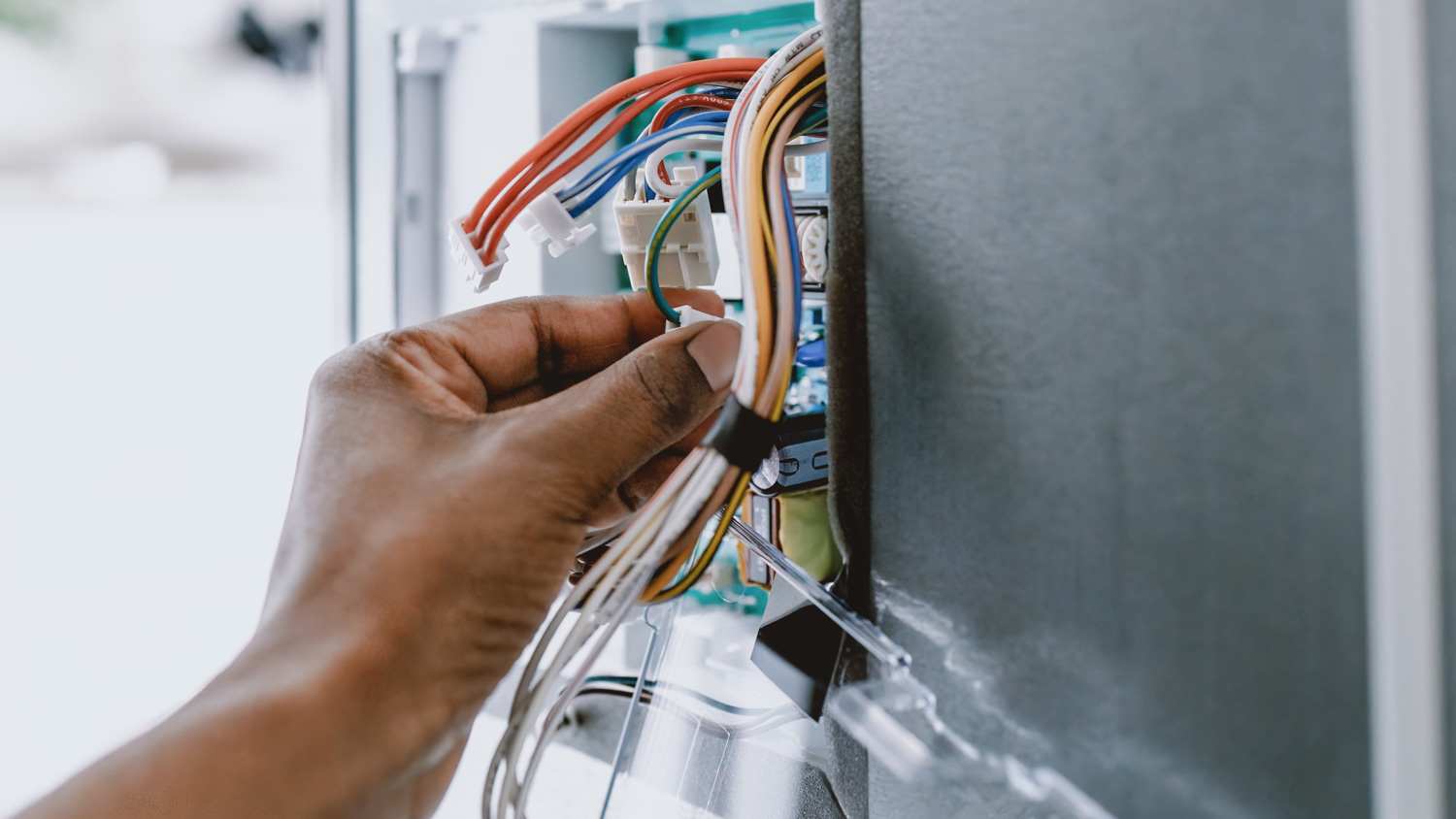
A ceiling light will usually have two or three wires: black, white, and sometimes green. Black wires are positive, or hot, while white wires are negative, or neutral. The green wire is the grounding wire.
When you’re wiring the light, connect black to black, white to white, and green to the grounding screw.
The Haven, KS homeowners’ guide to electrical services
From average costs to expert advice, get all the answers you need to get your job done.

Is it time to upgrade your electrical panel? For the sake of safety, find out sooner than later by exploring our top signs that it’s time for an upgrade.