




Top-rated paving pros.

Get matched with top paving pros in Onawa, IA

Enter your zip and get matched with up to 5 pros

Need a pro for your paving service project in Onawa, IA?

Select your specific project to find the pro for you.

Find Paving pros in Onawa

Paving Services questions, answered by experts

The dimensions of a driveway apron vary based on local building codes, the width of your driveway, and the distance between the driveway and the road. On average, aprons range from 12 to 24 feet wide and 8 to 18 feet long. Typically, the end of the apron connected to the driveway matches its width—such as 10 to 12 feet for a single-car driveway—while the end at the street flares out to allow cars to turn in and out more easily. In some areas, you may not be responsible for the portion of the apron that extends beyond the sidewalk, but this depends on local laws.

In most cases, you don’t need a permit to repave your driveway, although some exceptions exist. If you’re widening your driveway and plan on widening the apron as well, you’ll usually need a permit from the Department of Transportation in your area. This permit costs between $50 and $300 in most cases. Most municipalities will also require a certified and insured contractor do the work relating to the apron and curb cut. You can contact your building department or ask your paving company if you need a permit. Your driveway professional will usually pull the permit for you.

Professionals restore the surface to a fresh, attractive finish by applying a new, even sealant layer.

Asphalt and tarmac are not the same thing. Traditional tarmac, short for tarmacadam, uses tar as a binder to hold crushed stone together. Asphalt uses bitumen—a byproduct of crude oil—to bind aggregate. Though tarmac was once a go-to for roads, asphalt has become the modern standard. And these days, most surfaces referred to as “tarmac” are actually asphalt. So, while the names may overlap, the key distinction lies in the binder—tar for tarmac and bitumen for asphalt.

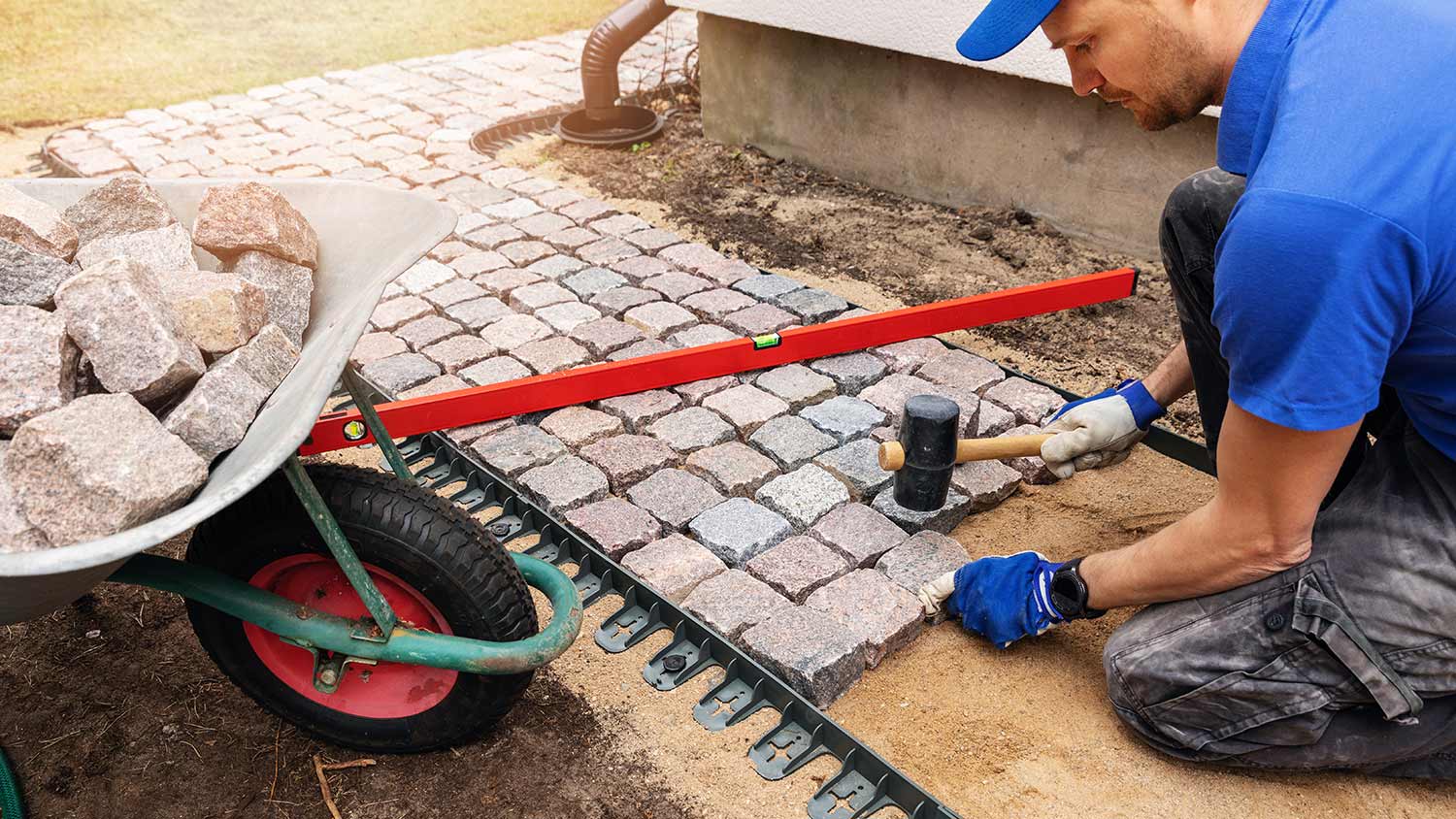
The most common causes of sunken pavers are poor base preparation and insufficient compaction. The problem could also be how your pavers were installed. If the soil beneath your patio or walkway wasn't compacted, it will pull pavers down as it settles. Additionally, using bare soil instead of making a paver bed with compacted gravel and sand can cause sinking over time. To fix sunken pavers, consider recompacting the base and addressing any drainage or erosion issues in the area.

The Onawa, IA homeowners’ guide to paving services

From average costs to expert advice, get all the answers you need to get your job done.