





Top-rated paving pros.

Best paving pros near Pender, NE

Enter your zip and get matched with up to 5 pros

Need a pro for your paving service project in Pender, NE?

Select your specific project to find the pro for you.

Top-Rated Paving pros in Pender - Updated Nov 2026

Avatar for 1 Stop Paving
1 Stop Paving
5.0(
1
)
Asphalt Paving - InstallAsphalt Paving - Install- For BusinessAsphalt Paving - Repair or Patch+1 more

Serving Pender, NE and surrounding areas

In business since 2017

Free estimates

Offers commercial services

Customer satisfaction is what determines our success, which is why we take a hands-on approach. When interacting with 1 Stop Paving, you'll notice that we're particularly focused on the principles of quality workmanship, timely completion, competitive pricing and integrity in all our business dealings. We combine knowledge and research with our extensive practical experience to ensure a specialized approach for your project needs. Contact us today for a fair and accurate estimate of your project. We look forward to adding you to our long and growing list of happy customers.

Response time9 hrs
Recommended by100%of homeowners
Paving Services FAQs, answered by experts

Yes, pea gravel is good for driveways as long as your driveway isn’t built on a hill or any type of slope where it can slide. It’ll settle on a flat surface and create a suitable driveway over time, though some spreading initially will take place. If you're wondering how to make a gravel driveway in a high-rainfall area, using pea gravel could help you to cut down on costs needed for extra drainage solutions.

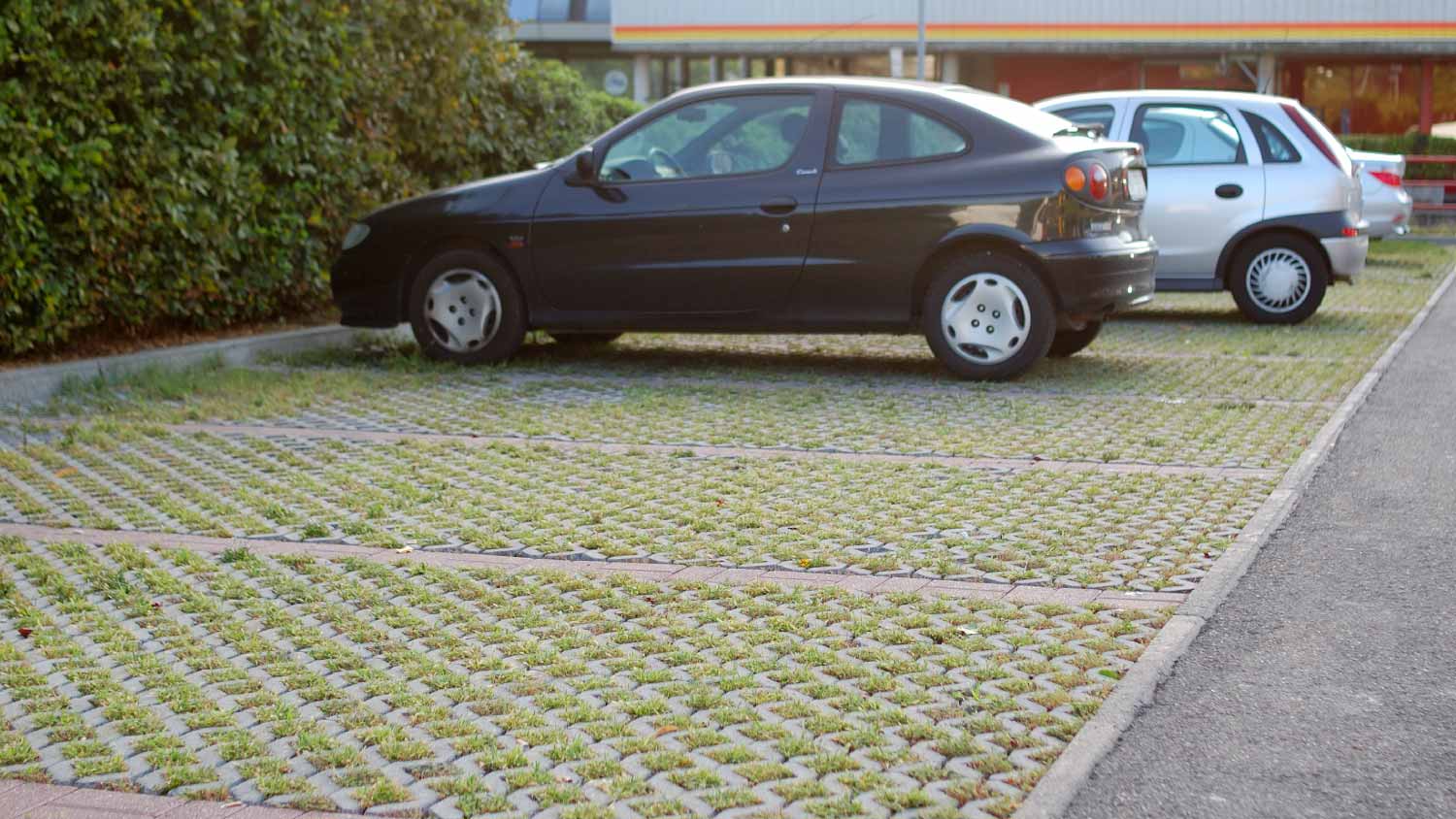
An example of permeable paving is a set of cinder blocks or natural stone pavers with room inside for natural materials, such as gravel, sand, or grass. You can also design these pavers with brick or plastic tiles.

In addition to these pavers, permeable pavement can be obtained by using a highly porous material, such as pervious concrete or pervious asphalt.

The dimensions of a driveway apron vary based on local building codes, the width of your driveway, and the distance between the driveway and the road. On average, aprons range from 12 to 24 feet wide and 8 to 18 feet long. Typically, the end of the apron connected to the driveway matches its width—such as 10 to 12 feet for a single-car driveway—while the end at the street flares out to allow cars to turn in and out more easily. In some areas, you may not be responsible for the portion of the apron that extends beyond the sidewalk, but this depends on local laws.

Decomposed granite and caliche can both harden into a solid surface using a plate compactor. However, due to decomposed granite’s fine particles, it’s not suitable for driveway surfaces. Some homeowners use pea gravel mixed with a gravel-binding resin to bind the loose stones and create a solid surface that won’t shift like loose gravel.

Asphalt and tarmac are not the same thing. Traditional tarmac, short for tarmacadam, uses tar as a binder to hold crushed stone together. Asphalt uses bitumen—a byproduct of crude oil—to bind aggregate. Though tarmac was once a go-to for roads, asphalt has become the modern standard. And these days, most surfaces referred to as “tarmac” are actually asphalt. So, while the names may overlap, the key distinction lies in the binder—tar for tarmac and bitumen for asphalt.

The Pender, NE homeowners’ guide to paving services

From average costs to expert advice, get all the answers you need to get your job done.