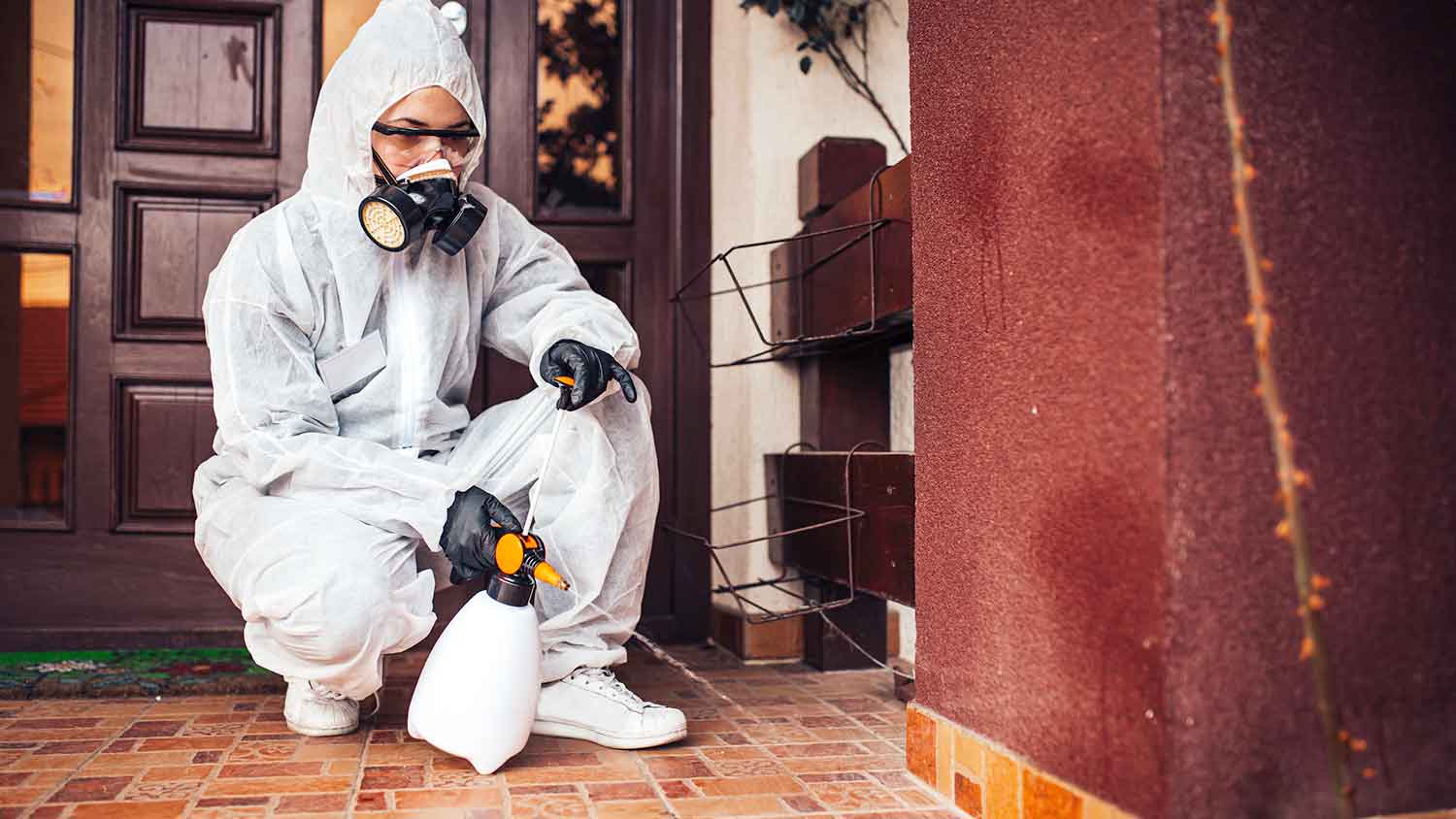
Top-rated pest control specialists.

Get matched with top pest control specialists in Boulder Creek, CA

Enter your zip and get matched with up to 5 pros

Need a pro for your pest control project in Boulder Creek, CA?

Select your specific project to find the pro for you.

TRUSTED BY BOULDER CREEK, CA HOMEOWNERS

  • Average homeowner rating star icon4.6
    Average homeowner rating
  • Verified reviews icon83
    Verified pest control services reviews

Find Pest control specialists in Boulder Creek

Hi-Tech Termite Control of the Bay Area, Inc.
4.5(
91
)
Pest Control - TermitePest Control - Termite - For Business

Serving Boulder Creek, CA and surrounding areas

Approved

In business since 1996

Free estimates

Credit card accepted

"Hi Tech was very professional in their inspection, bid and termite control. We had 3 inspection/estimates (the two other big names in the industry). Hi Tech was just much more professional and very competitive in pricing. Would definitely hire again."
Response time12 hrs
79 neighbors recently requested a quote

Recommended by93%of homeowners
Simply Rodents
New to Angi
Pest Control - RodentsPest Control - Rodents - For Business

Serving Boulder Creek, CA and surrounding areas

Approved

In business since 2018

Offers commercial services

At Simply Rodents, we pride our company on reliability, great communication, integrity, and quality work. We strongly believe in giving our absolute best in all the work we perform. We are experts, and will always keep you educated about the work process. We look forward to earning your business!

6 neighbors recently requested a quote

We Care Pest Control
4.7(
98
)
Mosquito ControlPest Control - Bed BugsPest Control - Bugs and Insects+3 more

Serving Boulder Creek, CA and surrounding areas

In business since 1992

Credit card accepted

"I thought it went very well. He was very meticulous in going through and identifying where the pests were coming into the house. We ended up spending another $150 to completely eradicate and take care of the problem. I don't know if they put anymore traps down there or not, but I haven't heard anything from the tenants saying that there is a problem. It's been six months now and so I'm thinking they took care of it."
Recommended by93%of homeowners
Showing 1-10 of 38
Pest Control questions, answered by experts

Some of the plants listed above, like daffodils, are poisonous to many animals if eaten. But wild animals instinctively avoid them, for the most part. Household pets don’t always have the same survival instinct, which is why it’s a good idea to familiarize yourself with common plants that pose a danger to cats and dogs.

Prime mosquito season varies depending on your location. It’s longer in the sweltering southern states and shorter in the cooler, drier northern regions. In places like Florida, it can run from February to November, but in the Pacific Northwest, mosquitoes appear in April and can hang around until the end of October. While the hottest summer months are when they are at peak population, mosquito seasons are extending in many regions because of the increase in annual temperatures.

Both insects can damage wood, but there are key differences between termites and carpenter ants that tell them apart. Carpenter ants tunnel through moist wood, leaving behind smooth tunnels and sawdust-like piles, as they don't eat the wood but rather carve it for nesting. In contrast, termites actually consume wood, creating irregular galleries filled with mud and dirt, and leaving behind mud tubes as their signature. In terms of appearance, carpenter ants have segmented bodies with heart-shaped heads and larger front wings, while termites have more oval bodies with straight antennae and equal-sized wings.

Spider mites hate high humidity, strong air circulation, and potent smells like peppermint oil. Utilizing these factors can help deter spider mites so that they don’t feast on your plant leaves and inhibit growth. If you try these methods and spider mites still won’t leave, it’s time to hire a professional pest control service to tackle the task.

False chinch bugs are generally smaller and somewhat paler than true chinch bugs, although they otherwise look similar. The name is a bit of a misnomer: They act very similarly and both feed on plants by sucking out their juices. However, chinch bug feeding tends to be very destructive to the plant, while strangely the false chinch bug does relatively little damage.

The Boulder Creek, CA homeowners’ guide to pest control services

From average costs to expert advice, get all the answers you need to get your job done.