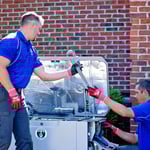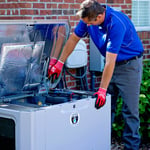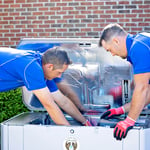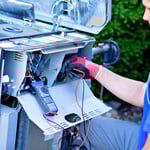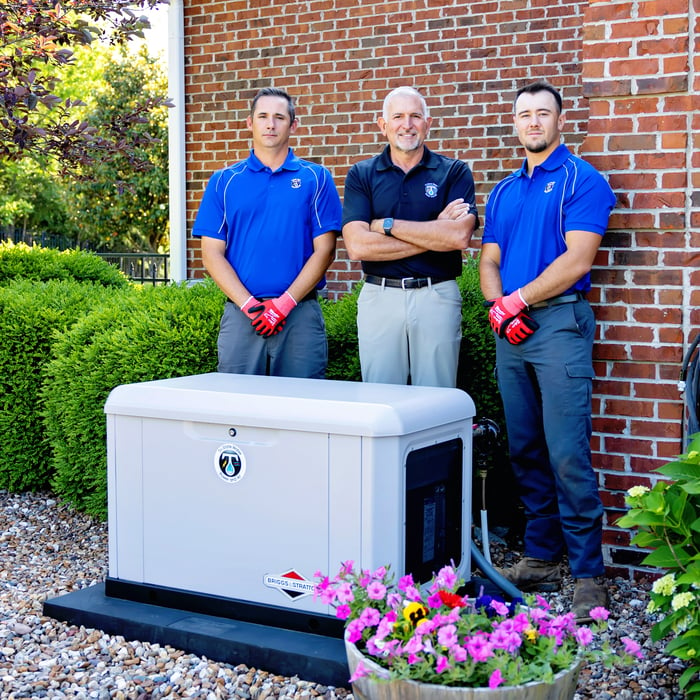




Top-rated generator install pros.

Get matched with top generator install pros in England, AR

Enter your zip and get matched with up to 5 pros

Need a pro for your generator install project in England, AR?

Select your specific project to find the pro for you.

Find Generator install pros in England

Avatar for Ozark Electric AR
Ozark Electric AR
5.0(
31
)
Fixed Generator - InstallPortable Generator - Install

Serving England, AR and surrounding areas

Approved

Super Service Award Winner

In business since 2024

Emergency services offered

Warranties offered

"Fantastic! Steve was very fast to respond to my request on Angi and also to come provide a free estimate. He was professional and honest. He did what he said, when he said he would do it and for the price he quoted. I won't hesitate to call him if I need an electrician in the future."
Additional Photos
Additional Photos
Additional Photos
Additional Photos
Additional Photos

+15

24 neighbors recently requested a quote

Recommended by58%of homeowners
Avatar for Next Generation Solar, LLC
Next Generation Solar, LLC
5.0(
5
)
Fixed Generator - Install

Serving England, AR and surrounding areas

Approved

In business since 2017

Free estimates

Emergency services offered

Since 2016, AEV Solar has been committed to taking care of customers across Arkansas by delivering reliable backup power and energy resilience solutions for homes and businesses. We specialize in custom battery backup, generator-integrated systems, and intelligent whole-home or commercial energy setups designed around each customer’s actual energy needs. With a strong focus on customer satisfaction, quality workmanship, and long-term support, we help our customers gain peace of mind knowing their property is protected when outages happen.

aevsolar.com
37 neighbors recently requested a quote

Avatar for GENERATED ENERGY SOLUTIONS, LLC
GENERATED ENERGY SOLUTIONS, LLC
4.4(
7
)
Fixed Generator - InstallFixed Generator - RepairGenerator - Install - For Business+1 more

Serving England, AR and surrounding areas

In business since 2011

Free estimates

Emergency services offered

"Needed a fixed home generator due to health issues. They worked on a scheduled day off to assure we had a generator installed prior to my husband coming home from the hospital. They worked efficiently and with the gas company. I would recommend them to anyone in central Arkansas needing service."
Generator Installation
Response time8 hrs
Response rate100%
Beggs Electric
4.9(
5
)
Fixed Generator - InstallFixed Generator - RepairPortable Generator - Install

Serving England, AR and surrounding areas

In business since 1995

Free estimates

Credit card accepted

"Jimmy Beggs prices are fair and reasonable. Work quality is great. If it's raining you may have to wait until a good day but the wait in my opinion is worth it. We will definitely use him again for generac install and other projects we have coming up. If you get him for any electrical you are in good hands. I personally will only use Beggs electricfor now on. Good company, good people."
Response time10 mins
Recommended by100%of homeowners
Showing 1-10 of 24
Generator Install questions, answered by experts

You can expect a diesel generator to last for up to 30,000 hours of use, which works out to 20 to 25 years with the proper maintenance, of course. That depends on how much you use it, so a diesel generator used for emergencies a couple of times a year will last a lot longer than a generator that takes over for a faulty electrical grid every month for a day or two. 

If you’re wondering whether gas generators produce carbon monoxide, know that natural gas generators do not produce carbon monoxide if they are functioning properly, as natural gas burns cleanly. However, if the generator malfunctions and the gas does not burn completely, there is potential for carbon dioxide to be produced. To prevent malfunctions, it's crucial to perform regular maintenance, including running the generator weekly and scheduling professional inspections every 6 to 12 months. Also, be sure to test your carbon monoxide detectors regularly to ensure they function in the rare case of the generator producing carbon monoxide.

Here’s what you can run with different wattages and types of generators:

Portable generator:

  • 2,000 watts can handle a large appliance like a freezer or refrigerator, plus a few smaller items like phones or computer chargers. 

  • 4,000 watts will keep two large appliances operating and a few smaller devices.

  • 8,000 watts should power most essential appliances and other devices, including a sump pump, well pump, or your dishwasher.

Partial to whole-house generator:

  • 20,000 watts and above will make it seem like your home’s power is still on.

While natural gas generators are costly, they’re a great option for standby power due to the reliability of natural gas as a fuel source. Unlike other fuels, natural gas is delivered through underground pipes, making outages extremely rare and less likely to be affected by the elements. As long as the area isn’t prone to earthquakes, they offer an unlimited supply of natural gas that doesn’t degrade over time or require storage in tanks.

To determine the right size generator for your house, you should calculate the total wattage of the appliances and devices you want to power during an outage. List all essential items, note their start-up wattages, and add them together.

Here are some typical wattage requirements for common appliances:

  • Refrigerator: 600 watts

  • Large dehumidifier: 700 watts

  • Large window air conditioner: 1,400 watts

  • Water heater: 3,000 to 4,500 watts

  • Electric furnace: 5,000 to 25,000 watts

A 7,500-watt generator might be sufficient for essentials like a refrigerator, freezer, well pump, and lighting circuits. However, for high-demand items like a water heater or furnace, a whole-home generator is a better choice. A portable generator may be enough if you only need to power a few critical items.

While home square footage can offer a rough estimate, it is not always a reliable indicator. For reference, here are some typical generator sizes based on square footage:

  • 1,000 sq ft: 6–9 kW

  • 1,500 sq ft: 7–10 kW

  • 2,000 sq ft: 10–14 kW

  • 2,500 sq ft: 12–16 kW

  • 3,000 sq ft: 16–20 kW+

For the most accurate sizing, consult a professional who can calculate your home's peak and average power consumption and recommend the optimal generator.

The England, AR homeowners’ guide to generator installs

From average costs to expert advice, get all the answers you need to get your job done.