

Circuit breakers help protect electrical circuits from overheating, which is especially important inside a home. Let’s go over the basics.
A circuit breaker box is the control center of all your home's electrical power

Your breaker box distributes electricity from utility lines to your home's circuits, using main breakers, circuit breakers, and grounding bars to control power flow.
Expect to pay $500 to $1,800 to replace a circuit breaker box, with costs influenced by amperage, panel type, and your home's electrical needs.
Check your electrical panel regularly for burnt smells, discoloration, or loose wiring, as these signs point to miswiring, short circuits, or breaker overload problems.
Hiring a local electrical professional provides reliable help with breaker box replacement, miswiring repairs, and ensuring your panel meets current code requirements.
A circuit breaker box, also known as an electrical panel, may seem like an unexciting electrical necessity. But while it’s not the talk of the town, the key role this fixture plays in ensuring you have electricity and are safe makes it worthy of respect. Below, we’ll cover what it is, what’s inside it, common problems, code requirements, and what it’ll cost to replace one.
A circuit breaker box is the main distribution point for all the electricity in your home. It takes the electricity from your electrical company’s utility lines and safely distributes it to your appliances, lighting, outlets, and electronics. Here are the essential elements of a breaker box:

The large switch located above or below the two rows of circuit breakers is the main breaker. It operates as the boss over all the circuit breakers by controlling the amount of electricity distributed to the circuits. So, if you need to turn off all the power in your home in case of an emergency, you just need to turn off the main breaker.
The rows of switches that take up most of an electrical panel’s interior are known as circuit breakers. Each one provides power to its designated breaker that you can quickly identify if properly labeled.
Each circuit breaker has its own job in ensuring your home’s electricity flows smoothly. A single-pole breaker is a single switch that can handle 120 volts and either 15 or 20 amps. Its purpose is to provide power to items that require low amperage to work.
While a double pole breaker uses two switches that handle 240 volts with amps rating up to 125, it powers more oversized household items such as air conditioners and stoves.
An arc fault circuit interrupter (AFCI) cuts off power to a circuit when it detects an arcing electrical fault and prevents fires. A ground fault circuit interrupter (GFCI) prevents homeowners from getting electrocuted due to ground faults.
The hot bus bars connect to thick—usually black—service wires and are how the electricity from your street’s utility lines reaches your electrical panel. And it’s how electricity flows from the main to the circuit breakers.
The neutral bus bars connect to the—usually white—neutral wire and return electricity to the circuit breaker after powering an appliance.
The grounding bar connects with the grounding copper wire so that electricity can travel into the ground if and when problems arise.
These empty slots allow a licensed electrician to add additional breakers if you need more electrical power to your home.

Standard code requirements for electrical panels:
It needs to be at least 4 feet off the ground but no higher than 6 feet
It should be located in a safe location for an electrical panel—no bathrooms or tight spaces
It should preferably be found in the basement of single-family homes or near the main entrance of an apartment
They are easy to access without moving objects around with a 3-foot clearance in front of it and a 90-degree angle clearance when opening
It should only have one neutral conductor per neutral terminal
Each circuit breaker needs to be labeled
These are only some of the most common code requirements for circuit breakers. For a proper installation of a new or replacement panel, you’ll need to adhere to local code requirements. Your local electrician can also advise on any additional changes to ensure you’re up to code.
There’s no one-size-fits-all electrical panel; here are the different types below and what they’re best suited for:
Main breaker panels, as implied, have main breakers built into them that allow you to shut off all the electricity in your home. These breaker panels can be installed indoors within 10 feet of the meter and feeder cable.
These circuit breaker boxes don’t have a main breaker; they use electrical lugs that line wires run to and require a separate disconnect outside the house. They’re mainly used as an add-on panel when all the circuit breakers in the main breaker panel are used.
Subpanels are small electrical panels with separate circuit breakers that provide electricity to a specific part of a house or building outside the house but on your property.
These are also sub-panels that convert a portable generator’s power into electrical power through the electrical panel. These breaker boxes are commonly found in areas where power outages occur frequently.
Transfer switches can be connected directly to the breaker box for an automatic transfer from your primary source of electricity to your alternative one.
The size of your breaker box is often determined by your household needs—from the types of appliances you have to whether your home uses gas in addition to electricity. A 200-amp panel is pretty standard for a single-family home, but older homes more often have 100 amps instead. You need to know the size of your breaker box so that you don’t accidentally overload the circuit by running too many electrical appliances at once. With a standard-sized breaker, you won’t have to worry about running a fan at the same time as your stereo, but don’t go adding a portable AC unit to the same circuit as your electric range in the kitchen.
This location will differ based on the unique layout of your home, but you’ll usually find the breaker box in low-traffic areas like the garage, basement, or a storage room. Look for a metal box that’s flush against the wall. Remember, it’s better to know where your breaker box is before an emergency happens, so take a look around when you have a moment.
Fuse boxes use fuses to control the current to each circuit breaker. And when there’s an electrical overload, the filament located inside the fuse will melt to protect the wires in your home and prevent house fires.
Circuit breaker boxes use internal switches to protect your home. It automatically switches off when dangerous levels of electrical current try to pass through to your electrical system.
The key differences between circuit breakers and fuse boxes are convenience and usability. With fuse boxes, once a fuse melts, you need to replace it with a new one with the correct voltage, or you risk sending too much electricity to your home wires which can cause a fire. On the other hand, circuit breakers can be reused and only need to be switched on to function properly.
Here are some of the most common breaker box issues that homeowners face:
When your electrical wires are miswired, your electronics can start functioning irregularly by not turning on and off properly, even when the switch is in the off position.
Miswiring can also lead to electric shock and fire hazards. While it’s not deadly, it’s also not a pleasant experience.
Other signs of miswiring include:
Burnt smells or discoloration near outlets
Loose wires
Flickering lights
Disconnected wires
Hot outlets
Short circuits are when a hot wire touches a separate hot or neutral wire. This leads to the electrical current diverging from its original course, which results in extremely high current flows.
It can be caused by faulty wiring inside the walls or in an outlet. Short circuits can be hazardous, and if you notice any strange smells or brown or black staining near outlets, you should contact an electrician immediately.
The most frequent reason for a tripped breaker is an electric overload. This happens when there are too many electronics connected at once. When a circuit is overloaded, it will trip the breaker to protect your electrical system. If you experience some of these issues, the safest option is to contact an emergency electrician in your area.
You might need to replace a circuit breaker box if they don’t produce enough electricity for your home’s needs, are outdated, or you plan on adding new additions to your home. The cost to replace one is $500 to $1,800 per box, with factors such as labor costs, amperage, electrical panel type, location, and labor costs all influencing its final price.
Of course, you’ll need to contact an electrician near you to get a customized quote catered to your needs.
I recently had Mosby Electric perform an electrical installation on 8-14-2026, and I couldn’t be more satisfied with the service. From the moment I called, their team demonstrated fast arrival and professionalism. The electricians were highly knowledgeable, completing the installation...
 Mosby Electric
Great company! Price was competitive, technician showed up on time and completed the job (exterior electric Radon fan replacement) quickly. Would hire them again.
 MaGen Property Inspections and Radon Mitigation
I conferred with 2 other contractors before Armstrong Electric. Nick and his crew showed me that the project was not as convoluted as the other contractors made it appear to be. They completed the entire project on time. They were professional, friendly and cleaned up after at completion. I...
 ARMSTRONG ELECTRIC, LLC
The techs on my project, Shawn and Cliff, were great. They were prompt, courteous, and efficient. I am very happy with the results and would definitely contact Mr. Electric for any future electrical projects.
 Mr. Electric of Columbus
Victor was wonderful. He was on time, professional, and explained everything he was doing. He was thorough and figured out that the problem was electrical instead of with my HVAC system. Very knowledgeable. I will be using this company in the future for any HVAC needs. Thanks!
 Hubbs Heating & Air LLC
They were excellent. They did a great job. I was totally satisfied. They put tremendous effort in making sure the work was completed. They were great. They provided immediate response to any inquires I made. I would hire them again. I would recommend them to anyone who needs electrical work....
 JCB & Associates, LLC DBA Property-Tech Industries
Initially, the repairman could not find the problem. Apparently, there was some electrical shortage, but he could not find the definite problem. He left, but called back later to say he had a new idea. He returned and replaced the light switches on the doors. The refrigerator seemed to return...
 Appliance Pro LLC
The initial quoted price from a walk-through seemed high, but we discussed that the quote represented worst case scenario (re-wiring to two floors) and we were excited about the opportunity to have the work done in a timely manner with closing for fire safety reasons, etc. When the job was...
I have to tell you I am all about customer service - I will go out of my way and even pay more for it if you give me great customer service. <br> <br>In a world where this is hard to find, these guys were awesome! I can not sing their praises enough. They were prompt, personable, funny, got...
 Waibel Electric
When I challenged the markup on the generator, Bruder Electric withdrew its bid. They only want naïve customers.
From average costs to expert advice, get all the answers you need to get your job done.
Circuit breakers help protect electrical circuits from overheating, which is especially important inside a home. Let’s go over the basics.
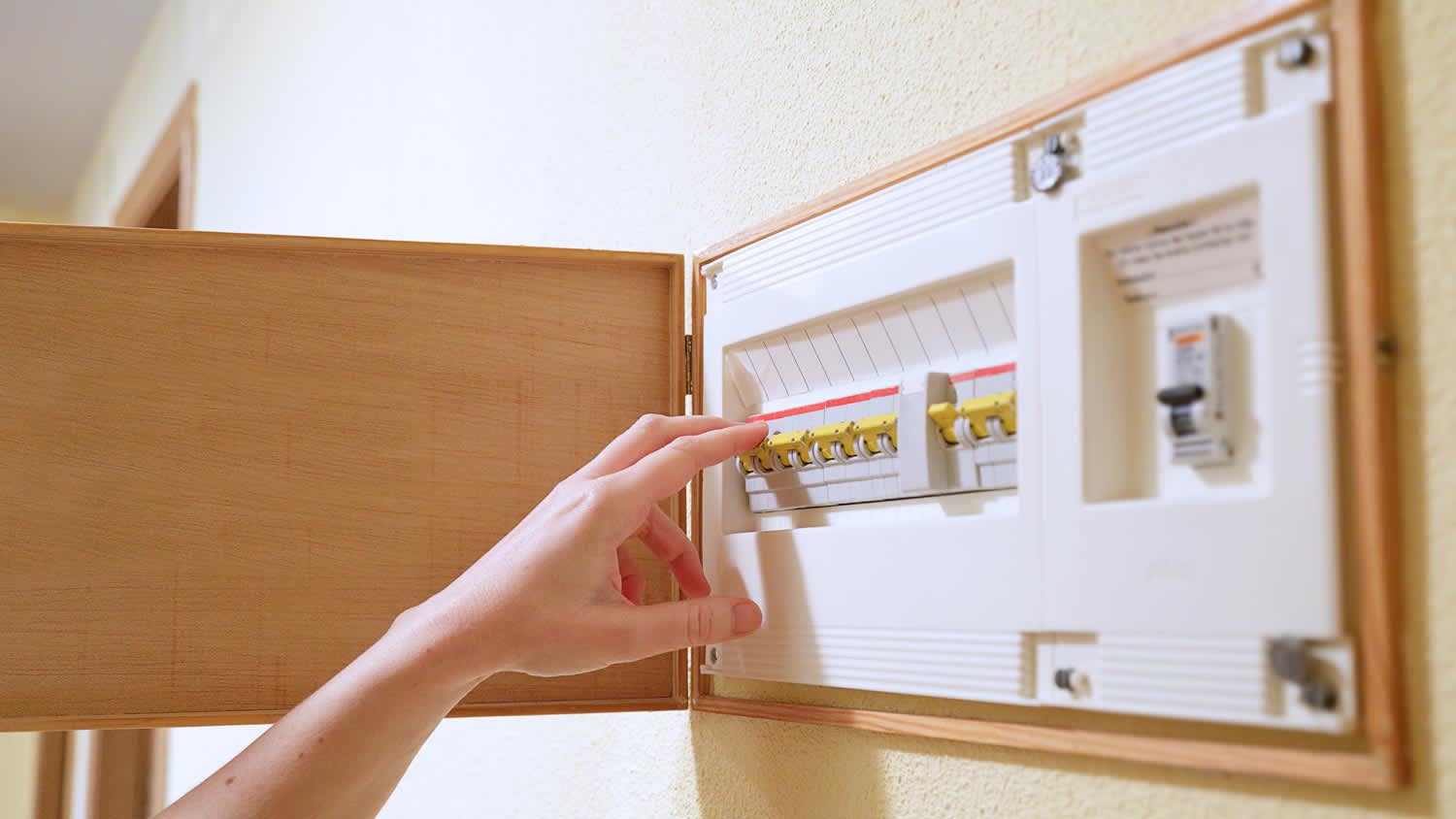
If you’re trying to choose between a circuit breaker vs. a fuse box for your home, our guide will help you decide which electrical panel is right for you.
Discover the various types of circuit breakers, their unique features, pros and cons, and the best applications for each in this comprehensive guide.

It can be difficult to tell where the neutral or ground wires are located in your breaker box. Here’s what you need to know about your breaker box wiring.
Flickering lights and breaker trips can be a sign that it’s time to replace a circuit breaker. Find out the cost, safety tips, and how to replace a circuit breaker.
Circuit breakers and surge protectors protect your home electronics and wiring, but they work in different ways. Here’s what you should know about these vital components.