


Top-rated excavation pros.

Get matched with top excavation pros in Southside, WV

Enter your zip and get matched with up to 5 pros

Need a pro for your excavation project in Southside, WV?

Select your specific project to find the pro for you.

Find Excavation pros in Southside

Avatar for Adkins Plumbing & Contracting, LLC
Adkins Plumbing & Contracting, LLC
4.5(
98
)
Building Site - Preparation and ClearingExcavation - Major Grading or ReslopingBuilding Site - Preparation and Clearing - For Business+1 more

Serving Southside, WV and surrounding areas

Approved

In business since 2021

Free estimates

Credit card accepted

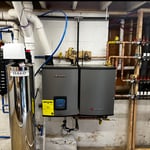
"I had a water leak thatI originally thought was a water line break beneath my house. Jarred inspected the crawl space and found it to be a HVAC issue instead. He and his brother installed a new unit for me. They were very professional, did an excellent job installing the unit and cleaned up in my house around the area afterward. I am very pleased with their work and would highly recommend them for any type of plumbing or HVAC issue."
My jobs
My jobs
My jobs
My jobs
My jobs

+102

45 neighbors recently requested a quote
Recommended by55%of homeowners
Avatar for Adkins Plumbing
Adkins Plumbing
4.3(
48
)
Building Site - Preparation and ClearingBuilding Site - Preparation and Clearing - For BusinessExcavation - Major Grading or Resloping+2 more

Serving Southside, WV and surrounding areas

Free estimates

Emergency services offered

Credit card accepted

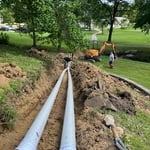
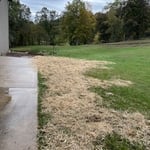
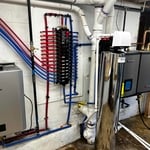
"Excellent Service. Jared and his crew were very professional, walked through the entire install prior to work. The excavation was performed with care to our property, they reseeded the grass afterwards. They permanently marked were each fitting along the run is located, so we know where to check if the line leaks years into the future. Professional, Friendly, high Quality. This will be the go to plumbers for all future jobs!"
Plumbing Project
Excavating Project
Plumbing Project
Plumbing Project
Plumbing Project

+4

Recommended by82%of homeowners
Showing 1-10 of 30
Excavating questions, answered by experts

Trenching and boring are two distinct methods for installing underground utilities. Trenching involves digging a channel using equipment like an excavator, trencher, backhoe, or shovel. While it is a simpler process, it causes significant disruption to the surface, landscaping, and surrounding ecosystems.

Boring, also known as directional boring, is a less invasive alternative that uses a drill to create a tunnel for utility lines without disturbing the surface. This method is more precise and is ideal for installations that need to go underneath buildings, roads, or bodies of water. Although boring is less disruptive, it is generally more expensive than trenching.

Prior to excavation, you should prepare the dig site and call 311 before you sign anything.

To get your site ready for excavation, you should move anything in the area that isn’t affixed to the land. You can save money on the excavation by removing hardscaping, including walkways, decks, concrete patios, and paver patios.

Before you carry out any digging, you should call 311 to confirm that there are no utility lines running through your excavation site. Skipping this step could lead to severe injury and property damage if your excavator hits a water, sewage, or gas line.

You should dig 3 to 6 inches deep for plastic edging. Dig as wide as you need to fit your plastic edging into it—2 inches is usually sufficient.

There is no standard depth for burying a septic tank; they are typically buried anywhere from 4 inches to 4 feet underground. The final depth depends on several factors, including the depth of your main sewer line, the height of the bedrock, soil type, local regulations, and the property's landscape. If you plan to grow grass or plants over the tank, a depth of at least 4 to 6 inches is recommended. Deeper tanks can be more difficult to locate, but a septic professional can help find it for you.

How deep your septic system needs to be into the ground depends on several factors. In extremely cold environments, the tank needs to rest below the maximum frost line, which can be up to six or eight feet deep. The standard burying depth for most systems is between a few inches and four feet below ground level. Depth can also depend on the slope of the landscaping and other property variables. 

The Southside, WV homeowners’ guide to excavation services

From average costs to expert advice, get all the answers you need to get your job done.