
Top-rated tree service pros.

Best tree service pros near Panhandle, TX

Enter your zip and get matched with up to 5 pros

Need a pro for your tree service project in Panhandle, TX?

Select your specific project to find the pro for you.

Top-Rated Tree service pros in Panhandle - Updated Nov 2026

Avatar for Family Tree Unlimited
Family Tree Unlimited
4.8(
131
)
Tree RemovalTree Trimming

Serving Panhandle, TX and surrounding areas

In business since 2020

Free estimates

Emergency services offered

"Alvin came out and he and my husband discussed the project. When the crew came out, they did exactly what had been by discussed, line for line. We will definitely keep this number handy for future tree service."
Response time7 hrs
Response rate92%
Recommended by89%of homeowners
Avatar for Pro Touch  Tree Service
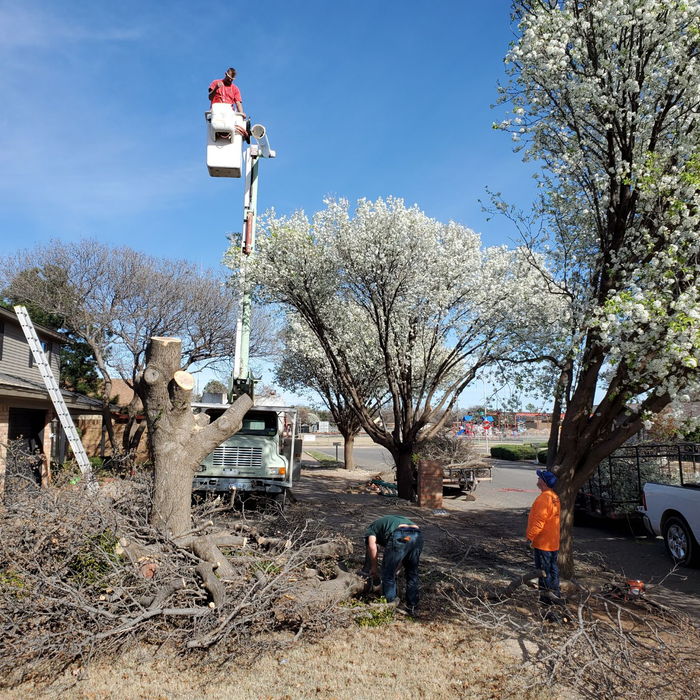
Pro Touch Tree Service
5.0(
5
)
Tree RemovalTree Removal - For BusinessTree Stump - Remove+3 more

Serving Panhandle, TX and surrounding areas

In business since 2024

Free estimates

Emergency services offered

"So professional and respectful to my property. Was a very tricky job in a tight space and the job was completed with such precision and perfection. I highly recommend them for tree services!"
Response time40 mins
Response rate100%
Recommended by80%of homeowners
...
Showing 1-10 of 75
Tree Service FAQs, answered by experts

In most cases, leaving tree roots underground is not a problem if the stump has been removed or ground below the soil. However, some larger roots may decompose, leaving dents in your soil. Additionally, some aggressive trees, including willows, oaks, elms, maples, and poplars may grow back from roots. Large aggressive trees with established root systems are more likely to grow back.

The ideal depth of a tree notch depends on the tree, but it should usually be between 20% and 25% of the tree’s depth. However, if the tree is leaning towards the direction of the notch, it can be cut more shallowly—at as little as 10% of the depth. When the tree is leaning away from the direction it needs to be felled, you can cut deeper, closer to 30%.

The best time to trim trees is in late fall through winter when the tree has slowed its growing for the year. Cold weather stops insects and fungal growth from attacking a new tree wound. Summer and fall are considered the worst times to trim trees, but it’s permissible in certain scenarios, such as tree disease, damaged branches, or small, aesthetic cuts.

An arborist specializes in tree care, performing tasks such as pruning, treating diseases, and removing hazardous trees. They also assess soil conditions, plant trees, and develop landscaping plans to ensure healthy growth. They also manage debris cleanup, inspect equipment, and record maintenance activities. Arborists often collaborate with landscapers and professional tree maintenance services, applying their specialized knowledge and problem-solving skills to maintain tree health and safety.

Completely topping a plum tree is a risky business. Cut too much, and you’ll kill your tree. That said, you do need to trim the top of your tree to encourage bushy growth, maintain your tree’s vase shape, and limit size. 

A plum tree's central leader (or trunk) should never extend more than 3 feet above the highest branch. When you first plant your tree, cut the central leader so it’s 2 to 3 feet tall. As it grows, cut it back 12 to 20 inches until it reaches its desired height. Never prune more than one-third of the new growth.

The Panhandle, TX homeowners’ guide to tree services

From average costs to expert advice, get all the answers you need to get your job done.