







Top-rated paving pros.

Get matched with top paving pros in Crofton, NE

Enter your zip and get matched with up to 5 pros

Need a pro for your paving service project in Crofton, NE?

Select your specific project to find the pro for you.

Find Paving pros in Crofton

Paving Services questions, answered by experts

In most cases, you don’t need a permit to repave your driveway, although some exceptions exist. If you’re widening your driveway and plan on widening the apron as well, you’ll usually need a permit from the Department of Transportation in your area. This permit costs between $50 and $300 in most cases. Most municipalities will also require a certified and insured contractor do the work relating to the apron and curb cut. You can contact your building department or ask your paving company if you need a permit. Your driveway professional will usually pull the permit for you.

You can pour concrete over asphalt if it’s in good condition, thick, stable, and well-compacted. Concrete is more durable than asphalt and can extend the lifetime of your driveway without having to pay frequent asphalt driveway repair costs or replace it completely. 

But this is best reserved as a temporary solution based on budget restraints, as asphalt requires more frequent repairs and assessments than concrete. Once that concrete top is poured, it’ll be harder to accurately understand what’s happening beneath that layer, which could lead to more issues.

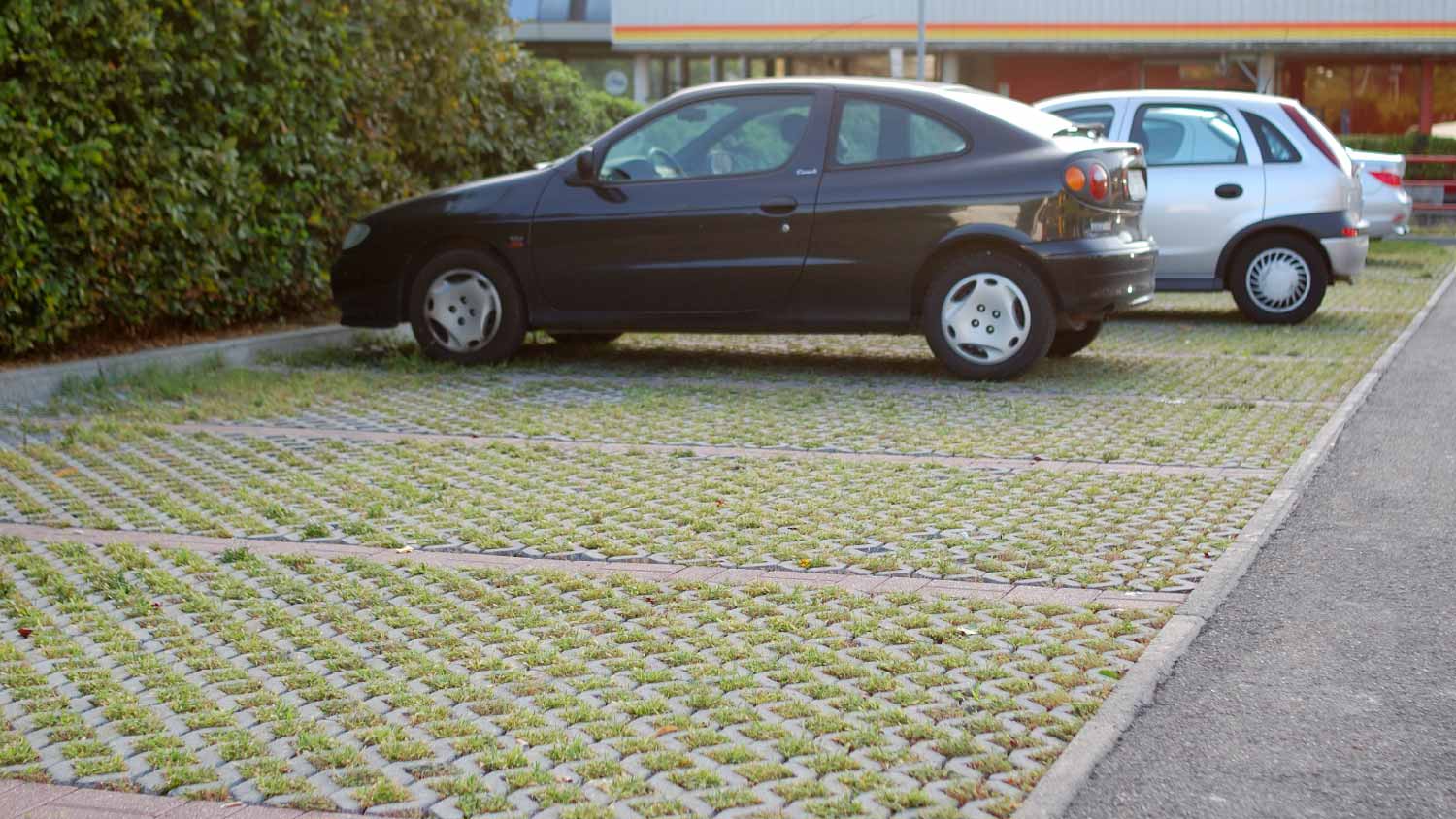
An example of permeable paving is a set of cinder blocks or natural stone pavers with room inside for natural materials, such as gravel, sand, or grass. You can also design these pavers with brick or plastic tiles.

In addition to these pavers, permeable pavement can be obtained by using a highly porous material, such as pervious concrete or pervious asphalt.

Yes, but it's best to kill off the grass with solarization and remove the dead plant matter before laying down the pavers. This helps limit the chance of your pavers shifting as the dead plant matter decomposes.

The ideal distance between stepping stones depends on your design preference. A general rule is to place them about 24 inches apart from center to center to match an average person's stride. Another common approach is to leave about 6 inches of space between the edges of each stone; this can be adjusted to fit the path's total length without cutting pavers. If you plan to plant between the stones, leave at least 6 to 8 inches of space to give the plants room to grow.

The Crofton, NE homeowners’ guide to paving services

From average costs to expert advice, get all the answers you need to get your job done.